
OpenAI’s GPT-5.4 mini and nano launch – with near flagship performance at much lower cost
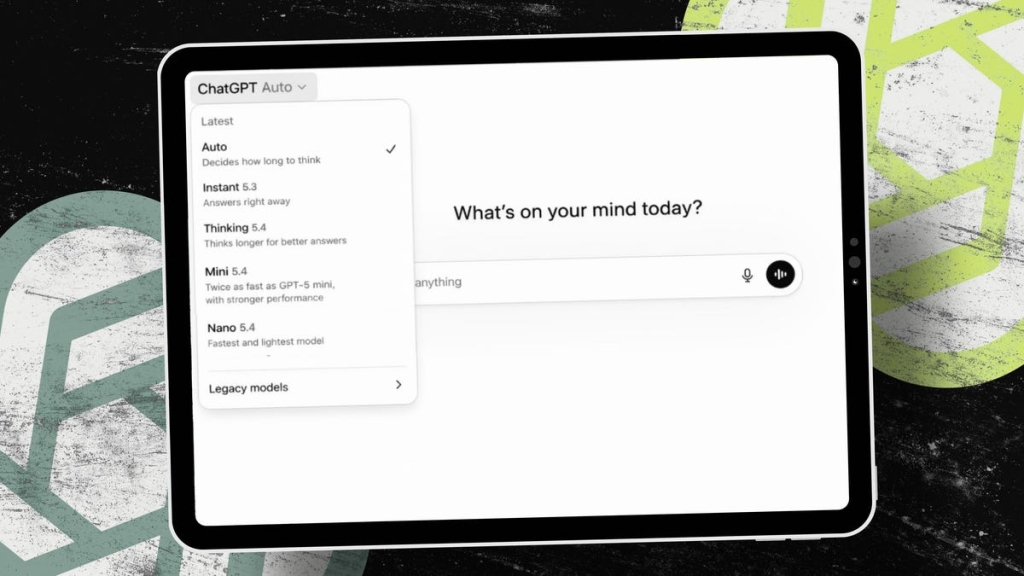
OpenAI Launches GPT-5.4 Mini and Nano: A Game-Changer for AI Efficiency and Cost-Effectiveness
In a move that’s sending shockwaves through the tech industry, OpenAI has unveiled its latest AI models: GPT-5.4 mini and GPT-5.4 nano. These new additions to the GPT family promise to deliver near-flagship performance at a fraction of the cost, marking a significant milestone in the democratization of artificial intelligence.
The Evolution of AI Models
The AI landscape has been evolving at breakneck speed, with OpenAI’s flagship large language models iterating rapidly from GPT-5.3 to GPT-5.4. Each generational jump typically results in increased performance and accuracy, but it also comes with a hefty price tag. The introduction of GPT-5.4 mini and nano aims to address this issue, offering developers and businesses a more cost-effective solution without compromising on quality.
Understanding the New Models
GPT-5.4 Mini: The Middle Ground
GPT-5.4 mini is designed to strike a balance between performance and efficiency. It runs more than twice as fast as its predecessor, GPT-5 mini, making it ideal for applications that require quick responses and reliable tool use. This model is particularly well-suited for coding assistants, subagents, and multimodal applications that need to reason over images in real-time.
GPT-5.4 Nano: The Lightweight Champion
On the other end of the spectrum, we have GPT-5.4 nano, the smallest and fastest model in the lineup. It’s aimed at classification, extraction, ranking, and simpler coding-support tasks. While it may not have the same level of sophistication as its larger counterparts, it offers impressive performance for its size and cost.
Performance Improvements: A Closer Look
The real selling point of these new models lies in their performance improvements. When compared to models released just months earlier, the gains are substantial:
- GPT-5.4 mini scores 54.38% on SWE-bench Pro compared to 45.69% for GPT-5 mini.
- On Terminal-Bench 2.0, GPT-5.4 mini reaches 60.00%, versus 38.20% for GPT-5 mini.
- On GPQA Diamond, GPT-5.4 mini scores 88.01%, approaching GPT-5.4’s 93.00%.
- OSWorld-Verified results show GPT-5.4 mini at 72.13%, significantly higher than GPT-5 mini’s 42%.
These improvements demonstrate that the smaller, lighter GPT-5.4 mini model can perform almost as well as the full GPT-5.4 model on benchmark tests, offering a compelling alternative for those looking to balance performance and cost.
Real-World Applications and Customer Testing
The true test of any new technology lies in its real-world applications. Several companies have already begun testing GPT-5.4 mini and nano, with promising results:
Hebbia: Revolutionizing Document Analysis
Hebbia, a technology specialist in building tools for professional document analysis, has found GPT-5.4 mini to be a game-changer. According to Aabhas Sharma, CTO at Hebbia, “GPT-5.4 mini delivers strong end-to-end performance for a model in this class. In our evaluations, it matched or exceeded competitive models on several output tasks and citation recall at a much lower cost.”
Notion: Enhancing Productivity Tools
Notion, a popular digital workspace platform, has also been experimenting with the new models. Abhisek Modi, AI engineering lead at Notion, noted that “GPT-5.4 mini handles focused, well-defined tasks with impressive precision.” This improvement could lead to more efficient and accurate AI-powered features within Notion’s productivity tools.
The Future of AI Workflows
The introduction of these models signals a shift in how we approach AI workflows. Rather than relying solely on large, resource-intensive models, developers can now mix and match different sizes of models to create more efficient and cost-effective systems.
For instance, a larger model like GPT-5.4 Thinking could be used for complex planning tasks, while GPT-5.4 mini handles subagent work such as searching codebases, reviewing files, and processing documents. This approach mirrors real-world human operations, where a team of specialists with varying skill levels collaborates to achieve a common goal.
Availability and Pricing: Making AI More Accessible
One of the most exciting aspects of GPT-5.4 mini and nano is their pricing structure. GPT-5.4 mini is available at $0.75 per million input tokens and $4.50 per million output tokens, while GPT-5.4 nano costs even less at $0.20 per million input tokens and $1.25 per million output tokens. These prices represent a significant reduction compared to the full GPT-5.4 model, which costs $2.50 per million input tokens and $15.00 per million output tokens.
This pricing strategy makes advanced AI capabilities more accessible to a wider range of developers and businesses, potentially accelerating the adoption of AI across various industries.
The Impact on AI Development
The launch of GPT-5.4 mini and nano is likely to have far-reaching implications for AI development:
-
Increased Experimentation: Lower costs will encourage developers to experiment more freely with AI, potentially leading to innovative new applications.
-
Faster Prototyping: The ability to quickly test ideas without incurring high costs will speed up the development process.
-
Edge Computing: Smaller models like nano could enable AI capabilities on devices with limited processing power, expanding the reach of AI technology.
-
Sustainability: More efficient models could reduce the environmental impact of AI by requiring less computational power.
Looking Ahead
As we look to the future, it’s clear that the AI landscape is becoming increasingly diverse and nuanced. The introduction of models like GPT-5.4 mini and nano represents a maturing of the field, where different tools are available for different tasks, rather than a one-size-fits-all approach.
This diversity in AI models opens up new possibilities for developers and businesses, allowing them to tailor their AI solutions more precisely to their needs. It also raises interesting questions about the future of AI development: Will we continue to see a proliferation of specialized models? How will this affect the overall progress of AI technology?
Conclusion
OpenAI’s launch of GPT-5.4 mini and nano marks a significant step forward in making AI more accessible and efficient. By offering near-flagship performance at a fraction of the cost, these models have the potential to accelerate AI adoption across various industries and use cases.
As developers and businesses begin to integrate these models into their workflows, we can expect to see a new wave of AI-powered innovations. The future of AI is not just about creating more powerful models, but also about making them more accessible and efficient. GPT-5.4 mini and nano are a testament to this evolving approach to AI development.
The AI revolution is far from over – in fact, it may just be getting started. As these technologies become more accessible and efficient, we can expect to see AI playing an increasingly integral role in our daily lives and across various industries. The launch of GPT-5.4 mini and nano is not just a step forward for OpenAI, but a leap forward for the entire field of artificial intelligence.
Tags: OpenAI, GPT-5.4, AI models, machine learning, natural language processing, coding assistants, multimodal applications, cost-effective AI, subagents, computer use tasks, document analysis, productivity tools, AI workflows, edge computing, sustainability in AI
Viral Sentences:
- “OpenAI’s GPT-5.4 mini and nano: Game-changing AI models that are twice as fast and half the cost!”
- “The future of AI is here, and it’s smaller, faster, and more affordable than ever before.”
- “GPT-5.4 mini approaches flagship performance at a fraction of the cost – a true breakthrough in AI accessibility.”
- “From coding to document analysis, these new AI models are revolutionizing how we work with artificial intelligence.”
- “OpenAI’s latest launch signals a shift towards more efficient, specialized AI models tailored for specific tasks.”
- “The AI arms race just got a new front: cost-effectiveness and accessibility.”
- “GPT-5.4 nano: Small in size, big on performance – the lightweight champion of AI models.”
- “Developers rejoice! High-performance AI is now within reach for projects of all sizes.”
- “The democratization of AI continues with OpenAI’s latest cost-effective models.”
- “From enterprise to edge devices, GPT-5.4 mini and nano are expanding the horizons of AI applications.”
,


Leave a Reply
Want to join the discussion?Feel free to contribute!