
Why Garry Tan’s Claude Code setup has gotten so much love, and hate
Garry Tan’s AI-Induced Insomnia: The CEO Who Sleeps Four Hours a Night to Work With Autonomous Agents
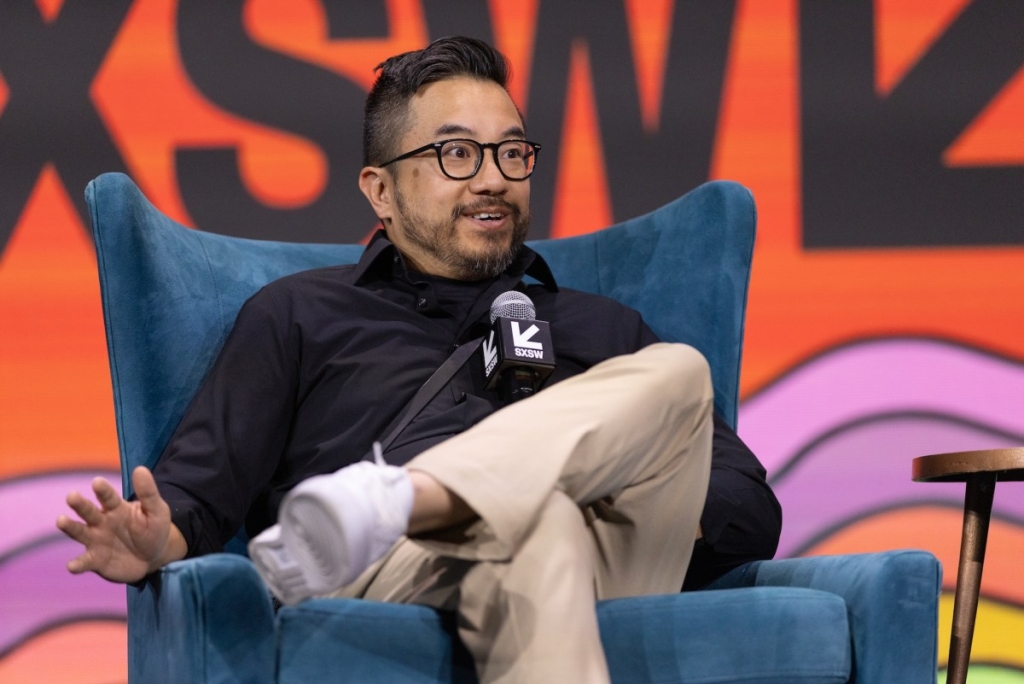
At the South by Southwest (SXSW) conference in Austin, Texas, Y Combinator CEO Garry Tan delivered a confession that sent ripples through the tech community: he’s barely sleeping, consumed by an obsession with AI agents that he describes as “cyber psychosis.”
“I sleep, like, four hours a night right now,” Tan told his interviewer, fellow venture capitalist Bill Gurley, during their Saturday onstage conversation. “I have cyber psychosis, but I think a third of the CEOs that I know have it as well.”
Whether Tan was joking about his AI-induced mental state remains unclear. While he laughed it off, AI-induced psychosis has become a genuine concern among tech workers pushing the boundaries of human-AI collaboration. The condition, characterized by obsessive behavior, sleep disruption, and hyperfixation on AI systems, has emerged as an unexpected side effect of the AI revolution.
From Modafinil to Natural Insomnia
Tan’s current sleep patterns represent a dramatic shift from his previous startup lifestyle. As the founder of Posterous, a blogging platform acquired by Twitter in 2012, Tan once relied on modafinil—a prescription medication used to treat narcolepsy and popular among startup founders for its wakefulness-promoting properties.
“I took modafinil just to stay awake longer to be able to turn the momentary crystalline structures I had in my brain into lines of code before sleep or human distraction turned it to grains of sand,” Tan explained in a subsequent X post. “I love coding but I love coding with AI even more.”
The comparison between his current AI-driven productivity and his modafinil-fueled past is striking. “I don’t need modafinil with this revolution,” he told Gurley. “I’m up. I slept at 4 a.m. I woke up at 8 a.m. I wanted to sleep more, but I couldn’t because: Let’s see what’s going on with the 10 workers. I’ve got like three different projects going right now.”
The Birth of gstack: An AI Engineering Org in a Box
On March 12, just two days before his SXSW appearance, Tan released what would become his most controversial contribution to the AI community: gstack, an open-source configuration for Claude Code, Anthropic’s AI coding assistant.
“I’ve been having such an amazing time with Claude Code, I wanted you to be able to have my exact skill setup,” Tan posted on X, sharing a link to his GitHub repository. The setup, licensed under MIT terms, included six “opinionated” Claude Code skills he had developed—essentially reusable prompts stored in special “skill.md” files that instruct the AI how to behave in specific roles or tasks.
Tan described gstack as “a mature, opinionated system built by someone who actually uses it heavily.” The project represented more than just a collection of prompts; it was an attempt to simulate an entire engineering organization within a single AI system.
How gstack Works: The AI Engineering Team
The genius of gstack lies in its organizational approach to AI coding. Rather than simply asking Claude to “build this feature,” Tan’s system breaks down the development process into specialized roles, each with its own skill set.
Using one skill, Claude acts as a CEO, evaluating whether a startup idea or feature is worth pursuing. Another skill transforms Claude into an engineer, writing the actual code. A third skill deploys Claude as a code reviewer, examining its own work for bugs and security vulnerabilities. Additional skills handle design, documentation, and other aspects of software development.
This multi-role approach mirrors how real engineering teams operate, but compresses the entire process into an AI system that can work continuously without breaks.
Viral Success and Immediate Backlash
The tech community’s reaction to gstack was swift and intense. Tan’s initial X post announcing the project went viral, accumulating thousands of interactions within hours. On Product Hunt, gstack quickly climbed the charts, eventually earning nearly 20,000 stars on GitHub with 2,200 forks—indicating that thousands of developers had taken the files to modify for their own use.
But the honeymoon period was short-lived. Shortly after releasing gstack, Tan shared a message from a CTO friend who had used the system. The message claimed that gstack had discovered a “subtle cross site scripting attack” that the CTO’s team hadn’t identified—a security vulnerability that could have had serious consequences.
“My CTO friend texted me: ‘Your gstack is crazy. This is like god mode. Your eng review discovered a subtle cross site scripting attack that I don’t even think my team is aware of. I will make a bet that over 90% of new repos from today forward will use gstack,'” Tan posted.
The tech community’s response was brutal. One founder on X wrote: “(1) Garry should be embarrassed for tweeting this. (2) If it’s true, that CTO should be fired immediately.”
Vlogger Mo Bitar created a video titled “AI is making CEOs delusional,” in which he argued that gstack was essentially “a bunch of prompts” in a text file. The common complaint among developers was that those already using Claude Code had their own versions of similar systems.
“Garry, let’s be clear and honest: if you weren’t the CEO of YC, this wouldn’t be on PH,” one person commented on Product Hunt, questioning whether the project’s prominence was due to Tan’s position rather than its inherent value.
Expert Analysis: Revolutionary or Overhyped?
To cut through the noise, I consulted multiple AI systems for their assessment of gstack, including Claude (which, unsurprisingly, was enthusiastic), ChatGPT, and Gemini.
ChatGPT characterized gstack as “reasonably sophisticated prompt workflows, but they’re not ‘magical.'” The system’s real insight, according to ChatGPT, was that “AI coding works best when you simulate an engineering org structure. Not when you just ask: ‘build this feature.'”
Gemini called the setup “sophisticated,” noting that “gstack is essentially a ‘Pro’ configuration. It is less about making coding easier and more about making it correct.”
Claude, perhaps unsurprisingly given it was evaluating a system designed for its use, was effusive in its praise. It called gstack “a mature, opinionated system built by someone who actually uses it heavily,” adding that “it’s one of the better examples of Claude Code skill design out there.”
The consensus among these AI judges suggests that while gstack may not be revolutionary, it represents a thoughtful, practical approach to maximizing AI coding productivity.
The Broader Implications of AI-Induced Psychosis
Tan’s experience raises profound questions about the future of work in an AI-driven world. His description of “cyber psychosis” and the inability to disconnect from AI systems reflects a broader trend among early AI adopters who find themselves unable to step away from their digital collaborators.
The phenomenon extends beyond individual CEOs. Reports from Silicon Valley suggest that many tech workers are experiencing similar symptoms—obsessive engagement with AI tools, disrupted sleep patterns, and a compulsive need to check on AI “workers” throughout the night.
This raises ethical questions about the responsibility of AI companies in designing systems that can be addictive or psychologically disruptive. Just as social media companies have faced scrutiny for addictive design patterns, AI companies may soon confront similar challenges as their tools become increasingly sophisticated and engaging.
The Future of AI-Assisted Development
Regardless of the controversy surrounding gstack, Tan’s experience points to a larger truth about the future of software development. The traditional model of a single developer working in isolation is rapidly giving way to AI-augmented teams where human developers orchestrate multiple AI agents, each specialized in different aspects of the development process.
This shift represents a fundamental change in how software is created. Rather than replacing human developers, AI systems like Claude Code are amplifying their capabilities, allowing a single person to accomplish what previously required an entire team.
For Tan, this amplification has become all-consuming. His four-hour sleep schedule and obsessive engagement with AI agents may represent an extreme case, but they also offer a glimpse into a future where the line between human and machine collaboration becomes increasingly blurred.
As AI systems continue to evolve, becoming more capable and more engaging, the tech industry will need to grapple with the psychological and social implications of these powerful tools. The question is no longer whether AI will transform software development, but how we’ll adapt to a world where our digital collaborators demand as much attention as our human ones.
For now, Garry Tan remains at the forefront of this transformation, sleeping four hours a night and pushing the boundaries of what’s possible when human creativity meets artificial intelligence. Whether his “cyber psychosis” is a temporary phase or a permanent condition of the AI age remains to be seen.
Tags: AI agents, cyber psychosis, Garry Tan, Y Combinator, Claude Code, gstack, AI coding, software development, Silicon Valley, SXSW, modafinil, startup culture, GitHub, open source, AI productivity, sleep deprivation, AI addiction, engineering org structure, prompt engineering, Anthropic, venture capital, tech obsession, AI collaboration, future of work
Viral Phrases:
“cyber psychosis”, “god mode”, “AI is making CEOs delusional”, “I sleep four hours a night”, “Let’s see what’s going on with the 10 workers”, “I don’t need modafinil with this revolution”, “It’s like I was able to re-create my startup”, “Once you try it, you’ll realize”, “AI-induced psychosis”, “The love for gstack began immediately”, “a bunch of prompts in a text file”, “If you weren’t the CEO of YC, this wouldn’t be on PH”, “I speak it listens and we create”, “There is no more powerful an experience to me than that”
,

Leave a Reply
Want to join the discussion?Feel free to contribute!