
Something Strange Is Happening Deep Inside Greenland’s Ice Sheet
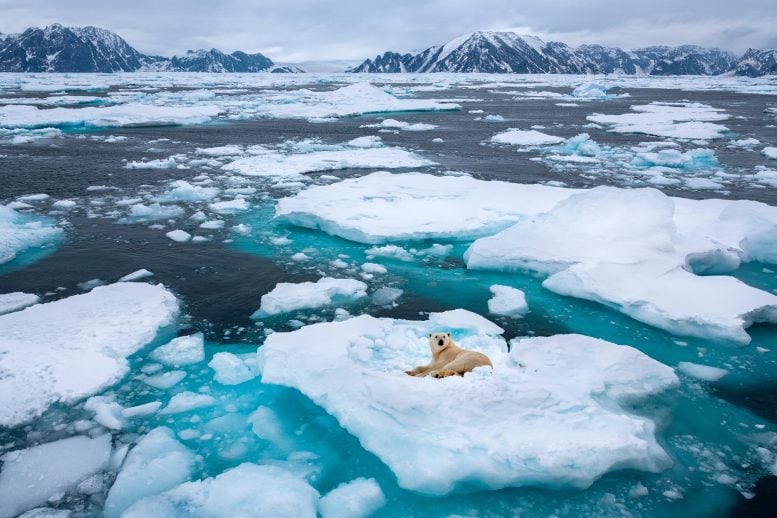
Something Strange Is Happening Deep Inside Greenland’s Ice Sheet
Deep beneath Greenland’s vast ice sheet, scientists have uncovered a hidden process that could reshape our understanding of the Arctic’s future. Researchers from the University of Bergen (UiB) have identified enormous swirling, plume-like formations buried far beneath the surface, structures that have puzzled the scientific community for over a decade.
These mysterious formations, stretching for miles and resembling colossal underwater plumes, were first detected using advanced radar and satellite imaging. Initially, their origin and purpose remained a mystery. Now, the UiB team believes they have uncovered the truth: the ice sheet itself may be slowly churning deep below the surface, driven by complex interactions between the ice, the bedrock, and the Earth’s geothermal heat.
The discovery challenges long-held assumptions about the stability of Greenland’s ice. Traditionally, scientists viewed the ice sheet as a relatively static mass, slowly moving outward under its own weight. However, these new findings suggest a much more dynamic system, with deep, swirling motions that could accelerate melting and influence global sea levels in ways we have yet to fully understand.
The process appears to be driven by a combination of factors. As the ice sheet moves, it grinds against the bedrock below, generating heat through friction. At the same time, geothermal heat from the Earth’s interior warms the base of the ice, creating pockets of meltwater. This meltwater acts as a lubricant, allowing the ice to slide more easily and potentially triggering the swirling motions observed by the researchers.
What makes this discovery particularly alarming is its potential impact on climate change. If the ice sheet is indeed churning more rapidly than previously thought, it could lead to faster ice loss and a more rapid rise in global sea levels. This, in turn, could have devastating consequences for coastal communities around the world, from small island nations to major metropolitan areas.
The findings also raise new questions about the role of Greenland’s ice sheet in the global climate system. The Arctic is warming at a rate two to three times faster than the global average, a phenomenon known as Arctic amplification. If the ice sheet is more dynamic than we realized, it could accelerate this process, creating a feedback loop that further destabilizes the region.
For now, the exact mechanisms driving these swirling formations remain under investigation. The UiB team is using a combination of field measurements, computer modeling, and satellite data to better understand the process. They hope their work will provide critical insights into the future of Greenland’s ice and its impact on the planet.
As the Arctic continues to warm and the ice sheet becomes increasingly vulnerable, discoveries like this underscore the urgent need for action on climate change. The hidden churning beneath Greenland’s ice is a stark reminder that the Earth’s systems are far more interconnected—and more fragile—than we often realize.
#Greenland #IceSheet #ClimateChange #Arctic #GlobalWarming #SeaLevelRise #Science #Environment #ClimateCrisis #PolarResearch #EarthScience #ClimateAction #Sustainability #Glaciology #ClimateEmergency #RisingSeas #ArcticAmplification #ClimateScience #EnvironmentalCrisis #IceMelt
Something strange is happening deep inside Greenland’s ice sheet. Scientists have discovered enormous swirling, plume-like formations buried far beneath the surface, challenging our understanding of the Arctic’s future. The ice sheet may be slowly churning deep below, driven by complex interactions between ice, bedrock, and geothermal heat. This hidden process could accelerate melting and influence global sea levels in ways we’ve yet to fully understand. The Arctic is warming at a rate two to three times faster than the global average, and discoveries like this underscore the urgent need for climate action. The Earth’s systems are far more interconnected—and more fragile—than we often realize.,


Leave a Reply
Want to join the discussion?Feel free to contribute!