
Blue Origin puts space tourism on hold to bet big on the Moon
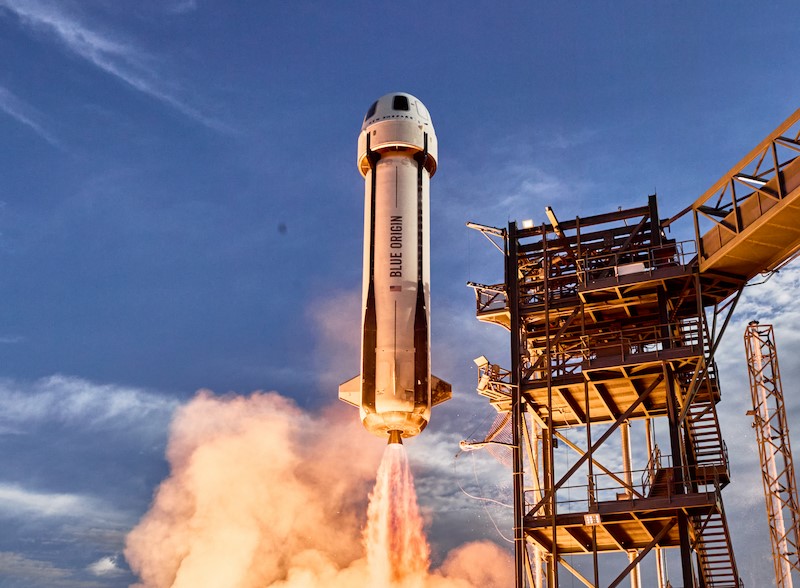
Blue Origin Hits Pause on New Shepard Flights to Focus on Moon Landing Ambitions
In a move that has sent ripples through the aerospace and commercial space sectors, Blue Origin has announced it will suspend all New Shepard suborbital flights for at least two years. The decision marks a dramatic pivot in the company’s strategy, redirecting its engineering talent and financial resources toward the development of lunar landing systems as part of NASA’s ambitious Artemis program.
The Kent, Washington-based space venture, founded by Amazon billionaire Jeff Bezos, revealed the decision in a brief but pointed statement released Friday. According to the company, the pause aligns with U.S. government objectives to return humans to the Moon and establish a sustainable long-term presence there. While the New Shepard program has been a cornerstone of Blue Origin’s public identity, the company now sees its lunar ambitions as the highest priority.
Since its first successful flight in 2015, New Shepard has completed 38 missions, carrying 98 people — including Bezos himself — beyond the Kármán line, the internationally recognized boundary of space. The program has also launched more than 200 research payloads for NASA, universities, and private sector partners. Its reusable design and consistent performance made it a poster child for the commercial space industry’s promise of affordable, frequent access to space.
However, the suborbital tourism market, while flashy and headline-grabbing, has always been a stepping stone for Blue Origin. The company’s real moonshot — quite literally — lies in its role as the primary contractor for NASA’s Blue Moon lunar lander. This system, designed to ferry astronauts from lunar orbit down to the Moon’s surface, is central to the Artemis program’s goal of establishing a permanent human presence on the Moon by the end of the decade.
The shift away from New Shepard is not without risk. The program had a healthy backlog of paying customers, including high-profile individuals and research institutions. Its flights generated significant media attention and public enthusiasm, helping to normalize the idea of civilian space travel. By stepping back from this proven revenue stream, Blue Origin is betting big on a future that remains years away from realization.
Industry analysts note that the pause could also be influenced by recent challenges. New Shepard has not flown since a 2022 anomaly that led to an uncrewed capsule being jettisoned mid-flight. While the capsule landed safely and no one was harmed, the incident triggered a lengthy investigation and subsequent redesign efforts. Though the company has since completed a successful test flight, the pause suggests lingering caution or strategic recalibration.
The timing of the announcement is also notable. NASA’s Artemis program is under increasing pressure to meet its deadlines, with the first crewed lunar landing targeted for 2026. Delays and budget constraints have already pushed back earlier timelines, and the space agency is looking to its commercial partners to accelerate progress. Blue Origin’s decision to double down on lunar lander development could be seen as both a commitment to the mission and a recognition of where the greatest opportunities — and contracts — lie.
For Blue Origin, the move represents a maturation of its business model. What began as a vision for millions of people living and working in space is now being channeled into concrete, government-backed projects with clear milestones and funding. The company’s recent successes with the New Glenn rocket development and its growing role in national security launches further underscore this shift toward large-scale, high-stakes aerospace endeavors.
Still, the pause on New Shepard leaves a void in the suborbital tourism market. Virgin Galactic, Blue Origin’s main competitor in this space, continues to operate its own spaceplane, though with a significantly smaller flight cadence. The absence of New Shepard could open the door for other players or signal a broader industry trend toward prioritizing deep space exploration over short hops to the edge of space.
As Blue Origin charts this new course, the aerospace community will be watching closely. The company’s ability to deliver on its lunar lander promises could determine not only its own future but also the pace of America’s return to the Moon. For now, the iconic New Shepard rocket will remain grounded, its engines silent, as Blue Origin sets its sights on a horizon 238,000 miles away.
Blue Origin, New Shepard, Moon landing, lunar lander, Artemis program, NASA, space tourism, suborbital flight, Jeff Bezos, aerospace, commercial space, space exploration, reusable rocket, Kármán line, Blue Moon, space industry, spaceflight, space travel, space race, lunar mission, space innovation, space technology, aerospace engineering, space policy, government contracts, space economy, space science, space research, space startup, space frontier, space age, next-generation space travel, space race 2.0, Moon return, lunar presence, space vision, space future, space dreams, space reality, space ambition, space leadership, space dominance, space legacy, space milestones, space history, space progress, space evolution, space transformation, space revolution, space era, space breakthrough, space achievement, space success, space challenge, space opportunity, space potential, space growth, space expansion, space exploration era, space age dawn, space age arrival, space age beginning, space age renaissance, space age revolution, space age transformation, space age evolution, space age progress, space age breakthrough, space age achievement, space age success, space age challenge, space age opportunity, space age potential, space age growth, space age expansion, space age exploration, space age leadership, space age dominance, space age legacy, space age milestones, space age history, space age future, space age vision, space age dreams, space age reality, space age ambition, space age innovation, space age technology, space age science, space age research, space age startup, space age frontier, space age frontier, space age frontier.
,

Leave a Reply
Want to join the discussion?Feel free to contribute!