
Something Else Used to Drive Climate Changes, Ancient Ice Cores Reveal : ScienceAlert
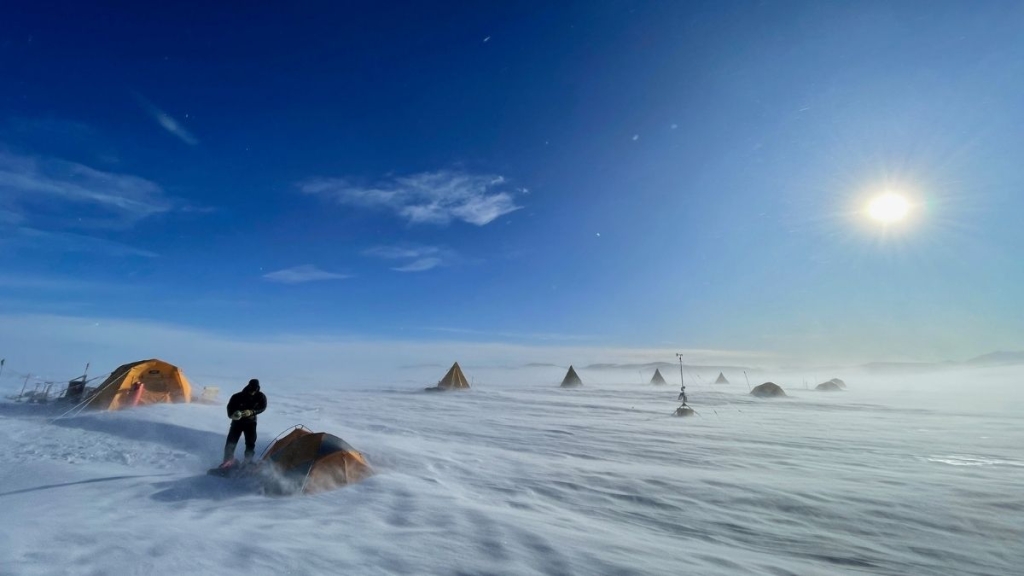
The Discovery That Could Rewrite Climate History
In a stunning revelation that’s sending shockwaves through the scientific community, researchers have uncovered evidence suggesting that greenhouse gases may not have always been the primary driver of Earth’s climate over the past three million years. This groundbreaking discovery, published in two companion papers in Nature, challenges our fundamental understanding of how our planet’s climate system works and could have profound implications for how we model future climate scenarios.
The research team, led by paleoclimatologist Sarah Shackleton from Woods Hole Oceanographic Institution and geochemist Julia Marks-Peterson from Oregon State University, analyzed ancient ice cores extracted from the remote Allan Hills region of Antarctica. These aren’t just any ice cores – they contain some of the oldest ice ever discovered, dating back nearly 6 million years to a time when our planet looked dramatically different.
What makes the Allan Hills so special? This blue ice region, comprising only about 1 percent of Antarctica’s ice sheet surface, is a geological treasure trove. Powerful winds continuously scour away new snow, exposing ancient glacial ice at the surface. Unlike most ice core sites that have moved significantly over millions of years, the Allan Hills region has remained remarkably stable, making it an ideal location for studying Earth’s deep past.
The findings are nothing short of revolutionary. When the research teams analyzed the trapped air bubbles within these ancient ice cores, they discovered something unexpected: atmospheric levels of carbon dioxide and methane remained “broadly stable” across the past 3 million years, even as the planet underwent dramatic climate shifts. This contradicts the long-held assumption that greenhouse gases were the primary control knob for Earth’s climate throughout geological history.
But the story gets even more intriguing. The team led by Shackleton found evidence of significant ocean temperature changes that appear to have occurred independently of greenhouse gas fluctuations. Using dissolved noble gases like xenon and krypton as temperature proxies, they discovered that the ocean underwent a dramatic cooling event around 2.7 million years ago – precisely when the Earth transitioned from a warmer climate to one that allowed massive Northern Hemisphere glaciation.
This timing is crucial. The Plio-Pleistocene Transition, as this period is known, marks one of the most significant climate shifts in Earth’s recent history. Yet according to these new findings, it wasn’t driven by changes in atmospheric greenhouse gas concentrations as scientists previously believed. Instead, something else – likely changes in ocean circulation patterns or other complex feedback mechanisms – appears to have been the primary driver.
The implications are staggering. If greenhouse gases weren’t always the dominant force controlling Earth’s climate, what does this mean for our understanding of climate sensitivity? How many other factors might we be overlooking in our current climate models? And perhaps most importantly, what can this teach us about the complex, interconnected systems that govern our planet’s climate?
Cambridge climatologist Eric Wolff, writing in an accompanying commentary, suggests two possibilities: either ice-sheet growth was “exquisitely sensitive” to tiny changes in carbon dioxide levels, or past climate changes were driven by entirely different mechanisms than we’ve assumed. Both scenarios paint a picture of a climate system far more complex and nuanced than our current models suggest.
The research also revealed an unexpected decoupling between sea surface temperatures and mean ocean temperatures, suggesting that different parts of the ocean system may respond to climate forcing in ways we don’t yet understand. This finding alone could revolutionize how oceanographers and climate scientists approach their work.
However, the researchers caution that these records, while revolutionary, come with significant limitations. The ice in the Allan Hills cores is highly compressed, especially in the oldest sections, meaning the data likely represents averages over multiple glacial and interglacial cycles rather than precise snapshots of individual climate events. As Shackleton noted in a recent podcast, “Exactly what these records capture in terms of how smooth or how much we’re averaging over glacial versus interglacial conditions is still an outstanding question.”
The drilling process itself is a testament to human ingenuity and perseverance. In 2019, researchers braved some of the harshest conditions on Earth to extract these precious ice cores. The NSF Ice Core Facility in Denver, Colorado, now houses these samples, where they’re carefully preserved and analyzed using cutting-edge techniques.
This research arrives at a critical moment in our climate conversation. As we grapple with the reality of human-caused climate change, understanding how Earth’s climate system functioned before we began dramatically altering it becomes increasingly important. These findings suggest that the climate system may be more resilient or more complex than we thought – or perhaps both.
The discovery also highlights the incredible value of basic scientific research. Who would have thought that studying 6-million-year-old ice could fundamentally alter our understanding of climate physics? Yet here we are, potentially rewriting textbooks and climate models based on these Antarctic findings.
As we look to the future, this research serves as both a warning and an inspiration. It’s a warning that our climate system is more complex than we imagined, with potentially hidden feedbacks and mechanisms we don’t yet understand. But it’s also an inspiration, showing that through scientific inquiry and exploration, we can continue to uncover the mysteries of our planet and better prepare for the challenges ahead.
The two papers, published in Nature under the titles “Atmospheric greenhouse gas concentrations over the past 3 million years from blue ice in Antarctica” and “Ocean temperature evolution over the past 3 million years from blue ice in Antarctica,” represent a major milestone in climate science. They remind us that Earth’s climate story is still being written, and that the next chapter may hold surprises we can’t yet imagine.
Tags: climate change, greenhouse gases, ice cores, Antarctica, Allan Hills, paleoclimatology, ocean temperatures, Plio-Pleistocene Transition, Mid-Pleistocene Transition, carbon dioxide, methane, climate modeling, Earth’s history, scientific discovery, Nature journal, climate science, ocean circulation, glacial cycles, atmospheric composition, noble gases, xenon, krypton, ice sheet dynamics, climate sensitivity, feedback mechanisms, scientific research, Antarctic exploration, NSF Ice Core Facility, Woods Hole Oceanographic Institution, Oregon State University, Cambridge University, Eric Wolff, Sarah Shackleton, Julia Marks-Peterson
Viral Sentences:
– “Greenhouse gases haven’t always been the driving force of Earth’s climate”
– “Ancient ice reveals climate secrets from 6 million years ago”
– “The discovery that could rewrite climate textbooks”
– “Antarctica’s blue ice holds the key to Earth’s climate past”
– “Scientists uncover shocking truth about climate change history”
– “The climate puzzle piece we’ve been missing all along”
– “Why greenhouse gases might not be the whole story”
– “The ice core discovery that’s changing everything”
– “Climate science’s biggest surprise in decades”
– “What 6-million-year-old ice tells us about our future”
– “The hidden factors controlling Earth’s climate”
– “Revolutionary findings challenge everything we thought we knew”
– “The climate mystery that’s baffled scientists for years”
– “Ancient ice reveals Earth’s climate secrets”
– “The discovery that could save our planet”
– “Climate science’s game-changing breakthrough”
– “Why our climate models might be wrong”
– “The Antarctic ice that’s rewriting history”
– “The shocking truth about Earth’s climate past”
– “What scientists found in 6-million-year-old ice”,


Leave a Reply
Want to join the discussion?Feel free to contribute!