
Nvidia CloudXR for visionOS: | Cult of Mac
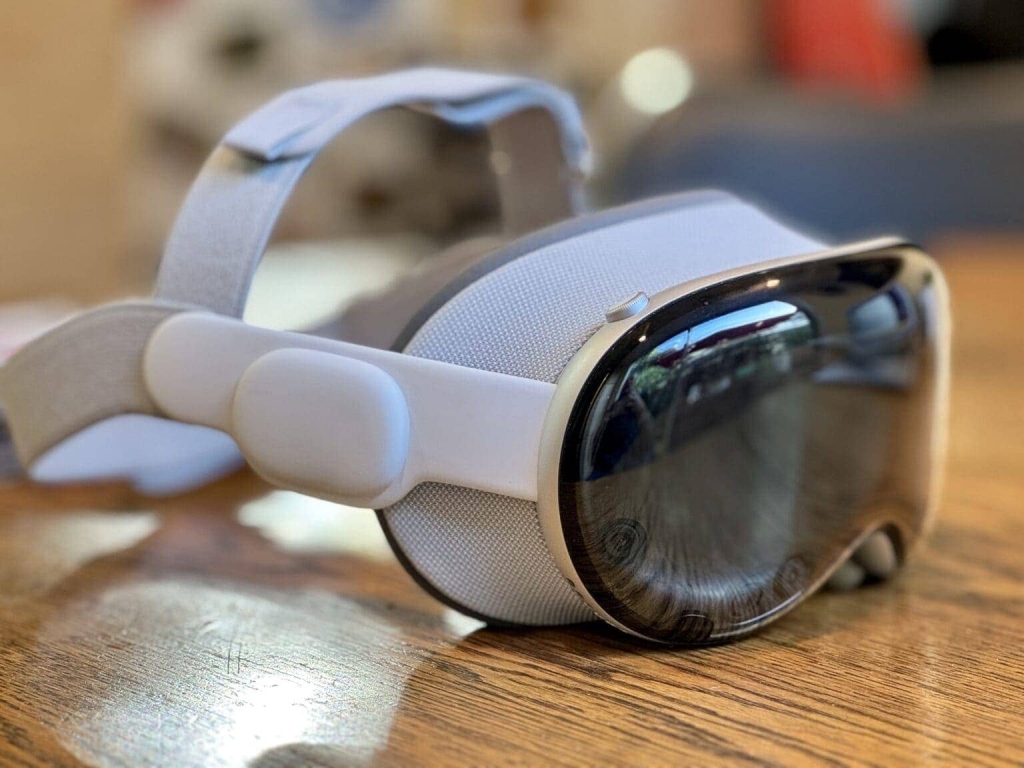
Nvidia’s RTX Graphics Cards Now Stream High-Fidelity Content to Apple Vision Pro via CloudXR
In a groundbreaking collaboration announced at Nvidia’s GTC conference in San Jose, Nvidia’s RTX graphics cards can now stream high-fidelity, immersive content directly to Apple Vision Pro headsets through Nvidia CloudXR. This technological marriage between Nvidia’s rendering powerhouse and Apple’s spatial computing platform represents a significant leap forward for both enterprise applications and consumer experiences.
What Nvidia CloudXR for visionOS Actually Does
At the heart of this announcement lies Nvidia CloudXR 6.0, a sophisticated streaming framework that handles the computationally intensive tasks of graphically demanding games, simulations, and professional 3D applications. Whether running on a local RTX-powered PC or in the cloud, CloudXR processes the heavy lifting and then wirelessly pipes the rendered output to Apple Vision Pro. The headset itself becomes essentially a high-fidelity display—it doesn’t need to crunch the numbers, just showcase the results.
This architecture could dramatically expand the range of immersive content available to Vision Pro users, from photorealistic automotive design reviews to high-end gaming experiences that would otherwise be impossible on a standalone headset.
The integration is natively built into visionOS and includes support for foveated streaming, a clever optimization technique that intelligently adjusts rendering resolution based on where the user is approximately looking. Crucially, Nvidia emphasizes that this gaze data is strictly protected—Apple’s privacy architecture ensures the application never actually knows where your eyes are pointed. The app only receives the optimized stream, maintaining user privacy while delivering the ultralow latency required for comfortable, photorealistic immersion.
For developers, CloudXR 6.0 is now available as a native streaming framework for Swift, Apple’s programming language for visionOS, iOS, iPadOS, and other platforms. Swift developers can now stream and build high-fidelity consumer and enterprise applications directly within Xcode, Apple’s integrated development environment. This seamless integration means visionOS developers don’t need to learn new tools or wrestle with separate SDKs—CloudXR slots naturally into their existing workflow.
The Enterprise Angle: Automotive, Healthcare, Aviation
The announcement is particularly heavy on enterprise use cases, and for good reason. This is where the pairing of Vision Pro’s spatial computing capabilities and Nvidia’s rendering muscle becomes most immediately compelling.
Automotive companies including Kia, BMW Group, Rivian, and Volvo Group are already leveraging this integration through Autodesk VRED and Innoactive’s XR streaming solutions to visualize massive 3D models with RTX-powered ray tracing at true 1:1 scale inside Vision Pro. Rather than gathering around a screen or physical clay model, design teams can essentially walk around photorealistic, full-size virtual cars together—collaborating in ways that were previously impossible.
Pharmaceutical company Roche, working with Innoactive, uses Autodesk Revit software, Nvidia Omniverse libraries, and CloudXR for visionOS to simulate lab layouts before construction begins. Manufacturer Foxconn employs the same pipeline for factory-floor walkthroughs, letting designers explore and optimize facilities before they’re built. The common thread across these applications is the elimination of expensive, late-stage physical prototypes by making digital models feel real enough to evaluate confidently.
What It Means for Consumers and Simulation Fans
Beyond enterprise workflows, CloudXR for visionOS also enables simulation enthusiasts to connect RTX-powered titles like iRacing and X-Plane to Vision Pro. This opens the door to 4K immersive gaming and flight simulation without compromise. If you’ve already invested in a high-end Nvidia GPU for your gaming or simulation rig, Vision Pro can now plug into that investment rather than demanding a separate, self-contained experience.
This represents a meaningful shift in how the headset can be positioned. Vision Pro has sometimes struggled against the perception that it’s a standalone device limited to whatever its onboard chip can handle. CloudXR reframes it as a display and interaction layer for much more powerful hardware, effectively turning your expensive gaming PC into a cloud rendering farm for your headset.
The Privacy Piece
One recurring theme in both Nvidia’s and Apple’s framing is that gaze data—the information about exactly where a user’s eyes are focused, which enables foveated streaming to work—is never exposed to the application layer. Approximate gaze data is processed on-device by visionOS to optimize the stream, but it’s never passed to the application itself. This protects user privacy while maintaining the ultralow latency required for comfortable, photorealistic immersion.
For enterprise deployments, where employees may be using the headset in sensitive design or data environments, that assurance carries extra weight. Companies can leverage the performance benefits of gaze tracking without worrying about applications collecting or misusing that data.
Nvidia CloudXR for visionOS: Timing and Availability
Developers can get the CloudXR SDK now at developer.nvidia.com. The consumer-facing visionOS 26.4 update that supports these features, along with partner apps like Immersive for Autodesk VRED, should arrive this spring.
For Apple developers already working in Swift and Xcode, the on-ramp is relatively low—there’s no new language to learn, no separate SDK to wrestle with. For Vision Pro owners with access to a modern Nvidia GPU, the upgrade in what the headset can do may arrive as a free software update, effectively future-proofing their investment.
This collaboration between Nvidia and Apple represents more than just a technical achievement—it’s a philosophical alignment that could reshape how we think about spatial computing, gaming, and professional visualization. By combining Apple’s design excellence and privacy focus with Nvidia’s raw computational power, both companies are creating something that’s greater than the sum of its parts.
Tags: Nvidia CloudXR, Apple Vision Pro, RTX graphics cards, spatial computing, foveated streaming, visionOS, Swift development, enterprise XR, automotive design, simulation gaming, privacy-focused technology, Nvidia GTC, 3D visualization, cloud rendering, immersive content
Viral Phrases: “game-changing collaboration,” “future of immersive computing,” “enterprise meets consumer tech,” “privacy-first spatial computing,” “rendering revolution,” “design without limits,” “simulation without compromise,” “the headset that keeps getting better,” “where Apple meets Nvidia,” “virtual reality reimagined”
,


Leave a Reply
Want to join the discussion?Feel free to contribute!