
SEC approves Nasdaq’s move to allow tokenized securities trading
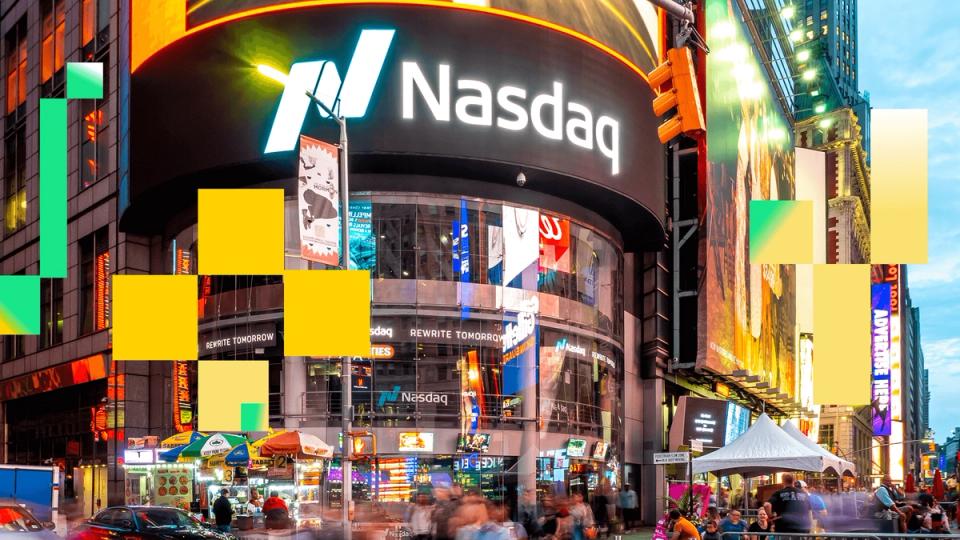
SEC Greenlights Nasdaq’s Bold Move to Tokenize U.S. Stocks — A Blockchain Revolution for Wall Street
In a landmark decision that could forever reshape the landscape of American finance, the U.S. Securities and Exchange Commission (SEC) has officially approved Nasdaq’s groundbreaking proposal to allow certain securities to trade in tokenized form. This move marks a pivotal step toward integrating blockchain technology directly into the heart of U.S. equity markets, signaling a new era where traditional finance and decentralized innovation converge.
On Wednesday, the SEC gave its nod to Nasdaq’s plan, which will enable eligible Nasdaq participants to settle trades as blockchain-based tokens instead of relying on conventional book-entry systems. This decision is not just a regulatory milestone—it’s a bold leap into the future of trading, where speed, efficiency, and transparency take center stage.
The Mechanics of Tokenization
Under the newly approved framework, tokenized shares will trade seamlessly alongside traditional shares on the same order book, at the same price, and with identical rights. They will retain the same ticker symbols and CUSIP (Committee on Uniform Securities Identification Procedures) identification numbers, ensuring continuity and familiarity for investors. Crucially, these tokenized assets will adhere to existing market rules, maintaining the integrity and protections that investors have come to expect.
The process will be facilitated by the Depository Trust Company (DTC), which will handle the clearing and settlement of tokenized trades. This integration ensures that while the underlying technology is cutting-edge, the operational backbone remains robust and reliable.
Why This Matters
Tokenization of traditional assets—such as stocks, bonds, and funds—has rapidly emerged as one of the most dynamic sectors in the digital asset space. By converting real-world assets into blockchain-based tokens, the process enables near-instant, around-the-clock trading. This level of accessibility and efficiency could democratize investing, opening doors for a broader range of participants to engage with the market.
The SEC’s approval underscores confidence in the framework’s ability to meet investor protection standards. Surveillance, data reporting, and settlement timelines will remain intact, ensuring that the transition to tokenization does not compromise market stability or security.
A Broader Trend in Traditional Finance
Nasdaq’s move is part of a larger trend among major U.S. exchanges to embrace blockchain technology. Last week, Nasdaq announced it is developing a framework that would allow publicly listed companies to issue blockchain-based versions of their shares. In a strategic partnership, Nasdaq has teamed up with crypto exchange Kraken to distribute tokenized stocks globally, amplifying the reach and impact of this innovation.
Meanwhile, the Intercontinental Exchange (ICE), the parent company of the New York Stock Exchange (NYSE), has also entered the fray. ICE invested in crypto exchange OKX with plans to launch new tokenized stocks and crypto futures, signaling that Wall Street’s heavyweights are betting big on the future of blockchain.
The $126 Trillion Opportunity
The potential of this shift cannot be overstated. The U.S. equity market, valued at approximately $126 trillion, represents a colossal opportunity for blockchain integration. By tokenizing stocks, exchanges can unlock unprecedented liquidity, reduce settlement times from days to seconds, and lower costs for investors and institutions alike.
This isn’t just about technology—it’s about reimagining the very fabric of financial markets. Tokenization could pave the way for innovations like fractional ownership, enabling more people to invest in high-value assets that were previously out of reach. It could also facilitate cross-border trading with minimal friction, breaking down barriers that have long constrained global markets.
What’s Next?
As the pilot program unfolds, all eyes will be on how tokenization performs in real-world conditions. If successful, this initiative could serve as a blueprint for other exchanges worldwide, accelerating the adoption of blockchain across the financial sector.
For now, the approval is a clear signal that regulators are willing to embrace innovation, provided it aligns with investor protection and market integrity. It’s a delicate balance, but one that could yield transformative results.
Tags & Viral Phrases:
- SEC approves Nasdaq tokenization
- Blockchain stocks trading
- Tokenized securities
- Wall Street meets crypto
- $126 trillion equity market on blockchain
- Nasdaq Kraken partnership
- ICE invests in OKX
- Future of stock trading
- Fractional ownership revolution
- Around-the-clock trading
- Traditional finance meets DeFi
- Game-changing SEC decision
- Next-gen stock market
- Blockchain equity markets
- Digital asset boom
- NYSE parent embraces crypto
- Nasdaq blockchain framework
- Tokenization of assets
- Financial markets 2.0
- Crypto and stocks unite
,


Leave a Reply
Want to join the discussion?Feel free to contribute!