
Why the world doesn’t recycle more nuclear waste
The Nuclear Waste Paradox: Why We Don’t Recycle More of It
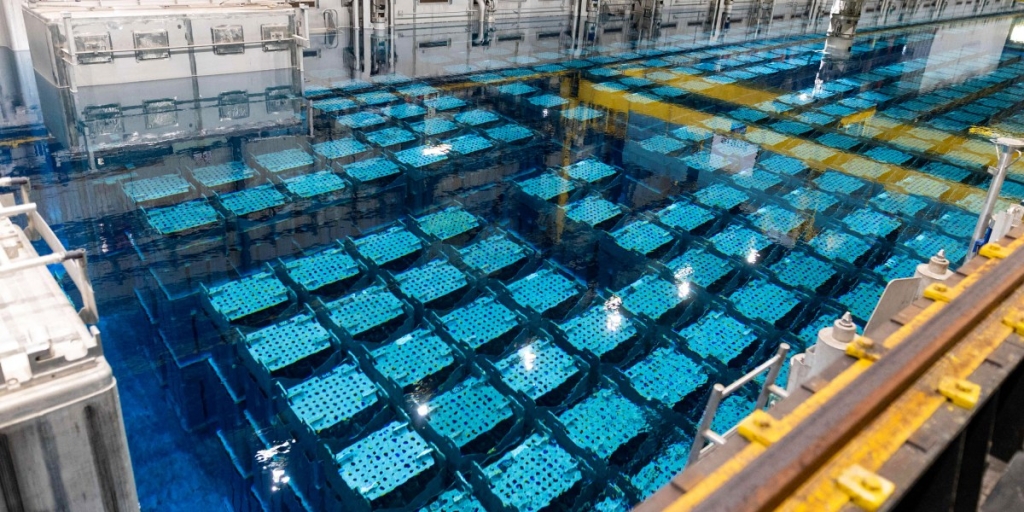
When spent nuclear fuel is removed from reactors, it still contains a significant amount of usable uranium—enough to make anyone wonder why we don’t simply recycle it. The answer is far more complex than it might initially appear, involving a delicate balance of economics, technology, and practical limitations that have kept the nuclear industry from establishing a truly closed fuel cycle.
The potential benefits are compelling. Reprocessing spent nuclear fuel could dramatically reduce both the volume of waste requiring long-term storage and the demand for newly mined uranium. Yet despite these advantages, the practice remains limited globally, with only a handful of countries maintaining significant reprocessing capabilities.
France stands as the world’s leader in nuclear fuel reprocessing, operating the La Hague facility in northern France. This plant can handle approximately 1,700 tons of spent fuel annually, representing a substantial fraction of the global reprocessing capacity. The facility employs a well-established technique known as PUREX (Plutonium Uranium Redox EXtraction), which has been the backbone of commercial reprocessing since the 1950s.
The PUREX process begins with dissolving spent fuel in nitric acid, creating a solution from which various elements can be chemically separated. Through a series of solvent extraction cycles, the process isolates uranium and plutonium from the remaining fission products and minor actinides. The plutonium is then converted into mixed oxide (MOX) fuel—a blend of plutonium and depleted uranium that can be used in conventional nuclear reactors, either as a supplement to traditional uranium fuel or, in specialized reactor designs, as the primary fuel source. The recovered uranium undergoes re-enrichment to produce fresh low-enriched uranium fuel suitable for standard reactors.
This approach offers clear advantages. By recovering valuable fissile materials, reprocessing reduces the immediate volume of high-level waste requiring disposal and decreases the need for uranium mining, which carries its own environmental impacts. The process also provides a strategic buffer against uranium supply disruptions and price volatility.
However, the reality of nuclear fuel reprocessing is far more nuanced than the simple concept of recycling might suggest. Allison Macfarlane, former chair of the U.S. Nuclear Regulatory Commission and current director of the School of Public Policy and Global Affairs at the University of British Columbia, points out a critical limitation: while reprocessing reduces waste volume, it doesn’t necessarily reduce the heat load that must be managed in geological repositories.
Geological repositories—deep underground facilities designed to isolate nuclear waste for thousands of years—are typically constrained by heat rather than volume. Spent nuclear fuel generates heat through radioactive decay, and this thermal output must remain within safe limits to prevent damage to the repository’s engineered barriers and surrounding rock. MOX fuel, particularly when it has been used once already, produces significantly more heat per unit mass than conventional spent fuel due to its higher plutonium content and different isotopic composition.
This creates a paradox: even if reprocessing reduces the total volume of waste, the heat-generating characteristics of MOX fuel mean it may occupy as much or more space in a geological repository than the original spent fuel would have. In some cases, the increased heat output could actually reduce the repository’s overall capacity, making the net benefit of reprocessing less clear than it initially appears.
The technical challenges extend beyond heat management. The uranium recovered through PUREX contains various isotopes that are difficult and expensive to separate, including uranium-232 and uranium-236. These contaminants make the recovered uranium unsuitable for direct reuse in most reactor types without extensive additional processing. France currently stockpiles this recovered uranium, viewing it as a strategic reserve for potential future use, and has historically exported some to Russia for enrichment—though this practice raises questions about the true environmental benefits of reprocessing when considering the full fuel cycle.
Perhaps most significantly, the recycling loop breaks after just one additional use. While MOX fuel can be burned in conventional reactors, the resulting spent MOX fuel presents unique challenges for further reprocessing. The plutonium in used MOX fuel has a different isotopic composition than what was originally recovered, containing a higher proportion of non-fissile isotopes that make it less suitable for reuse. The process of separating these isotopes becomes increasingly difficult and expensive with each cycle.
This limitation means that even in the most optimistic scenario, nuclear fuel can only be recycled once or twice before it must be disposed of permanently. The dream of a truly closed nuclear fuel cycle—where materials circulate indefinitely with minimal waste—remains elusive with current technology.
Economic factors also weigh heavily against widespread reprocessing. Building and operating reprocessing facilities requires massive capital investment, and the recovered materials must compete in markets already supplied by established uranium mining and enrichment industries. The costs of handling, transporting, and processing radioactive materials add significant overhead, and the price of uranium has historically been low enough that recycling rarely makes financial sense without government subsidies or policy mandates.
Security concerns compound these economic challenges. The PUREX process separates pure plutonium, which could theoretically be diverted for weapons use. This creates proliferation risks that must be carefully managed through international safeguards and security measures, adding further complexity and cost to reprocessing programs.
The United States, once a leader in nuclear technology, abandoned commercial reprocessing in the 1970s due to proliferation concerns and economic factors. Other countries have taken different paths: Japan invested heavily in reprocessing infrastructure but has struggled with technical problems and changing public opinion following the Fukushima disaster. The United Kingdom has closed its reprocessing facilities, and Russia’s program operates under different economic and political conditions than those in Western democracies.
Looking forward, advanced reactor designs and new fuel cycle concepts offer potential solutions to some of these challenges. Fast reactors, which can use a wider range of fuel types and achieve better fuel utilization, could theoretically close the fuel cycle more completely. However, these technologies remain largely experimental or in early commercial deployment, and they face their own technical, economic, and regulatory hurdles.
The question of why we don’t recycle more nuclear waste ultimately comes down to a complex interplay of factors: the technical limitations of current reprocessing technology, the economic realities of competing with established fuel supply chains, the physical constraints of waste disposal, and the political and security considerations that shape nuclear policy. While reprocessing offers genuine benefits in terms of resource conservation and waste volume reduction, it falls far short of the ideal of complete recycling that many people envision when they first learn about the practice.
As the world grapples with climate change and the need for reliable, low-carbon energy sources, these questions about nuclear fuel cycles become increasingly relevant. The nuclear industry continues to evolve, with new reactor designs, fuel concepts, and waste management strategies under development. Whether future innovations will finally enable the truly closed fuel cycle that has long been promised remains one of the most important unanswered questions in nuclear energy.
Tags and Viral Phrases:
nuclear waste recycling, spent fuel reprocessing, PUREX process, MOX fuel, La Hague plant, nuclear fuel cycle, geological repository, Allison Macfarlane, nuclear proliferation, fast reactors, closed fuel cycle, uranium recovery, nuclear energy economics, radioactive waste management, nuclear technology innovation, energy sustainability, climate change solutions, nuclear policy, strategic uranium stockpile, advanced reactor designs, nuclear waste paradox, heat generation in spent fuel, nuclear security concerns, fuel utilization efficiency, nuclear industry evolution.
,


Leave a Reply
Want to join the discussion?Feel free to contribute!