
Appeals court clears way for Nevada to temporarily ban prediction market Kalshi
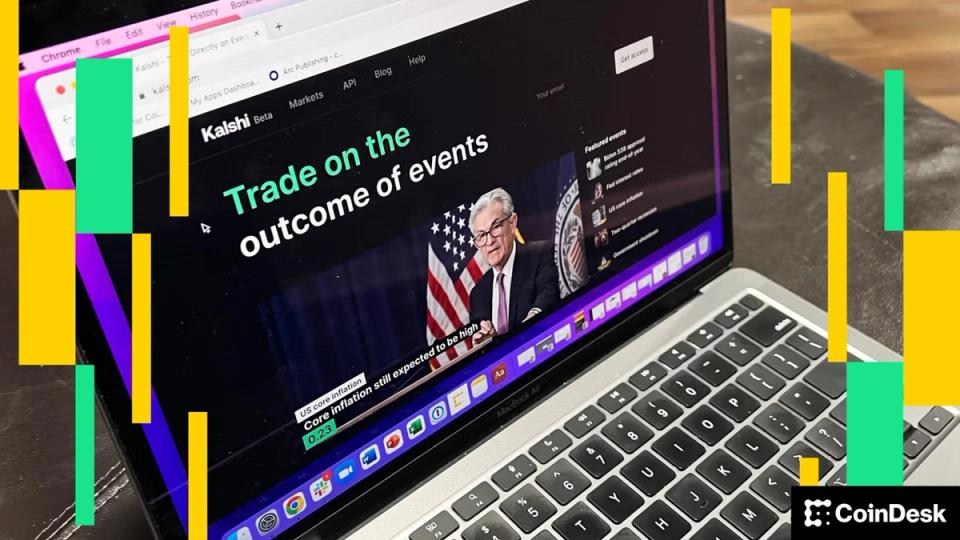
Kalshi Faces Imminent Nevada Shutdown as Federal Appeals Court Denies Emergency Stay
In a dramatic turn of events that could reshape the future of prediction markets in the United States, federal appeals court judges have denied Kalshi’s emergency motion for an administrative stay, paving the way for Nevada regulators to potentially shut down the entire platform statewide within days.
The Ninth Circuit Court of Appeals panel issued its ruling Thursday, rejecting Kalshi’s plea to halt what the company describes as an unprecedented regulatory assault that could effectively ban all event contracts—not just sports-related offerings—in the Silver State.
“This isn’t just about sports predictions anymore,” said a source familiar with the case who spoke on condition of anonymity. “Nevada regulators are essentially arguing they can shut down an entire federally-regulated financial exchange because some of its contracts might touch on topics they consider gambling-adjacent.”
The dispute traces back to March when the Nevada Gaming Control Board issued a cease-and-desist order targeting Kalshi’s sports-related prediction contracts. However, Kalshi claims Nevada subsequently sought a temporary restraining order that would prohibit all event contracts, representing a massive expansion of the original complaint.
Kalshi attempted to move the case to federal court, arguing that the Commodity Futures Trading Commission has exclusive jurisdiction over prediction markets as commodity futures contracts. But without the administrative stay, the case will likely return to Nevada state court, where Kalshi fears it could face conflicting rulings across multiple jurisdictions.
In its March 13 appeal, Kalshi warned of “imminent harm” if the court didn’t intervene. The company outlined a nightmare scenario where it could find itself simultaneously litigating the same jurisdictional question in four different venues: Nevada state court, Nevada federal court, and two separate federal appeals court cases.
“The risk of conflicting decisions is not theoretical,” Kalshi’s filing stated. “The state court could rule that the Commodity Exchange Act doesn’t preempt state gambling laws, while a federal appeals court could reach the exact opposite conclusion in a related case.”
Gaming attorney Dan Wallach, a prominent voice in the prediction market legal battles, painted a stark picture of what’s coming. In a post on social platform X, he explained that a temporary restraining order would force Kalshi to completely exit Nevada for at least two weeks while a preliminary injunction hearing proceeds.
“The TRO could come down literally any day now,” Wallach wrote. “That means Kalshi users in Nevada would wake up one morning to find the entire platform inaccessible in their state.”
The stakes extend far beyond Nevada’s borders. Over a dozen states have launched similar actions against prediction market providers, with regulators arguing they maintain jurisdiction over any product that resembles traditional gambling—even when those products operate under federal commodity trading regulations.
The Commodity Futures Trading Commission has vigorously defended its turf, arguing it alone has authority to regulate prediction markets as futures contracts. The CFTC even filed an amicus brief in one federal case supporting this position and recently signed a memorandum of understanding with Major League Baseball.
That MLB-CFTC agreement came on the same day the league announced a partnership with Polymarket, another prediction market platform. The timing wasn’t coincidental—it represented a coordinated effort to establish federal regulatory authority over these emerging markets.
Industry observers note this battle represents a fundamental clash between state gambling regulators and federal commodity regulators over who controls the future of prediction markets. The outcome could determine whether these platforms can operate nationwide or face a patchwork of state-by-state restrictions.
For Kalshi, the immediate concern is survival in Nevada. The company has built a business model around offering contracts on everything from economic indicators to political events to sports outcomes. Losing access to Nevada’s market would be painful; losing the legal precedent could threaten its entire operation.
“This is regulatory whack-a-mole at its worst,” said one financial technology analyst who tracks the space. “Every time these companies think they’ve established their legal footing, another state regulator pops up with a new theory of why they should be shut down.”
The irony isn’t lost on industry participants that Nevada—home to Las Vegas and the most gambling-friendly jurisdiction in America—is leading the charge against prediction markets. Critics argue this reveals the protectionist interests of traditional gambling operators who view these new platforms as competitive threats.
As the temporary restraining order looms, Kalshi users in Nevada are left wondering whether they’ll wake up tomorrow to find their accounts frozen and their ability to trade event contracts eliminated. The company hasn’t announced specific contingency plans, but sources suggest they’re preparing for the worst-case scenario.
With the federal appeals court’s denial, the clock is ticking. Nevada regulators could file their temporary restraining order at any moment, potentially shutting down Kalshi statewide before the weekend. For a company that’s raised hundreds of millions in venture capital and positioned itself as the future of event-based trading, this represents an existential threat delivered through the most traditional of venues: a state courtroom in America’s gambling capital.
The broader prediction market industry watches nervously, knowing that if Nevada succeeds in shutting down Kalshi entirely, other states will likely follow suit with similar actions, potentially fragmenting what could be a transformative financial technology into isolated pockets of availability dictated by state regulators rather than federal law.
Tags: Kalshi, prediction markets, Nevada Gaming Control Board, CFTC, commodity futures, event contracts, temporary restraining order, regulatory battle, federal jurisdiction, state gambling laws, Polymarket, Major League Baseball, legal showdown, futures trading, gambling regulation
Viral Phrases: “regulatory whack-a-mole,” “Nevada regulators are essentially arguing they can shut down an entire federally-regulated financial exchange,” “the most gambling-friendly jurisdiction in America is leading the charge against prediction markets,” “wake up one morning to find the entire platform inaccessible,” “existential threat delivered through the most traditional of venues,” “patchwork of state-by-state restrictions,” “transformative financial technology,” “fragmenting what could be a revolutionary market”
,
Leave a Reply
Want to join the discussion?Feel free to contribute!