
DoorDash launches Tasks
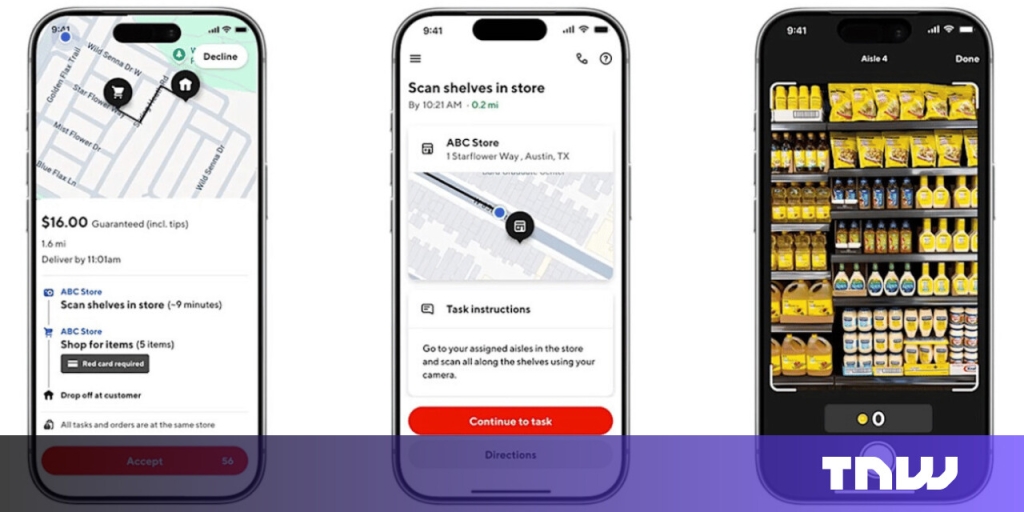
DoorDash Launches “Tasks” – Turning 8 Million Gig Workers Into AI Data Collection Agents
In a move that blurs the lines between food delivery and artificial intelligence infrastructure, DoorDash has officially launched Tasks, a new platform that transforms its vast network of gig workers into on-demand human sensors for the physical world. The implications? Gig workers are now being paid to train the very AI systems that could one day replace them.
Here’s how it works: A DoorDash courier straps on a body camera, washes a few dishes, holds each one up to the lens for a few seconds, and earns a few dollars. That footage—mundane, specific, and reproducible at scale—is exactly what AI and robotics companies need to train models that understand physical tasks. And with eight million Dashers already dispersed across almost every U.S. ZIP code, DoorDash has built the most efficient distributed data collection network in the country.
The Two-Tier System: Inside the Dasher App and Beyond
Tasks operates on two levels. The first is a set of new task types inside the existing Dasher app: taking photos of restaurant dishes to populate menus, photographing hotel entrances so future drivers can find drop-off points, or scanning supermarket shelves for inventory checks. The second is a standalone Tasks app, designed for activities with no delivery component at all—filming household chores, recording unscripted conversations in other languages, or, in a partnership that drew attention back in February, closing open doors on Waymo’s self-driving cars in Atlanta.
That Waymo partnership is particularly telling. When a Waymo passenger leaves a vehicle door ajar—a safety trigger that prevents the car from moving—nearby Dashers receive a notification and can earn around $11 to drive over and close it. It’s a small transaction with outsized symbolic weight: gig workers, often cited as the group most exposed to displacement by automation, being paid by an autonomous vehicle company to solve a problem its own technology cannot yet handle. Waymo has said future vehicles will include automated door closures.
The Infrastructure Advantage
For DoorDash, the logic is straightforward. The company has spent more than a decade building the operational infrastructure to dispatch workers to specific physical locations, verify completion, and handle payments at scale. That’s exactly the capability that AI data collection requires, and it’s not something that can be replicated quickly by companies that don’t already have a network like it.
“There are more than 8 million Dashers who can reach almost anywhere in the U.S. and who want to earn flexibly beyond delivery,” said Ethan Beatty, General Manager of DoorDash Tasks, in a statement. “That’s a powerful capability to digitize the physical world.”
The scale claim is significant: companies like Scale AI built entire businesses around remote data labeling workforces, and DoorDash is arriving in that market with a distribution network already in place, operating in-person rather than online, and capable of collecting the kind of embodied, physical-world data that is increasingly scarce and valuable.
DoorDash says Dashers have completed more than two million tasks since 2024, a figure that covers the earlier, lower-profile incarnation of the program before Thursday’s formal launch. The company is not the only delivery platform to have moved in this direction: Uber and Instacart have both introduced similar programs over the past year.
The Unanswered Questions
There are questions the launch does not answer. DoorDash has not published detail on how it handles consent, data retention, or the rights workers have over footage of themselves in their own homes. The exclusion of California, New York City, Seattle, and Colorado—jurisdictions with significantly stricter gig worker and data privacy regulation than the rest of the country—is conspicuous.
Pay is determined upfront on a per-task basis, weighted for effort and complexity, but no average rates or floor guarantees have been disclosed. For a program that requires workers to bring cameras into their kitchens and record their own voices, those are not minor details.
DoorDash says it plans to expand into more task types and countries. For now, what it has launched is a version of something the technology industry has been trying to build for years: a human sensing layer over the physical world, paid by the task, available on demand.
Tags: DoorDash Tasks, AI data collection, gig economy, Waymo partnership, human sensors, robotics training data, distributed workforce, physical world digitization, gig worker automation, data economy 2026
Viral Phrases: “Turning gig workers into AI data collection agents,” “Paid to train the AI that could replace you,” “The human sensing layer over the physical world,” “Eight million Dashers as distributed sensors,” “Closing Waymo doors for $11,” “The infrastructure advantage nobody else has,” “Consent questions in the gig data economy,” “California and NYC excluded—why?” “The mundane footage that trains tomorrow’s robots,” “Gig workers as the new data labelers”
Viral Sentences: “DoorDash just launched a product that turns its 8 million gig workers into on-demand human sensors for the physical world.” “The same workers who deliver your food are now being paid to film their own kitchens and train AI systems.” “Waymo is paying Dashers $11 to close car doors—because its self-driving cars can’t figure it out yet.” “DoorDash has built the infrastructure for AI data collection without even trying to.” “The gig economy’s next evolution: becoming the nervous system for artificial intelligence.” “What happens when the workers collecting AI training data are the same ones most likely to be replaced by it?” “DoorDash Tasks isn’t just a new feature—it’s a fundamental shift in how we value human labor in the age of AI.” “The company that delivers your dinner is now delivering the data that will power tomorrow’s robots.” “In 2026, the most valuable real estate isn’t physical—it’s the distributed network of human eyes and hands that can digitize the world on demand.” “DoorDash didn’t just launch a product; it launched a new economic model where human labor becomes the sensor network for artificial intelligence.”
,


Leave a Reply
Want to join the discussion?Feel free to contribute!