
Fitbit’s Personal Health Coach Will Soon Understand Your Medical Records
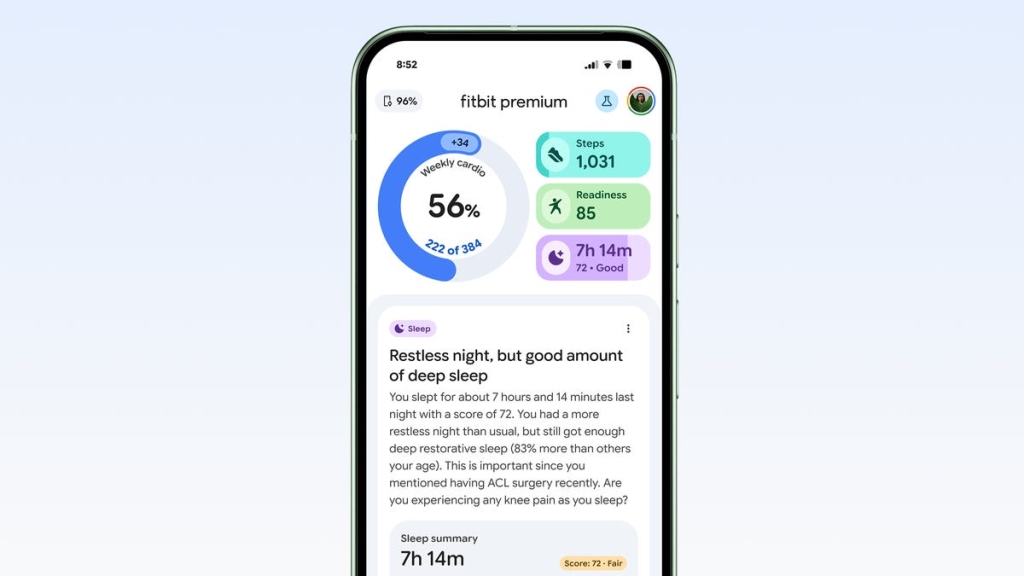
Google Fitbit’s AI Health Coach Gets Major Upgrade: Sleep Tracking, Medical Records Integration, and More
Google is making significant strides in the world of wearable health technology with a major update to its AI-powered health coach, Coach, for Fitbit users. This update, announced at Google’s annual The Check Up health event, brings enhanced sleep tracking, medical records integration, and the ability to connect continuous glucose monitors (CGMs) to the Fitbit app. These improvements aim to provide users with more personalized and comprehensive health insights, transforming their fitness trackers into powerful health advisors.
Enhanced Sleep Tracking: A 15% Boost in Accuracy
One of the most significant updates to Coach is the improved sleep tracking capabilities. Google has implemented a new algorithm that delivers a 15% increase in sleep stage accuracy, based on comparisons between the latest and previous algorithms across compatible Pixel and Fitbit devices. This enhancement allows Coach to better differentiate between when you’re trying to sleep and when you’re actually asleep. It can now detect napping, interrupted sleep, and transitions between sleep stages with greater precision.
These improvements contribute to a revamped Sleep Score that focuses not only on the amount of sleep you get but also on how long it takes you to fall asleep. With more comprehensive sleep data, Coach can provide more informed insights and recommendations for better sleep, helping users optimize their rest and overall well-being.
Medical Records Integration: A New Era of Personalized Health Insights
In a groundbreaking move, Google is introducing the ability for US Fitbit Premium subscribers to link their medical records to the Fitbit app. This feature, set to launch in April, allows Coach to access information such as medications, lab results, and doctor visit history. The integration was developed in collaboration with B. Well Connected Health, an AI-powered digital health platform, and Clear, the identity verification platform known for its airport security services.
To link medical records, users can search for their doctor in the Fitbit app and connect to their member portal. Alternatively, those who use Clear for identity verification can have their medical records searched on their behalf. Availability of this feature will depend on the user’s healthcare provider.
Once linked, Coach can use your medical history to create more personalized guidance that combines your lab results, Fitbit data, and other relevant information from your records. This integration represents a significant step towards a more holistic approach to health management, where wearable data and medical records work together to provide a comprehensive view of an individual’s health.
In the coming months, users will be able to share these records and summaries with their healthcare providers or family members using a QR code or Smart Health Link URL. This feature could streamline communication between patients and healthcare providers, potentially leading to more informed and efficient care.
Privacy Concerns and Data Security
As with any feature that involves sensitive health data, privacy is a paramount concern. Fitbit assures users that medical records are securely stored and that individuals have control over how their data is used, shared, and deleted. The company also states that medical records will not be used for advertising purposes.
However, privacy experts caution users to think carefully before uploading medical information into an AI tool. It’s crucial to understand the implications of sharing such sensitive data and to weigh the potential benefits against the risks. Users should also be aware that AI health coaches are not a replacement for professional medical advice and should not make any changes to their lifestyle or health routine without consulting their doctor.
Continuous Glucose Monitor Integration: Expanding Health Insights
In April, Fitbit members in the public preview will also be able to connect a continuous glucose monitor (CGM) to the Fitbit app via Health Connect. This feature allows users to view all their health data from compatible apps in one place. Any CGM that supports a Health Connect integration will be included, such as Dexcom and Abbott Lingo.
With this connection, Fitbit members can ask their Coach for more information about how their workouts or meal choices affect their glucose levels. This integration could be particularly beneficial for individuals with diabetes or those looking to optimize their diet and exercise routines for better glucose control.
The Future of Fitbit’s AI Health Coach
Google’s investment in health research, including predicting insulin resistance using wearable data, hypertension studies, and learning about AI performance in virtual care settings, gives us a glimpse into the future of Fitbit’s AI health coach. These research initiatives suggest that future updates may include more advanced predictive health features and improved virtual care capabilities.
As AI technology continues to evolve, we can expect Fitbit’s Coach to become even more sophisticated in its ability to provide personalized health insights and recommendations. The integration of medical records, sleep data, and other health metrics could lead to a more comprehensive understanding of an individual’s health, potentially enabling early detection of health issues and more proactive health management.
However, as these technologies advance, it will be crucial for companies like Google to maintain transparency about data usage, ensure robust privacy protections, and continue to emphasize that AI health coaches are tools to support, not replace, professional medical advice.
The evolution of Fitbit’s AI health coach represents a significant step forward in the integration of wearable technology and personal health management. As these tools become more advanced and comprehensive, they have the potential to empower individuals to take a more active role in their health and wellness. However, it’s essential to approach these technologies with a balanced perspective, recognizing their benefits while also being mindful of privacy concerns and the importance of professional medical guidance.
#Google #Fitbit #AIHealthCoach #SleepTracking #MedicalRecords #ContinuousGlucoseMonitor #HealthTech #WearableTech #PersonalHealth #DataPrivacy #HealthInsights #VirtualCare #DiabetesManagement #SleepOptimization #HealthResearch #PredictiveHealth #WellnessTech #FitnessTracker #HealthData #SmartHealth #MedicalIntegration #GlucoseMonitoring #HealthManagement #AIWellness #TechInnovation #DigitalHealth #HealthPrivacy #HealthcareTech #WellnessJourney #HealthOptimization,

Leave a Reply
Want to join the discussion?Feel free to contribute!