
Jumping into the deep end of my NCAA Pool with AI
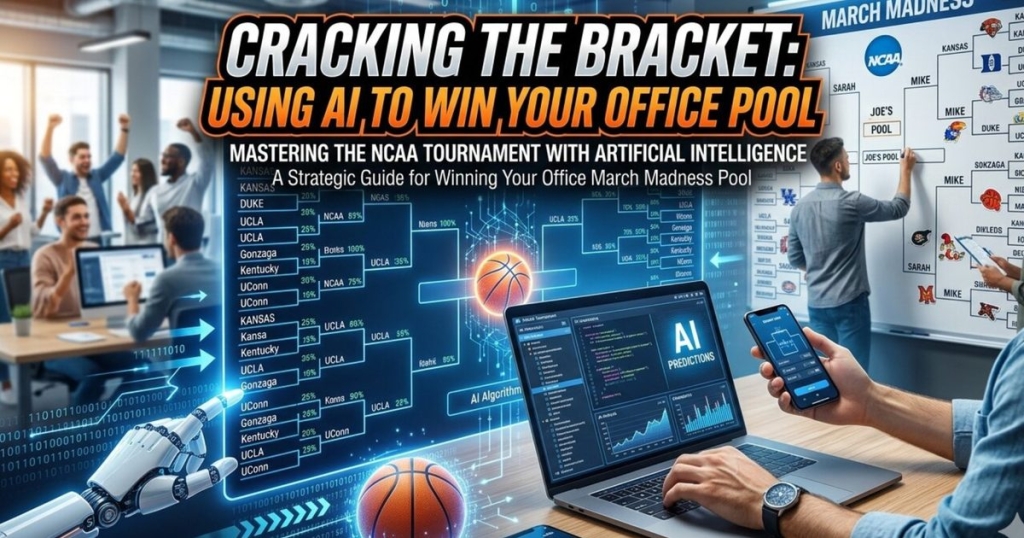
The Ultimate AI vs. Human Showdown: I Let ChatGPT Pick My March Madness Bracket
It’s a brave new world in college basketball fandom. After forty-plus years of filling out March Madness brackets—even winning a few (remember NC State in 1984?)—I decided to take the plunge and let artificial intelligence handle my picks this year. Like most casual fans, I watch some college hoops, usually just my three or four favorite teams and whoever they’re playing. I’ll catch the big national games on weekends, but that’s about the extent of my expertise.
So when I stare at that daunting bracket each year, I’m usually asking myself: Where is High Point University and who do they play? What about that dreaded 12/5 upset everyone talks about? Is it too chicken to pick all the #1 seeds to win? The anxiety is real, and my insight is minimal.
Jumping into the Deep End with AI
I asked ChatGPT how it would build a model to predict the NCAA tournament winner. The response alone was enough to make me say “wow.”
“I can absolutely help build one with you,” it replied. “From a simple seed-and-efficiency model to a more serious probability model using KenPom-style efficiency, pace, injuries, travel, coaching, and upset history. I can also help with bracket win probabilities, upset picks by round, Monte Carlo tournament simulation, Elo or logistic regression models, and spreadsheet-based prediction tools.”
ChatGPT considered team strength on a neutral court, including offensive and defensive efficiency, strength of schedule, consistency, and squad strength, among other factors. That ultimately turned into a set of predictions based on this equation:
It’s the considered matchups of two teams using these team ratings, using a logistic model.
Finally, it simulated the entire tournament based on this technique—not more than 50,000 times.
Trust the Algorithm or Your Gut?
I don’t know about you, but that’s working at a level of calculus and computing power that’s way above my skill level. Then ChatGPT delivered a brilliant nuance, essentially asking, “Is it more important to be right or to win money in your pool?”
The difference is crucial: if you only pick favorites, your percentage correct will be higher, but you won’t separate yourself from other players in the pool. You need to gamble on a couple of upsets to make money. Since I can enter two brackets in my most important pool—the one where you get teased mercilessly if your bracket sucks—I asked for one of each approach.
I almost completely followed ChatGPT’s recommendations. The exceptions were giving my three favorite teams a nod in the early rounds: Santa Clara, Gonzaga, and UCLA. I would love to be wrong, but I don’t expect to see any of them later in the tournament.
My plan is to track the success or failure of ChatGPT’s predictions here as we go through the tournament. You’ll be the first to know if ChatGPT makes me look like a fool. My fingers are crossed.
Tags: AI March Madness, ChatGPT bracket picks, machine learning college basketball, NCAA tournament predictions, artificial intelligence sports betting, bracketology 2.0, tech meets tradition, algorithmic advantage, data-driven picks, viral sports tech
Viral Phrases: “The machine is taking over March Madness,” “AI just dunked on my bracket,” “ChatGPT called my upset before it happened,” “I let the algorithm handle my bracket and now I’m either genius or fool,” “The future of bracketology is here,” “My bracket is now powered by GPT,” “Data beats decades of fandom,” “The ultimate man vs. machine sports showdown,” “AI doesn’t care about your favorite team,” “March Madness has a new coach: ChatGPT”
,


Leave a Reply
Want to join the discussion?Feel free to contribute!