
This Tiny Plant Could Help Crops Turn Sunlight Into Food Faster
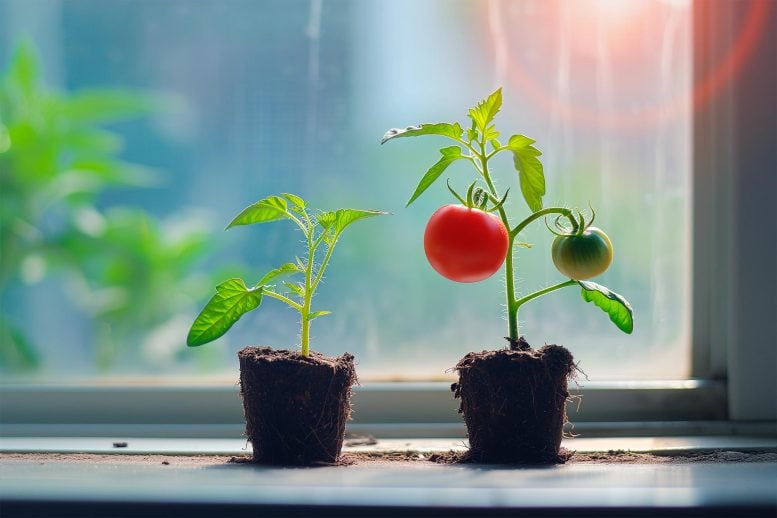
Tiny Plant’s Molecular “Velcro” Could Revolutionize How Crops Harness Sunlight
In a groundbreaking discovery that could reshape global agriculture, scientists have uncovered a remarkable molecular mechanism in a rare group of land plants—one that allows them to capture and convert sunlight into food far more efficiently than traditional crops. The secret lies in what researchers are calling a molecular “velcro,” a surprisingly elegant strategy that could one day be engineered into staple crops like wheat, rice, and corn, potentially boosting yields and resilience in the face of climate change.
The study, led by an international team of plant biologists, geneticists, and biochemists, focused on a tiny, often-overlooked plant species that thrives in challenging environments. Unlike most plants, which rely on relatively slow and energy-intensive processes to convert sunlight into usable energy, this plant employs a highly efficient molecular system that acts almost like a biological adhesive—hence the “velcro” analogy. This system allows the plant to rapidly and effectively bind carbon dioxide (CO2) from the air, accelerating the photosynthetic process and maximizing energy capture.
Photosynthesis, the process by which plants convert sunlight into chemical energy, is the foundation of life on Earth. However, it’s far from perfect. In most crops, the enzyme responsible for capturing CO2—RuBisCO—is notoriously inefficient, often wasting energy by binding to oxygen instead of carbon dioxide. This inefficiency limits crop productivity and is a major bottleneck in global food production. The newly discovered mechanism, however, appears to sidestep this limitation by using a specialized protein complex that acts like molecular velcro, tightly binding CO2 and channeling it directly to the photosynthetic machinery.
The implications of this discovery are profound. If scientists can successfully transfer this molecular “velcro” system to major crops, it could lead to a new generation of plants that grow faster, produce higher yields, and require less water and fertilizer. This would be a game-changer for agriculture, particularly in regions facing food insecurity or the impacts of climate change. Imagine wheat fields that produce 30% more grain per acre, or rice paddies that can thrive in hotter, drier conditions—all thanks to a molecular innovation borrowed from a tiny, unassuming plant.
The research team used advanced imaging techniques, including cryo-electron microscopy and X-ray crystallography, to unravel the structure of the molecular velcro system. They found that it consists of a network of proteins that form a highly organized, almost crystalline arrangement on the surface of the plant’s cells. This structure not only enhances CO2 capture but also protects the plant from environmental stressors like high temperatures and drought—a dual benefit that could make engineered crops far more resilient.
While the discovery is still in its early stages, the potential applications are vast. Agricultural biotech companies are already expressing interest in collaborating with the research team to explore how this molecular system could be integrated into commercial crops. However, significant challenges remain. Engineering such a complex system into plants that have evolved over millions of years is no small feat, and it will likely take years of research and testing before any genetically modified crops reach the market.
Critics of genetic modification may raise concerns about the safety and ethics of such interventions, but proponents argue that the benefits far outweigh the risks. With the global population projected to reach nearly 10 billion by 2050, and climate change threatening traditional farming practices, innovations like this could be essential to ensuring food security for future generations.
The discovery also highlights the importance of studying biodiversity and the hidden potential of even the smallest organisms. As one researcher put it, “This tiny plant has been quietly perfecting its molecular machinery for millions of years. By understanding and harnessing its secrets, we’re not just improving crops—we’re learning from nature’s own solutions to some of our biggest challenges.”
As the world grapples with the twin crises of hunger and environmental degradation, this tiny plant’s molecular “velcro” offers a glimmer of hope—a reminder that sometimes, the most transformative solutions come from the most unexpected places.
Tags & Viral Phrases:
- Molecular “velcro”
- Photosynthesis breakthrough
- Crop yield revolution
- Climate-resilient agriculture
- Tiny plant, big impact
- RuBisCO inefficiency solved
- Genetic modification for food security
- Cryo-electron microscopy discovery
- X-ray crystallography in plant science
- Biodiversity’s hidden potential
- Engineering nature’s solutions
- 2050 food crisis averted?
- Drought-resistant crops
- High-yield wheat and rice
- Sustainable farming innovation
- Plant biology game-changer
- Carbon capture efficiency
- Future of global agriculture
- Biotech meets nature
- Tiny plant, giant leap for crops
,


Leave a Reply
Want to join the discussion?Feel free to contribute!