
Nvidia has an OpenClaw strategy. Do you?
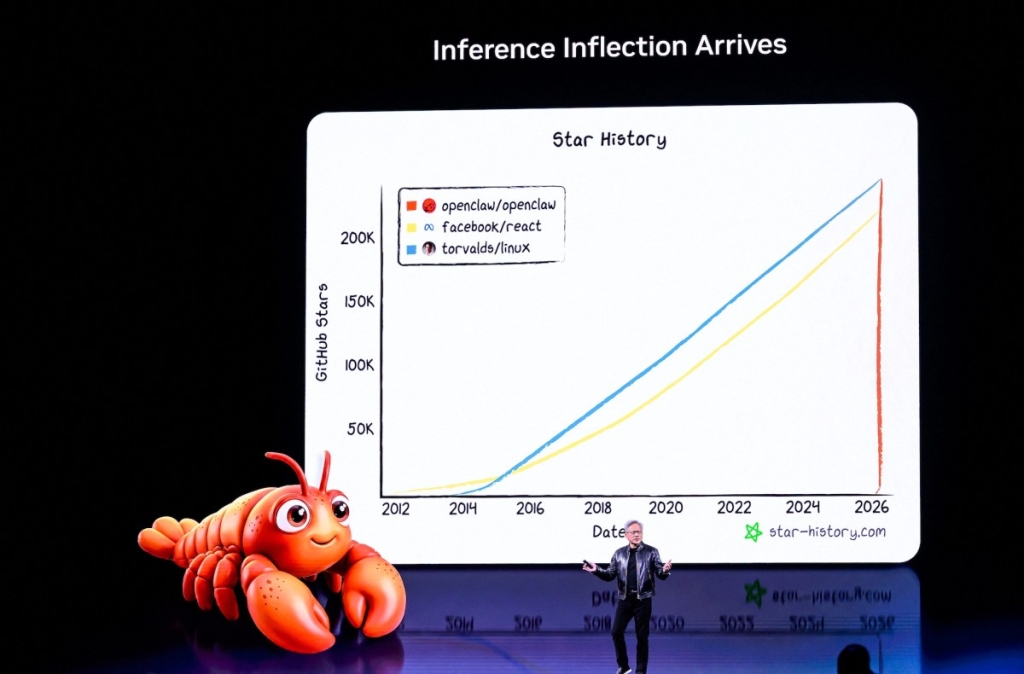
NVIDIA’s GTC 2026: A $1 Trillion Vision, an OpenClaw Strategy, and the Rise of AI Infrastructure Domination
At NVIDIA’s GTC 2026 conference, CEO Jensen Huang once again proved why he’s not just the face of the company, but the beating heart of the AI revolution. This time, he took the stage in his signature black leather jacket—part rockstar, part tech visionary—and delivered a marathon keynote that stretched for two and a half hours. But it wasn’t just the length that stunned the audience; it was the sheer audacity of the vision he laid out.
Huang didn’t just tease new products or incremental upgrades. He projected a staggering $1 trillion in AI chip sales by 2027, a figure so massive it almost defies comprehension. This wasn’t a forecast—it was a declaration. A roadmap for the next era of computing, where NVIDIA isn’t just a participant but the architect.
The Blackwell and Vera Rubin Sales Projections: A New Stratosphere
The centerpiece of Huang’s keynote was the unveiling of NVIDIA’s next-generation AI hardware: the Blackwell and Vera Rubin architectures. These aren’t just chips; they’re the engines of a new industrial revolution. Blackwell, with its unprecedented processing power, is designed to handle the most complex AI workloads imaginable. Vera Rubin, named after the pioneering astronomer, promises to push the boundaries of what’s possible in AI inference and training.
Huang’s projection of $1 trillion in sales isn’t just about hardware. It’s about the ecosystem NVIDIA is building—a web of software, platforms, and partnerships that make its chips indispensable. From data centers to autonomous vehicles, from healthcare to entertainment, NVIDIA is positioning itself as the foundational layer of the AI economy.
The OpenClaw Strategy: Security Meets Scalability
One of the most intriguing announcements was NVIDIA’s push for an “OpenClaw strategy.” This isn’t just a catchy phrase; it’s a comprehensive approach to AI infrastructure that addresses one of the industry’s biggest challenges: security. As AI systems become more powerful and pervasive, the risks of misuse, data breaches, and ethical lapses grow exponentially.
OpenClaw is NVIDIA’s answer. It’s a framework that combines open-source collaboration with proprietary security measures, ensuring that AI development is both innovative and safe. For startups and enterprises alike, this strategy could be a game-changer, offering a path to scalable AI without compromising on security.
The Olaf Robot: A Viral Moment with a Message
Huang closed his keynote with a bizarre yet memorable moment: a rambling Olaf robot that had to have its mic cut. While it might have seemed like a quirky stunt, it was a deliberate choice. The Olaf robot symbolized the future of AI—autonomous, unpredictable, and sometimes chaotic. It was a reminder that as we build these systems, we must also build the guardrails to keep them in check.
What It All Means for Startups
On the latest episode of TechCrunch’s Equity podcast, hosts Kirsten Korosec, Anthony Ha, and Sean O’Kane dissected the implications of NVIDIA’s announcements. The consensus? NVIDIA’s growing web of AI infrastructure partnerships is a double-edged sword for startups.
On one hand, it’s an opportunity. NVIDIA’s ecosystem offers startups access to cutting-edge hardware, software, and expertise that would be nearly impossible to develop in-house. On the other hand, it’s a challenge. As NVIDIA becomes more dominant, the barriers to entry in the AI space grow higher. Startups will need to find ways to differentiate themselves in a market increasingly shaped by NVIDIA’s vision.
Travis Kalanick’s Return: Atoms and the Robotics Revolution
The podcast also touched on another major story from the week: Travis Kalanick’s return to the tech scene with his new startup, Atoms. Kalanick, the former CEO of Uber, is back with a bold new mission: building a “wheelbase for robots.” Atoms aims to create the foundational hardware and software that will power the next generation of autonomous machines.
Kalanick’s track record is both inspiring and controversial, and his new venture is already making waves. The podcast hosts raised questions about Kalanick’s acquisitions along the way, speculating on how they’ll shape Atoms’ trajectory. Will Kalanick’s aggressive, Uber-era playbook work in the robotics space? Or will he need to adapt to a new set of challenges?
The Broader Implications
NVIDIA’s GTC 2026 wasn’t just a conference; it was a statement of intent. Huang’s vision of a $1 trillion AI economy is a call to action for the entire tech industry. It’s a reminder that we’re at the dawn of a new era, where AI isn’t just a tool but a transformative force.
For startups, the message is clear: adapt or be left behind. The opportunities are immense, but so are the risks. As NVIDIA continues to expand its influence, the companies that thrive will be those that can navigate this rapidly evolving landscape.
Listen to the Full Episode
For a deeper dive into these stories, listen to the full episode of Equity on YouTube, Apple Podcasts, Overcast, Spotify, and more. You can also follow Equity on X and Threads at @EquityPod.
Tags: NVIDIA, GTC 2026, Jensen Huang, AI chips, Blackwell, Vera Rubin, OpenClaw strategy, $1 trillion AI sales, robotics, Travis Kalanick, Atoms, Equity podcast, TechCrunch, AI infrastructure, autonomous vehicles, data centers, security, startups, innovation, tech industry, future of AI
Viral Phrases:
- “$1 trillion AI chip sales by 2027”
- “OpenClaw strategy: Security meets scalability”
- “Jensen Huang’s rockstar keynote”
- “Travis Kalanick’s return with Atoms”
- “The Olaf robot: A chaotic symbol of AI’s future”
- “NVIDIA’s ecosystem: The foundation of the AI economy”
- “Adapt or be left behind: The startup challenge”
- “The dawn of a $1 trillion AI era”
- “Building the wheelbase for robots”
- “AI’s transformative force: Opportunities and risks”
,


Leave a Reply
Want to join the discussion?Feel free to contribute!