
Google’s new AI ‘world model’ has seemingly spooked videogame investors, but it’s hard to know what it will actually lead to
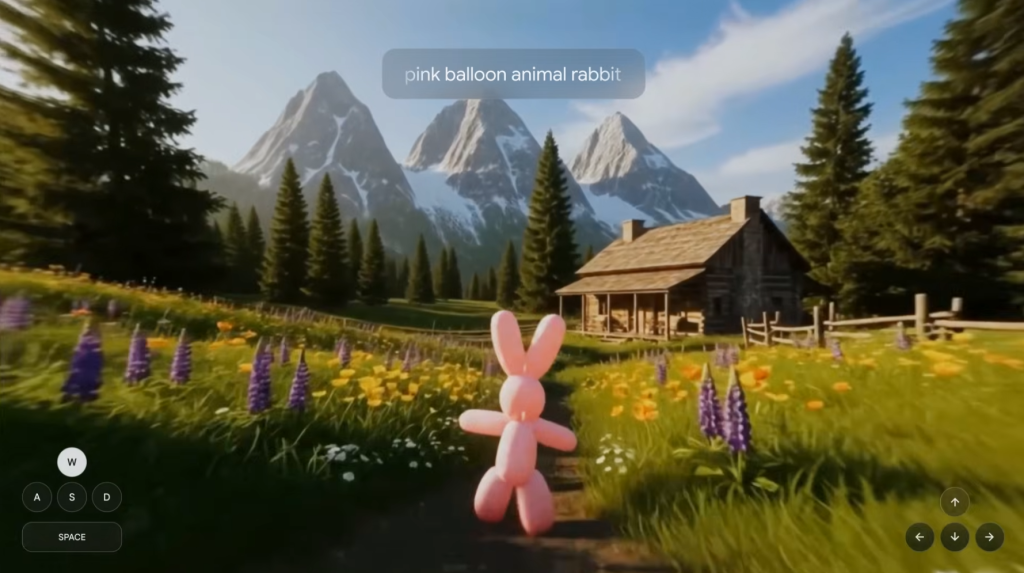
Google’s Project Genie 3: The AI That’s Trying to Build Infinite Worlds (and Scaring the Game Industry)
Google has unveiled its latest AI marvel, Project Genie 3, and it’s already causing ripples across the gaming industry. This experimental research prototype promises to create, explore, and remix interactive worlds on demand—but is it the future of gaming or just another overhyped tech demo?
What Is Project Genie 3?
Project Genie 3 is Google’s most advanced AI world-building model to date. Unlike traditional static 3D environments, Genie 3 generates the path ahead in real-time as you move and interact with the world. It simulates physics, handles dynamic interactions, and claims to maintain consistency across scenarios—from robotics and animation to exploring historical settings.
Google is offering access to this “experimental research prototype” through its $250/month AI Ultra subscription, positioning it as a premium tool for creators and enthusiasts alike.
The Good, The Bad, and The Copyright Infringement
The Verge got hands-on with Genie 3 and reported being able to generate “bad Nintendo knockoffs” including Mario 64 and The Legend of Zelda-style experiences. Before publishing, Google apparently intervened and stopped accepting prompts to recreate Mario 64 specifically.
The results are impressive in some ways—the model maintains continuity better than previous attempts and simulates physics reliably. However, The Verge found plenty of jank, including scenarios that failed to maintain continuity and overall experiences “much worse than an actual handcrafted video game.”
Why the Gaming Industry Is Panicking
As Seeking Alpha noted, game-related stocks like Unity and Take-Two dipped following the announcement. While it’s premature to attribute this solely to Project Genie, the anxiety is understandable.
A recent GDC survey revealed that more than half of game developers now view generative AI negatively—a dramatic increase from just two years ago. One developer put it bluntly: “I’d rather quit the industry than use generative AI.”
The concerns are multifaceted:
- Job displacement fears: Will AI replace level designers and world builders?
- Quality concerns: Can procedurally generated content match handcrafted experiences?
- Copyright nightmares: As developer Rami Ismail joked, “For once, CC: [email protected]”
The Technical Achievement (and Its Limitations)
Google claims Genie 3 can simulate any real-world scenario with breakthrough consistency. The model generates content in real-time as users move through environments, creating a sense of exploration rather than just displaying pre-rendered assets.
However, the current limitations are significant:
- Visual quality: Still far below handcrafted games
- Consistency issues: World elements can break or behave unpredictably
- Interaction depth: Limited compared to traditional game mechanics
- Processing requirements: Likely requires substantial computing power
The Bigger Picture: Cultural Domination or Creative Tool?
The announcement comes amid growing skepticism about Big Tech’s AI ambitions. Projects like Darren Aronofsky’s AI-generated American Revolution drama series (presented by Salesforce) have only intensified concerns that these tools are about cultural domination rather than advancing human interests.
Google frames Project Genie as a research prototype aimed at advancing human capabilities, but the $250/month price tag suggests commercial ambitions. Is this truly about empowering creators, or is it another step toward tech companies controlling the means of cultural production?
The Philosophical Question: Would You Even Want This?
Beyond the technical and ethical concerns lies a more fundamental question: If generative AI tools worked perfectly, would you actually want to use them for entertainment?
Consider the thought experiment: Imagine being able to type any scenario into your PC and instantly play it out in a custom simulation. It sounds like science fiction—but would it actually be satisfying?
The author of this piece wrestles with this question, noting that after the novelty wore off, they might get bored of asking AI to generate new Sherlock Holmes mysteries or other scenarios. They haven’t replaced listening to music they like with asking AI music generators to create music they like—so why would gaming be different?
The Potential Middle Ground
Perhaps the answer lies in using AI as a tool for human creators rather than as the end product itself. But even this approach raises questions: When prompts are tiny compared to what comes back from an AI data center, can we accept a creative process that relies so heavily on machine predictions?
The Bottom Line
Project Genie 3 represents a significant technical achievement in AI-generated interactive content. It’s more advanced than previous attempts at procedural world generation, with better consistency and physics simulation. However, it’s still far from replacing handcrafted gaming experiences, and the ethical concerns around copyright, job displacement, and cultural control remain unresolved.
For now, Project Genie 3 is more of a fascinating glimpse into what might be possible than a practical tool for game creation. But as AI continues to advance at breakneck speed, the question isn’t whether these tools will improve—it’s whether we’ll still want to use them when they do.
AI-generated worlds, infinite possibilities, copyright chaos, gaming industry disruption, Project Genie 3, Google DeepMind, procedural content generation, interactive AI, world simulation, physics engine, real-time generation, creative tools, technological breakthrough, entertainment revolution, machine learning, deep learning, neural networks, gaming future, developer concerns, ethical AI, cultural impact, subscription AI, $250/month AI, experimental prototype, consistency breakthrough, dynamic worlds, robotics simulation, historical exploration, animation modeling, bad Nintendo knockoffs, Mario 64 AI, Zelda AI, Rami Ismail, GDC survey, generative AI backlash, job displacement, quality concerns, copyright nightmares, Darren Aronofsky AI, cultural domination, Big Tech AI, creative process, machine predictions, handcrafted vs AI, technical achievement, limitations, philosophical questions, entertainment satisfaction, middle ground, practical tools, technological advancement, gaming evolution
,


Leave a Reply
Want to join the discussion?Feel free to contribute!