
A Top Democrat Is Urging Colleagues to Support Trump’s Spy Machine
Here’s a rewritten version of the news article with a detailed, informative, and slightly viral tone, followed by a list of tags and viral phrases at the end:
Title: “Privacy Under Fire: Democrat Rep. Jim Himes Defends Warrantless Surveillance as FBI Oversight Crumbles”
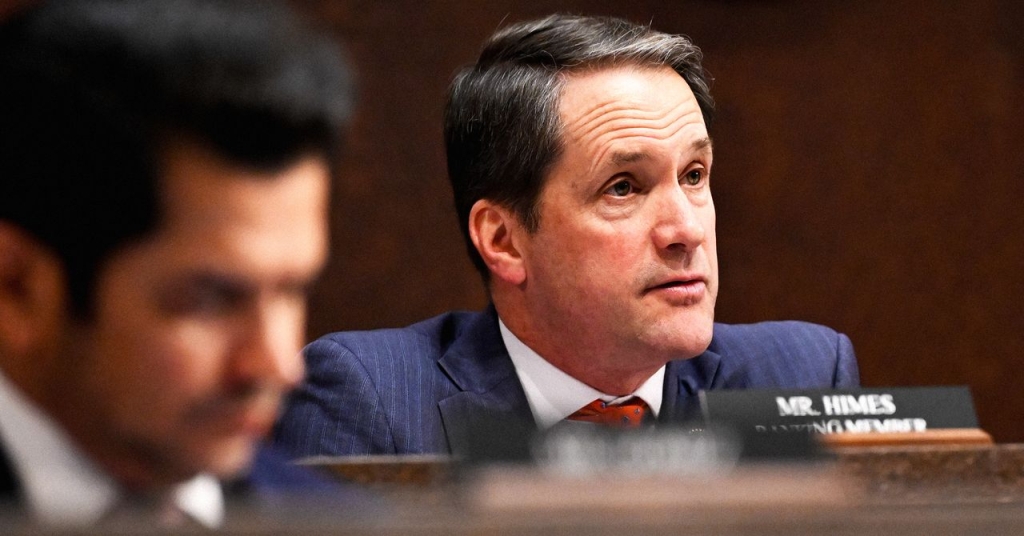
In a move that has privacy advocates sounding the alarm, Democratic Congressman Jim Himes, the ranking member of the House Intelligence Committee, is quietly lobbying his colleagues to preserve the FBI’s controversial power to conduct warrantless searches of Americans’ communications. WIRED has learned that Himes is urging fellow Democrats to support the White House’s request to renew Section 702 of the Foreign Intelligence Surveillance Act (FISA), a program that allows the government to intercept the electronic data of foreigners abroad but also sweeps in vast quantities of private messages belonging to U.S. citizens.
Himes’ pitch hinges on the “56 reforms” passed by Congress in 2024, which codified the FBI’s internal protocols as a substitute for constitutional warrants. In a letter obtained by WIRED, Himes claims these changes are “working as intended” to prevent domestic misuse, citing a compliance rate “exceeding 99 percent” over the past two years. However, the structural foundations of that defense have been fundamentally altered by recent changes within the FBI.
The 99 percent compliance metric was produced by the Office of Internal Auditing, a unit that long served as a smoke alarm designed to detect illegality. But no longer exists. The unit was shuttered by FBI Director Kash Patel last year. Historic court opinions based on its data had previously exposed hundreds of thousands of improper FBI searches. Without the auditors required to calculate failure rates, the compliance mechanisms Himes points to have effectively ceased to function.
In a statement, Himes’ office largely reiterated the positions laid out in his letter to colleagues. “I am open to making further reforms to Section 702, building on the many successful reforms we made in reauthorization legislation two years ago,” he says. “A short-term reauthorization of Section 702 will enable Congress to thoroughly debate the pros and cons of these suggested reforms—and to determine if compromise is possible—without placing our national security in peril by allowing the program to expire.”
As a member of the so-called Gang of Eight—a bipartisan group of lawmakers who are briefed on highly sensitive classified information—Himes possesses some of the deepest knowledge of the spy program. Nevertheless, his letter contains several other claims that appear fundamentally at odds with the mechanics of FISA oversight.
“Because of how heavily it is overseen by all three branches of government,” Himes says, “any effort to misuse the program would almost certainly become known to the Foreign Intelligence Surveillance Court and to Congress.”
The Foreign Intelligence Surveillance Court is a secret court that possesses no investigative arm to audit FBI databases. Similar to Congress, its oversight role is purely reactive, relying entirely on the U.S. Justice Department to self-report violations.
“Neither Congress nor the FISA Court conducts independent audits of the FBI’s queries,” says Liza Goitein, senior director of the Brennan Center’s Liberty and National Security Program. “They rely on the Department of Justice to conduct thorough audits and to report the results truthfully and promptly. This particular Department of Justice has gutted internal oversight mechanisms and has been rebuked by dozens of federal courts for providing inaccurate, misleading, or incomplete information.”
There are no judges standing between the FBI and the private communications of millions of Americans, something that Himes and other members of his committee claim is necessary for the government to react quickly to terrorist threats. Critics argue that, given the current administration’s efforts to dismantle internal checks at the FBI, this is a massive vulnerability, leaving Americans exposed to surveillance abuses that will take years to declassify—if they’re ever reported at all.
Tags:
warrantless surveillance, Section 702, FISA, FBI, privacy, Jim Himes, House Intelligence Committee, Kash Patel, Office of Internal Auditing, compliance rate, national security, Foreign Intelligence Surveillance Court, oversight, constitutional rights, civil liberties, data privacy, electronic communications, government surveillance, Gang of Eight, classified information, terrorist threats, internal checks, abuse of power, whistleblowers, transparency, accountability.
Viral Phrases:
- “Privacy Under Fire”
- “Warrantless Searches of Americans’ Communications”
- “The 99 Percent Lie”
- “FBI Oversight Crumbles”
- “No Judges Standing Between the FBI and Your Private Messages”
- “A Massive Vulnerability”
- “Surveillance Abuses That Will Take Years to Declassify”
- “The End of Privacy as We Know It?”
- “Big Brother is Watching, and Congress is Helping”
- “Your Private Messages Are Not Private Anymore”
,

Leave a Reply
Want to join the discussion?Feel free to contribute!