
What Happens When You Can’t Get a Death Certificate in Gaza
Gaza’s Hidden Crisis: The Untold Story of Thousands of Missing Persons and the Legal Abyss They Leave Behind
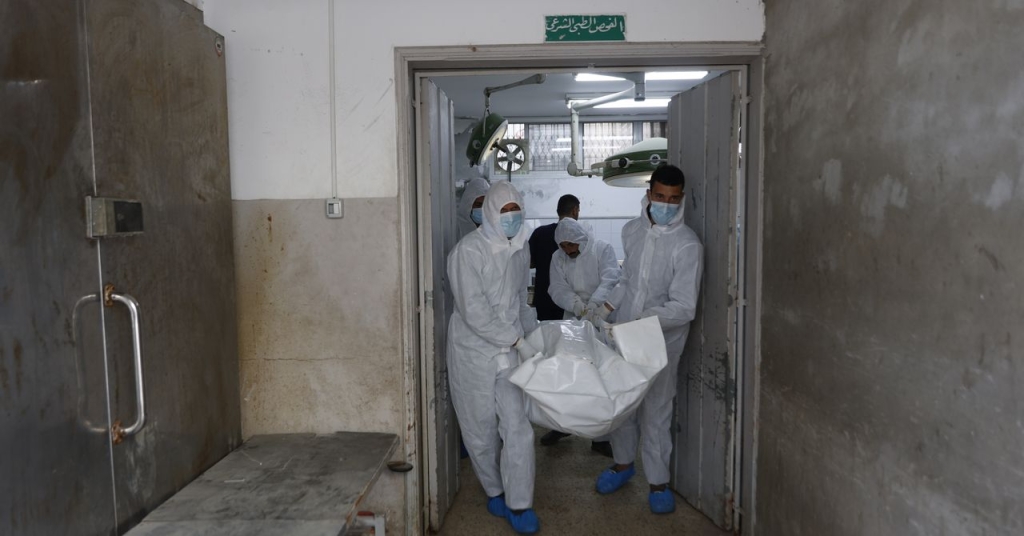
In the heart of Gaza, where the hum of daily life once blended with the rhythm of a functioning bureaucracy, a crisis has quietly unfolded—one that is as much about the absence of bodies as it is about the absence of justice. What was once a routine administrative task—registering a death—has become an insurmountable hurdle for thousands of families caught in the crossfire of conflict, displacement, and bureaucratic collapse.
Before October 2023, the process was straightforward: a body was brought to a hospital, medical staff issued the necessary paperwork, and families could update civil records, settle inheritance matters, access bank accounts, apply for assistance, or secure legal guardianship of children. But as Israeli bombardment intensified, detention of Palestinians became widespread, and mass displacement repeated itself, this system has been pushed to the brink of collapse. “It is an unfolding legal crisis,” said Ahmed Masoud, head of the legal department at the Palestinian Center for the Missing and Forcibly Disappeared. “Thousands of cases now sit in a legal gray zone.”
The scale of the problem is staggering. Research conducted by the Palestine Reporting Lab, in partnership with WIRED, and the Institute for Social and Economic Progress (ISEP), a Palestinian research group, paints a grim picture. Based on a survey of 600 people across 53 locations in Gaza, ISEP estimates that more than 51,000 people may have gone missing since October 2023, with roughly 14,000 to 15,000 still unaccounted for. The implications are profound: over 42.9 percent of households with a missing person report struggling to obtain a death certificate, and the same percentage say the missing individual was the family’s primary breadwinner.
The ripple effects are devastating. Wives of missing men are often unable to withdraw money from bank accounts, access legal documents, pensions, or other benefits in their husband’s name. Among Gazans reporting a missing household member, 71.4 percent say the disappearance has affected their rights and legal entitlements. Over one in four (28.6 percent) report difficulties establishing guardianship of a child, while 14.3 percent face challenges in getting married or divorced. Financial barriers are equally crippling: a third (33.3 percent) of households cannot access bank accounts associated with the missing relative, nearly one in five (19.1 percent) are unable to access aid reserved for widows or children who have lost at least one parent, and nearly one in 10 (9.5 percent) cannot access an inheritance.
Samah Al-Shareif, a lawyer at the Gaza-based Women’s Affairs Center, has seen firsthand the human toll of this crisis. She described a woman whose husband had retired before the war, and whose pension was the family’s lifeline. When he disappeared, the woman found herself unable to access his bank account or receive his pension. “The bank has refused to deal with her,” Al-Shareif said, “insisting that she either get a death certificate or present her husband in person.” The woman has been left without income or financial security, despite her husband’s lawful entitlements.
Children are perhaps the most vulnerable victims of this crisis. Nedal Jarada, head of Al Amal Institute for Orphans, one of Gaza’s longest-standing social welfare organizations, has witnessed the emergence of a new category of orphans: “de facto orphans.” These are children who believe their parents have been killed but cannot prove it, or whose parents’ whereabouts remain unknown. The lack of documentation has left organizations like Al Amal unable to provide the support these children desperately need.
The numbers are overwhelming, but behind each statistic is a human story—a family torn apart, a child left without a guardian, a widow left without recourse. As Gaza grapples with the aftermath of conflict, the missing persons crisis is a stark reminder of the long-term consequences of war, not just in terms of lives lost, but in the erosion of the systems that sustain life and dignity.
Tags: Gaza, missing persons, legal crisis, humanitarian disaster, bureaucratic collapse, conflict aftermath, families in crisis, children’s rights, financial barriers, death certificates, inheritance, bank accounts, legal guardianship, widows, orphans, Palestinian Center for the Missing, Institute for Social and Economic Progress, Women’s Affairs Center, Al Amal Institute for Orphans, Ahmed Masoud, Samah Al-Shareif, Nedal Jarada, Palestine Reporting Lab, WIRED, Israeli bombardment, detention, mass displacement, October 2023, legal gray zone, de facto orphans, social welfare, humanitarian aid, legal entitlements, financial security, human rights, war consequences, systemic failure, identity crisis, justice denied, invisible victims, bureaucratic nightmare, shattered lives, resilience, hope amidst despair, global attention, underreported crisis, urgent action needed, systemic injustice, forgotten voices, legal limbo, emotional toll, societal breakdown, future generations, advocacy, accountability, international law, human dignity, survival, community support, legal reform, documentation, identity verification, economic impact, psychological trauma, family separation, societal collapse, humanitarian intervention, global solidarity, systemic reform, justice for all, human resilience, rebuilding lives, hope for the future.
,

Leave a Reply
Want to join the discussion?Feel free to contribute!