
US authorities reportedly investigate claims that Meta can read encrypted WhatsApp messages | WhatsApp
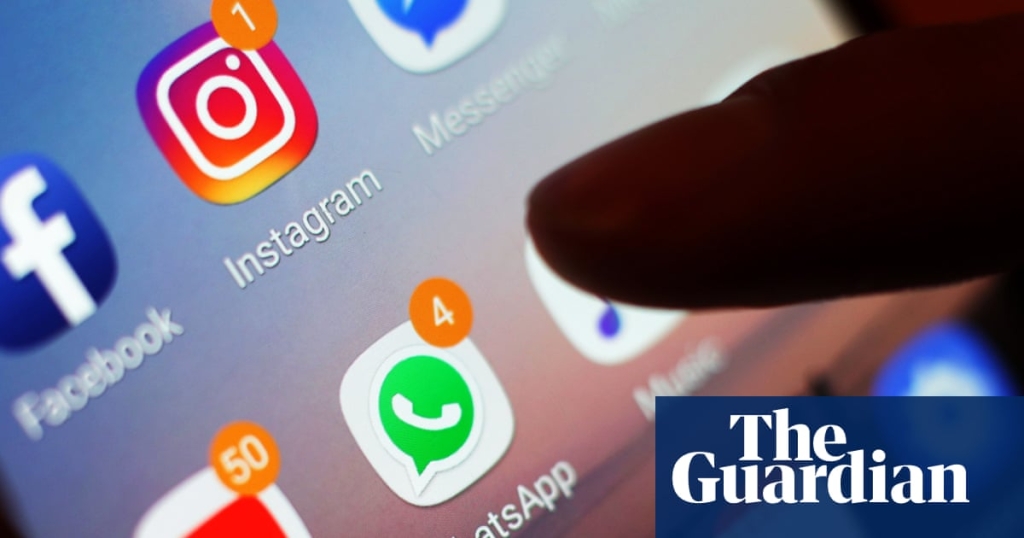
US Authorities Investigated Claims Meta Can Read Encrypted WhatsApp Chats, Sparking Privacy Firestorm
In a shocking development that has sent shockwaves through the tech world, US authorities have reportedly launched an investigation into claims that Meta, the parent company of WhatsApp, can access users’ supposedly “private” encrypted messages. This explosive revelation comes amid a high-stakes legal battle that pits privacy advocates against one of the world’s most powerful tech giants.
The controversy erupted following a lawsuit filed last week, alleging that Meta “can access virtually all of WhatsApp users’ purportedly ‘private’ communications.” This accusation strikes at the very heart of WhatsApp’s core promise to users: end-to-end encryption that ensures only the sender and recipient can read messages, with no third party—including Meta itself—able to intercept or decipher the content.
Meta has vehemently denied these allegations, calling them “categorically false and absurd.” In a scathing response, the company suggested the lawsuit represents nothing more than a calculated publicity stunt designed to support NSO Group, an Israeli spyware manufacturer notorious for developing tools used to target journalists, activists, and government officials worldwide.
The timing of this lawsuit raises eyebrows, as the law firm behind it, Quinn Emanuel Urquhart & Sullivan, is simultaneously representing NSO Group in its appeal against a staggering $167 million judgment from a US federal court. That ruling came after WhatsApp successfully sued NSO Group for deploying its infamous Pegasus spyware against over 1,400 users, including journalists and human rights defenders.
According to Quinn Emanuel, the explosive claims stem from “courageous” whistleblowers hailing from Australia, Brazil, India, Mexico, and South Africa. These unnamed sources allegedly provided evidence that Meta possesses the technical capability to bypass WhatsApp’s encryption and read users’ private messages.
Meta spokesperson Carl Woog didn’t mince words in condemning the lawsuit. “We’re pursuing sanctions against Quinn Emanuel for filing a meritless lawsuit that was designed purely to grab headlines,” Woog stated emphatically. “This is the same firm that is trying to help NSO overturn an injunction that barred their operations for targeting journalists and government officials with spyware.”
The legal maneuvering has created a complex web of competing interests and accusations. Adam Wolfson, a partner at Quinn Emanuel, pushed back against Meta’s characterization, insisting that their defense of NSO has no bearing on the whistleblower allegations. “We look forward to moving forward with those claims and note WhatsApp’s denials have all been carefully worded in a way that stops short of denying the central allegation in the complaint – that Meta has the ability to read WhatsApp messages, regardless of its claims about end-to-end encryption,” Wolfson argued.
The technical feasibility of such claims has become a central point of debate among cybersecurity experts. Steven Murdoch, professor of security engineering at University College London, described the lawsuit as “a bit strange,” emphasizing the lack of transparency regarding the whistleblowers’ identities and credibility. “I would be very surprised if what they are claiming is actually true,” Murdoch stated.
The professor’s skepticism is rooted in the fundamental architecture of end-to-end encryption. If WhatsApp were indeed reading users’ messages, the scale of such surveillance would make it nearly impossible to keep secret within the company. “It’s very hard to keep secrets inside a company,” Murdoch explained. “If there was something as scandalous as this going on, I think it’s very likely that it would have leaked out from someone within WhatsApp.”
The Bloomberg report, which first broke news of the US investigation, cites anonymous sources within the Department of Commerce. However, a department spokesperson quickly pushed back, labeling these assertions as “unsubstantiated.” This conflicting narrative adds another layer of uncertainty to an already complex situation.
WhatsApp has long positioned itself as the gold standard for private messaging, proudly advertising its end-to-end encryption as a feature that ensures only the intended recipients can read messages. This approach differs significantly from platforms like Telegram, which encrypt messages between users and their servers but theoretically retain the ability to decrypt and read content.
However, a senior technology executive, speaking anonymously to the Guardian, offered a nuanced perspective on WhatsApp’s privacy claims. While acknowledging that the “idea that WhatsApp can selectively and retroactively access the content of [end-to-end encrypted] individual chats is a mathematical impossibility,” the executive noted that WhatsApp’s privacy protections “leave much to be desired” due to the platform’s extensive metadata collection practices.
Meta appears determined to fight back aggressively against what it perceives as a coordinated attack on its reputation and business model. “We’re pursuing sanctions against Quinn Emanuel for filing a meritless lawsuit that was designed purely to grab headlines,” Woog reiterated. “WhatsApp’s encryption remains secure and we’ll continue to stand up against those trying to deny people’s right to private communication.”
As the legal battle unfolds and the US investigation continues, millions of WhatsApp users worldwide find themselves caught in the crossfire of competing narratives about privacy, security, and corporate responsibility in the digital age. The outcome of this controversy could have far-reaching implications for how encrypted messaging platforms operate and how users trust the technology they rely on for private communication.
The case also highlights the ongoing tension between national security interests, corporate accountability, and individual privacy rights in an era where digital surveillance capabilities continue to evolve at a breathtaking pace. Whether the whistleblower claims prove substantiated or are ultimately dismissed as baseless allegations, the mere suggestion that a platform trusted by billions could be compromised has already shaken user confidence and sparked urgent conversations about the true nature of digital privacy in 2026.
Tags: WhatsApp privacy scandal, Meta encryption controversy, NSO Group spyware, whistleblower allegations, end-to-end encryption debate, tech privacy lawsuit, US investigation, digital surveillance, encrypted messaging security, Meta vs whistleblowers, WhatsApp metadata collection, cybersecurity experts weigh in, legal battle over privacy, tech giant accountability, encrypted chat access claims
Viral Sentences:
- “The idea that WhatsApp can selectively and retroactively access the content of [end-to-end encrypted] individual chats is a mathematical impossibility”
- “We’re pursuing sanctions against Quinn Emanuel for filing a meritless lawsuit that was designed purely to grab headlines”
- “It’s very hard to keep secrets inside a company”
- “This is the same firm that is trying to help NSO overturn an injunction that barred their operations for targeting journalists”
- “WhatsApp’s encryption remains secure and we’ll continue to stand up against those trying to deny people’s right to private communication”
- “The lawsuit was designed purely to grab headlines”
- “Courageous” whistleblowers from five countries allege Meta can read encrypted messages
- US authorities reportedly investigating claims that shatter WhatsApp’s privacy promises
- Meta calls allegations “categorically false and absurd” while pursuing legal sanctions
- The $167 million judgment that has NSO Group fighting for survival
- End-to-end encryption: the mathematical fortress that may have been breached
- WhatsApp’s metadata collection leaves “much to be desired” despite encryption claims
- Tech experts remain skeptical as legal battle intensifies
- The whistleblower claims that could end WhatsApp as we know it
- Privacy advocates demand answers as investigation unfolds
,


Leave a Reply
Want to join the discussion?Feel free to contribute!