
RAI’s amazing Roadrunner robot leaves humanoids behind
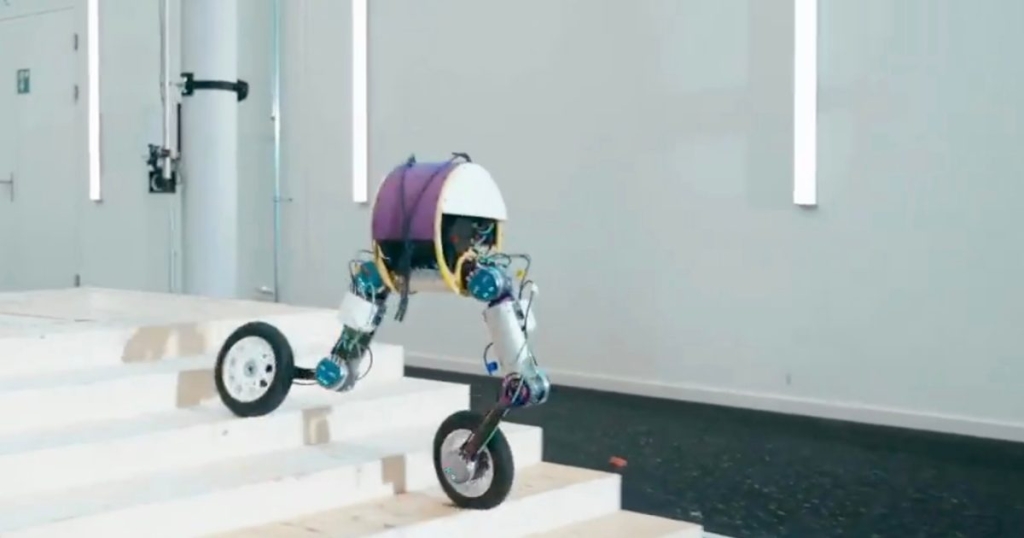
Meet Roadrunner: The 33-Pound Bipedal Robot That Can Roll, Climb, and Flip Like a Stunt Pro
When the Robotics and AI (RAI) Institute announces a new machine, the tech world sits up and pays attention. That’s because the institute was founded by Marc Raibert—the same visionary who launched Boston Dynamics, the company behind the jaw-dropping Atlas humanoid and the nimble Spot robot dog. Now, Raibert’s latest brainchild is turning heads in a very different way.
Introducing Roadrunner: a 15-kilogram (33-pound) bipedal-wheeled robot that blends the agility of legs with the speed of wheels. This isn’t just another prototype—it’s a glimpse into the future of mobile robotics.
At first glance, Roadrunner’s design is striking. Its symmetrical, knee-jointed legs allow it to shift seamlessly between modes—rolling on flat ground like a small vehicle, then transforming into a climber that can tackle stairs and ramps with the ease of a parkour athlete. In a recently released demo video, the robot launches from a resting position, zips across smooth terrain, and then—without missing a beat—ascends a flight of steps using its wheels as feet. The real showstopper? It descends the same stairs in reverse, wheels-first, like a daredevil cyclist pulling off a stunt.
But Roadrunner isn’t just about flashy moves. The team at RAI Institute trained a single control policy to handle both side-by-side and inline driving, and deployed several behaviors—like standing up from various ground configurations and balancing on one wheel—directly on the hardware without additional fine-tuning. This “zero-shot” deployment means the robot can adapt to new challenges right out of the box.
The implications are huge. Roadrunner is being developed as a research platform to explore the limits of agile, dynamic mobility. In the near future, a more advanced version could be deployed for real-world tasks—warehouse inspections, delivery runs, or even search-and-rescue missions in environments too tricky for traditional wheeled bots. In some scenarios, it could even rival humanoid robots, offering a lighter, more versatile alternative.
Founded in 2022, the RAI Institute has quickly built a reputation for creating robots that don’t just walk or roll—they dance, flip, and adapt. With Roadrunner, they’ve once again blurred the line between machine and athlete, proving that the next generation of robotics isn’t just about getting from point A to B—it’s about doing it with style.
viral tags:
RoadrunnerRobot #BipedalBot #RAIInstitute #MarcRaibert #BostonDynamics #RoboticsInnovation #AgileMobility #FutureOfRobots #TechBreakthrough #ViralRobot #AIandRobotics #NextGenTech
viral sentences:
Roadrunner flips the script on robot mobility.
33 pounds of pure robotic agility.
Wheels or legs? Why not both?
This robot climbs stairs like a pro cyclist.
Zero-shot deployment: ready for anything, right out of the box.
The future of robotics is rolling in—and it’s wearing wheels.
From Boston Dynamics to Roadrunner: Marc Raibert’s legacy keeps evolving.
Agile, dynamic, and ready for real-world action.
Roadrunner: where parkour meets precision engineering.
A robot that can stand, roll, climb, and balance—all in one sleek package.
,


Leave a Reply
Want to join the discussion?Feel free to contribute!