
Microsoft exec Charles Lamanna on how AI is creating an expensive new request from job candidates
AI Tokens: The New Currency of Tech Talent Wars
In a stunning revelation that signals a fundamental shift in how Silicon Valley recruits and retains top talent, Microsoft’s Executive Vice President of Business Applications & Agents Charles Lamanna has exposed a growing trend that’s sending shockwaves through the tech industry: engineers are now demanding AI tokens as a core component of their compensation packages.
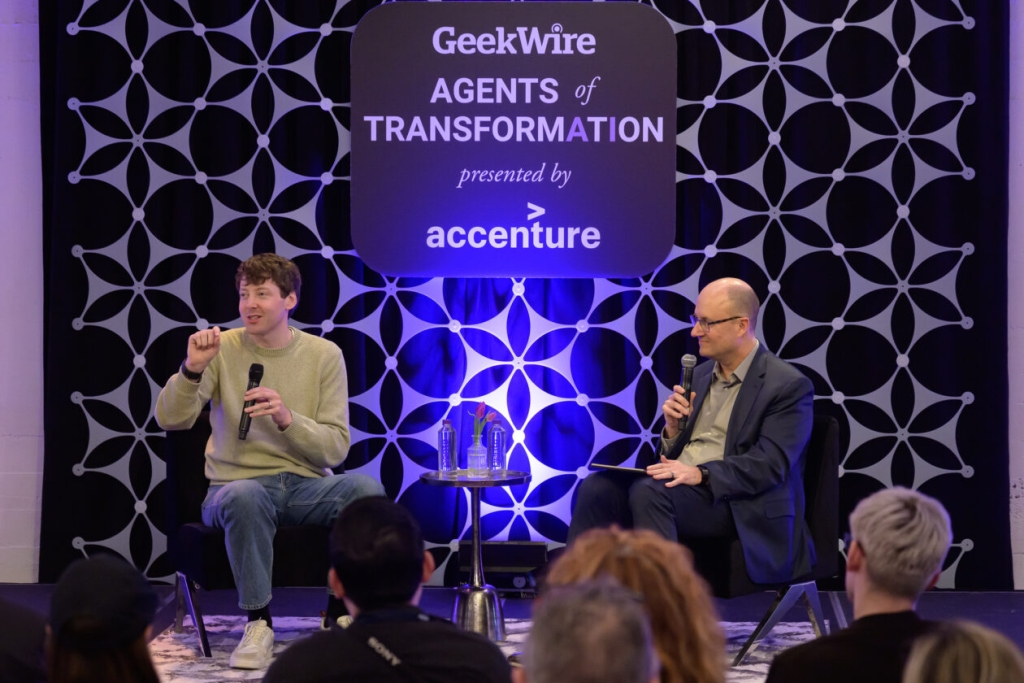
Speaking at GeekWire’s Agents of Transformation event in Seattle, Lamanna shared a jaw-dropping anecdote about a job candidate who explicitly stated they would only join Microsoft if their team received a specific dollar amount of AI tokens—the computational fuel that powers interactions with artificial intelligence systems. While Lamanna kept the exact figure confidential, he dropped a bombshell estimate: “you should think of $100 to hundreds of dollars of token cost per day, at the limit.”
This isn’t just another workplace perk like free snacks or gym memberships. We’re witnessing the birth of a new economic reality where access to AI capabilities is becoming as fundamental to productivity as a computer or internet connection. The implications are staggering and far-reaching.
The Math That’s Changing Everything
Let’s break down the economics that Lamanna laid out. Consider a “fully loaded” software engineer—the total cost to a company including salary, benefits, office space, equipment, and overhead—clocking in at approximately $500,000 annually. Now imagine that same engineer requesting $100,000 worth of AI tokens annually, which could potentially make them three times more efficient at their job.
From a pure ROI perspective, this is a no-brainer. You’re investing an additional 20% in resources to potentially triple output. The numbers become even more compelling when you consider that AI tokens, while not cheap, are still significantly less expensive than human labor hours.
The Mouse, Email, and Teams Analogy
Lamanna drew a powerful comparison that should make every CTO and HR director sit up straight. He asked the audience to imagine what would happen if you showed up to work and were told you couldn’t have a mouse, couldn’t access email, and couldn’t use Microsoft Teams. That’s how engineers accustomed to AI-powered coding agents feel when working under tight token budgets.
This isn’t hyperbole—it’s a fundamental shift in how knowledge work gets done. AI coding assistants, debugging tools, and automated testing frameworks have become so integral to modern software development that restricting access to them is essentially asking engineers to work with one hand tied behind their back.
Beyond Software Engineering
What makes this trend particularly fascinating is that Lamanna sees it extending far beyond software engineering. He’s already observing similar patterns in financial planning, data analysis, content creation, and other forms of office and information work.
“They’ll be like, I’m not going to work there unless I actually get a certain amount of token budget,” Lamanna predicted. This suggests we’re on the cusp of a major talent war where companies that can’t or won’t provide adequate AI resources will find themselves at a severe competitive disadvantage.
Silicon Valley’s New Recruiting Arms Race
Lamanna isn’t alone in recognizing this seismic shift. Nvidia CEO Jensen Huang dropped a similar bombshell last week, telling CNBC that AI tokens would become “one of the recruiting tools in Silicon Valley.” When the CEO of the world’s leading AI chip manufacturer makes such a statement, you know something fundamental is changing.
Venture capitalist Tomasz Tunguz took this concept even further in a blog post last month, proposing that inference costs (the technical term for token usage) could become a fourth pillar of engineer compensation alongside salary, bonuses, and equity. “Will you be paid in tokens? In 2026, you likely will start to be,” Tunguz wrote, essentially predicting that token budgets will become standard negotiating points in compensation discussions.
The Rise of Tokenmaxxing
Perhaps the most telling indicator of how deeply this trend has penetrated tech culture comes from The New York Times, which reported on employees at tech companies competing on internal leaderboards that track token consumption. This new status game, dubbed “tokenmaxxing,” has created a bizarre new form of workplace competition where engineers vie to see who can consume the most AI resources.
It’s a fascinating psychological phenomenon—engineers are essentially competing to prove how much they’re leveraging AI to boost their productivity, turning token usage into a badge of honor rather than something to minimize.
The Broader Implications
This trend raises profound questions about the future of work, compensation, and corporate strategy:
Cost Allocation: How will companies budget for AI resources? Will it become a centralized IT expense or a distributed team budget?
Performance Metrics: If AI makes engineers three times more productive, how do we measure and reward that productivity? Traditional metrics may become obsolete.
Competitive Advantage: Companies that provide generous token budgets may attract better talent, creating a virtuous cycle of better AI adoption and better products.
Economic Models: The traditional cost structures of tech companies are being upended. Labor costs may decrease while infrastructure costs increase, fundamentally changing business models.
Talent Wars: We may see bidding wars not just for salary but for token access, with top engineers commanding premium AI resources as part of their packages.
The Bottom Line
What we’re witnessing is nothing short of a revolution in how knowledge work gets done and how talent is compensated. AI tokens are becoming the new oil of the digital economy—a critical resource that powers everything and determines competitive advantage.
Companies that fail to recognize this shift risk finding themselves unable to attract or retain top talent, while those that embrace it may find themselves with a significant competitive edge. The question isn’t whether this trend will continue—it’s how quickly the rest of the business world will catch up to what Silicon Valley already knows: in the age of AI, tokens aren’t just a technical detail; they’re becoming as fundamental to work as the computers we use to run them.
As we move deeper into 2026, expect to see more companies announcing “AI-first” hiring policies, token budget allocations becoming standard in job offers, and a new class of “token managers” emerging to oversee these critical resources. The future of work isn’t just automated—it’s tokenized.
Tags and Viral Phrases:
AI tokens compensation, tokenmaxxing culture, Silicon Valley recruiting wars, Charles Lamanna Microsoft, Jensen Huang Nvidia, Tomasz Tunguz venture capital, AI-powered productivity, software engineering transformation, financial planning automation, knowledge work revolution, token budget negotiations, inference costs compensation, AI-first hiring policies, token managers emerging, digital economy transformation, competitive advantage AI, talent retention strategies, workplace tool evolution, engineering compensation models, AI resource allocation, productivity metrics disruption, business model transformation, talent acquisition strategies, AI infrastructure costs, knowledge worker empowerment, technological disruption trends, workplace culture evolution, economic model disruption, competitive talent markets, AI adoption acceleration, workplace efficiency revolution, talent war dynamics, compensation structure evolution, AI resource management, workplace productivity tools, talent attraction strategies, AI implementation challenges, workforce transformation, technological equity in workplace, AI accessibility importance, productivity measurement evolution, workplace resource allocation, talent market disruption, AI capability access, workplace technology adoption, talent retention economics, AI infrastructure investment, workplace tool democratization, talent acquisition innovation, AI-powered workplace evolution
,


Leave a Reply
Want to join the discussion?Feel free to contribute!