
Apple iPhone 17 vs. iPhone 16
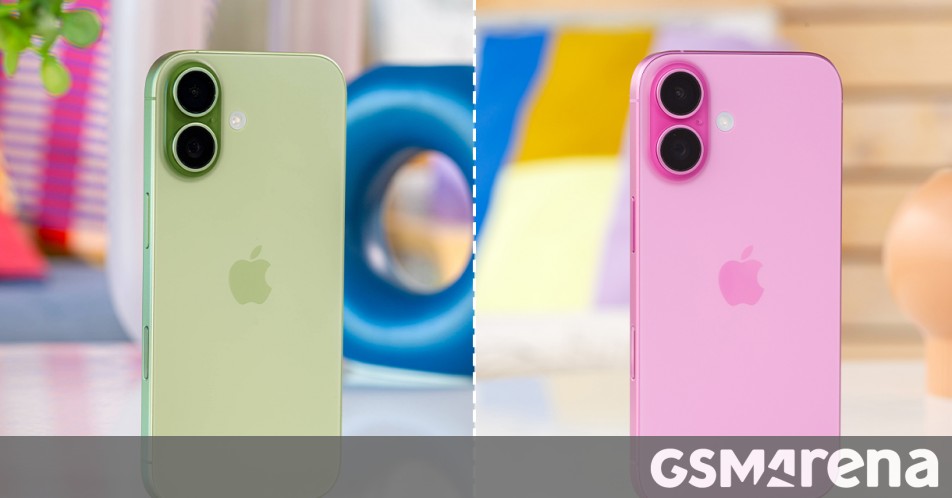
Apple iPhone 17 vs. iPhone 16: A Generational Leap That Matters
When Apple unveiled the iPhone 17, many assumed it would be another incremental update to the company’s mainstream lineup. After all, the iPhone 16 was already a capable device, delivering solid performance, excellent cameras, and that signature Apple polish. But spending time with the iPhone 17 reveals something different: this isn’t just a refinement—it’s one of the most meaningful generational jumps we’ve seen in the standard iPhone line in years.
Design: Familiar, But Refined
At first glance, the iPhone 17 looks almost identical to its predecessor. That’s intentional. Apple has maintained the clean, flat-edged aluminum-and-glass design that has defined the standard iPhone since 2020. However, there are subtle but important changes.
The iPhone 17 is slightly larger, with a 6.3-inch display compared to the 6.1-inch panel on the iPhone 16. This increase comes with a modest growth in height (about 2mm) and thickness, while the width remains virtually unchanged. The weight has ticked up to 177 grams from 170 grams, but in everyday use, you won’t notice the difference. It still feels compact, balanced, and comfortable in hand—true to the spirit of Apple’s standard iPhones.
The materials remain familiar: aluminum frame, flat glass panels, IP68 water resistance, and now protected by Ceramic Shield 2 glass for improved durability. Unlike the iPhone 17 Pro models, which received a titanium frame and a new glass “window” insert, the vanilla iPhone 17 sticks to the classic formula. For many users, this conservative approach is exactly what they want—a timeless design that doesn’t chase trends.
Display: The Big Leap Forward
If there’s one area where the iPhone 17 makes a dramatic improvement, it’s the display. After years of 60Hz panels on the standard models, Apple has finally brought a 120Hz LTPO Super Retina XDR OLED to the iPhone 17. This isn’t just about smoothness—it’s about intelligence. The adaptive refresh rate can drop all the way down to 1Hz, enabling the Always On Display feature while maintaining excellent battery efficiency.
The panel itself has grown to 6.3 inches (up from 6.1 inches), with a slightly higher resolution of 1206 × 2622 pixels, maintaining the same sharp 460ppi pixel density. Color accuracy, HDR performance, and contrast remain excellent, with full support for HDR10 and Dolby Vision.
In our testing, both iPhones can output the same maximum brightness in Auto mode, but the iPhone 17 was quick to drop it down while the iPhone 16 maintained it for longer. However, with its anti-reflective coating, the iPhone 17 also needs less brightness to overcome glare outside when it’s sunny.
This is the first year the regular iPhone truly feels “Pro-grade” display-wise. The iPhone 16 still looks great, but its 60Hz OLED now feels decidedly last-gen next to the 17’s silky-smooth, more efficient LTPO panel.
Battery Life: Small Gains, Smart Efficiency
The iPhone 17 comes with a slightly larger 3,692mAh battery compared to the iPhone 16’s 3,561mAh unit. On paper, that’s a modest upgrade, but paired with the new, more efficient A19 chip and the LTPO display that can drop its refresh rate down to 1Hz, it contributes to slightly better power management overall.
In our testing, the two phones delivered very close results—the iPhone 17 posted an Active Use Score of 14:59 hours, while the iPhone 16 managed 15:42 hours. The difference is small enough not to matter in daily use—the newer model benefits from smoother adaptive refresh to more than make up for that difference.
Charging: Finally Catching Up
Charging remains one of the iPhone line’s more conservative areas, though the iPhone 17 finally takes a small step forward. It supports the newer PD 3.2 standard with AVS negotiation, officially rated at up to 35-40W. In our testing, the iPhone 17 caps at around 29W with most Apple and third-party chargers we tried, but the upgraded protocol allegedly ensures more efficient charging.
In our wired charging test, the new model was able to top up slightly more in half an hour, and a full charge was noticeably faster than the iPhone 16.
Wireless charging also remains similar in speed, with MagSafe and Qi2 support offering up to 25W on both models (since iOS 26).
Audio: A Small Step Back
Both iPhones rely on Apple’s familiar hybrid stereo speaker setup, with the earpiece acting as the secondary channel and the main speaker firing from the bottom of the frame. The overall sound remains excellent, full-bodied, clean, and balanced, with convincing depth and stereo separation that are among the best in the segment.
That said, the iPhone 17 measures slightly quieter than its predecessor. It achieved a Good loudness score of -27.5 LUFS, while the iPhone 16 managed a Very Good -25.5 LUFS. The drop isn’t dramatic but noticeable in side-by-side playback, and it mirrors what we’ve seen across the entire iPhone 17 lineup this year—the Pro models are also a touch quieter than before, possibly due to altered speaker tuning or smaller acoustic chambers.
In terms of tonal balance, both phones deliver similarly rich output. The iPhone 17 still offers deep bass, clear mids, and smooth highs, maintaining Apple’s hallmark audio quality even if it no longer tops the charts in sheer loudness. The iPhone 16, on the other hand, sounds virtually identical in character but has the edge in overall volume, giving it a slightly livelier presentation.
In short, the iPhone 16 is the louder of the two, but the iPhone 17 sounds just as refined—arguably even a bit more controlled and natural at higher volumes. Either way, both remain excellent performers for multimedia and casual music playback.
Performance: The A19 Makes Its Mark
Under the hood, the iPhone 17 runs on Apple’s new A19 chipset, which is still built on a 3nm process but features updated CPU and GPU clusters for improved efficiency and thermal control. The architecture delivers higher peak performance with improved sustained output.
Apple has also streamlined memory and storage configurations this year. The base iPhone 17 now starts at 256GB of storage, double what the iPhone 16 offered at its entry level, while both models share 8GB of RAM. The new chip’s enhanced neural engine and media subsystems also enable faster photo processing, improved on-device AI capabilities, and smoother overall camera and system performance. Still, technically, both devices support the Apple Intelligence features.
In day-to-day use, the difference between the two phones is subtle in light tasks but becomes noticeable under heavier workloads or gaming, where the A19 maintains higher sustained performance and runs cooler. Combined with the higher base storage and improved efficiency, the iPhone 17 feels like the more capable and better-balanced performer, even if the iPhone 16 still delivers flagship-grade responsiveness. The iPhone 17 would definitely give you better future-proofing in terms of system performance.
Benchmark Performance: Numbers Tell the Story
Synthetic benchmarks show a clear performance lead for the iPhone 17’s new A19 chipset across the board. In AnTuTu 10, it posts a healthy 20% jump over the iPhone 16. The gains carry through to Geekbench 6, where the iPhone 17 reaches 9,360 points, up from 7,929, confirming tangible CPU and efficiency improvements.
Graphics performance, on the other hand, appears to be almost identical despite the updated 5-core Apple GPU. In 3DMark Wild Life Extreme, the iPhone 17 scores 4,803, compared to 4,295 on the iPhone 16—not a massive leap, but enough to deliver steadier frame rates and improved thermals during prolonged gaming or heavy 3D workloads.
In real-world use, the iPhone 17 feels every bit as fast and responsive as the numbers suggest. It maintains its higher performance for longer under load, thanks to improved thermal management and the efficiency of the LTPO display working alongside the A19. The iPhone 16 remains a strong performer, but next to its successor, it now feels a step behind in both raw power and sustained output.
Camera: Hardware Similarities, Feature Differences
Both the iPhone 17 and iPhone 16 use a 48MP 1/1.56″ main sensor with f/1.6 lens, dual-pixel PDAF and sensor-shift OIS—effectively the same hardware generation.
The bigger shift is the ultrawide: the iPhone 17 upgrades to a 48MP unit that mirrors what Apple puts on the Pro models. The iPhone 16’s ultrawide is 12MP, again with AF.
Selfies also tilt in favor of the new model: the iPhone 17 debuts a multi-aspect 18MP PDAF selfie camera with OIS, capturing higher-res, more flexible framing (landscape/portrait at full res). The iPhone 16 retains the tried-and-true 12MP PDAF selfie, which is sharp and reliable, albeit less detailed overall.
Image Quality: Main Camera Excellence
In daylight from the main camera, the two iPhones are quite close quality-wise, with the same rendition and dynamic range. At 2x, both phones crop from the main sensor. The iPhone 17’s 12MP crops look convincingly “optical” in good light with excellent detail, but only if you are into pixel peeping. The iPhone 16’s 2x is solid and low-noise, though its digital zoom is a clearer step down from 1x.
The ultrawide is where the iPhone 17 stands out, but only on paper. Its 48MP sensor outputs 24MP by default but the higher resolution gives you only a minor increase in resolved detail, while the general rendition remains quite similar between the two phones.
Selfies are another win for the iPhone 17 on paper. The iPhone 17 may come out on top, but only because of the more flexible framing offered by the 18MP multi-aspect sensor, which is unique in the smartphone world. Other than that, both iPhones take nice-looking, sharp selfies, and neither one takes the lead in image quality.
In low light, the main cameras of the two phones do an equally commendable job, with great detail and dynamic range. The zoom results in the dark are very usable from both but the iPhone 17 has a slight edge in detail again.
At night neither ultrawide does a great job. But the iPhone 17 has the option to toggle on a night mode, which is slow, but improves the results.
Video Quality: Pro-Level Performance
In good light from the main camera, both phones record excellent 4K footage. The quality is equally great either way. Ultrawide video is very likable on both.
After dark, the main-camera footage comes out nicely from either iPhone, and the 2x zoomed video is decent. The low-light ultrawide video isn’t great, but it’s usable.
Stabilization is always on and consistently effective on both models across all cameras and frame rates. Walking shots appear steady, pans are smooth, and micro-jitter is well-controlled. There’s no meaningful advantage for either here—both are among the most stable shooters in the segment.
The Verdict: Is It Worth the Upgrade?
The vanilla iPhone 17 represents one of the more substantial year-on-year updates in Apple’s recent lineup history. It may look largely familiar on the outside, sticking to the traditional aesthetic rather than adopting the more radical design shake-up of the Pro models, but beneath that familiar exterior lies a phone that pushes the “standard” iPhone closer to Pro territory than ever.
One of the biggest upgrades this year is the display. The iPhone 17 finally adopts an LTPO OLED panel with a 120Hz adaptive refresh rate, aligning it with Apple’s Pro devices. The result is an Always-On Display capability as well as a smoother, more responsive experience throughout the interface. Combined with the new A19 chipset, the phone feels notably faster and more fluid in daily use.
The performance leap brought by the new SoC is tangible and the increased 256GB base storage feels like an overdue but very welcome move. The new 48MP ultrawide camera is a welcome step-up, while the 18MP selfie shooter raises the bar for front-facing photography. Battery life remains reliably strong, ensuring the iPhone 17 feels like a more complete all-rounder.
That said, the iPhone 16 still holds up admirably more than a year after its release. Its main camera output remains competitive, and its overall performance, battery life, and excellent video capture make it far from obsolete. In fact, with prices now dipping, it arguably offers the better value if you’re not after the very latest hardware or the higher storage tier.
Ultimately, the iPhone 17 is the model to get if you want a truly modern iPhone experience without going Pro—a phone that’s faster, better equipped, smoother to use, and more future-proof.
However, if you’re upgrading from an older model and want to save a few hundred bucks, the iPhone 16 remains a reliable device to recommend. You won’t feel short-changed either way, but this year, Apple’s standard model makes a stronger case for itself than it has in a long time.
tags
iPhone17 #iPhone16 #Apple #SmartphoneUpgrade #TechReview #MobileTech #iOS #DisplayTech #CameraComparison #Performance #BatteryLife #ChargingSpeed #AudioQuality #TechNews #GadgetReview
viral_sentences
The iPhone 17 brings Pro-level features to the standard lineup
120Hz display finally arrives on the regular iPhone
A19 chip delivers noticeable performance gains
256GB base storage doubles the iPhone 16’s offering
iPhone 17’s ultrawide camera matches the Pro models
Multi-aspect 18MP selfie camera is a game-changer
Battery life sees smart efficiency improvements
Charging speeds finally catch up to competitors
Audio quality remains excellent despite slight volume drop
This is the most meaningful iPhone standard update in years
iPhone 16 still offers excellent value at reduced prices
The upgrade decision comes down to your priorities
Apple closes the gap between standard and Pro models
Future-proofing makes the iPhone 17 compelling
Display technology leap is the headline feature
,


Leave a Reply
Want to join the discussion?Feel free to contribute!