
Moto Watch review: Not the Moto 360 revival you’ve been hoping for
Motorola Moto Watch Review: A Promising Start That Falls Short
When Motorola announced its new Moto Watch, I was cautiously optimistic. The company’s partnership with Polar, known for its impressive fitness smartwatches, suggested this could be a game-changer in the affordable smartwatch market. Unfortunately, my experience proved that Motorola still has significant ground to cover before this device can compete with established players.
Design and First Impressions
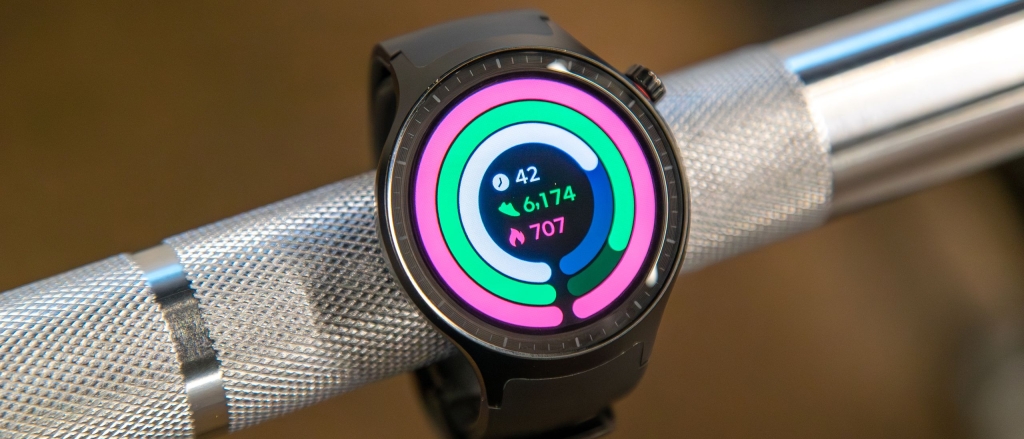
The Moto Watch makes a solid first impression with its premium aesthetic. The sandblasted aluminum frame combined with a stainless steel crown gives it a sophisticated look that rivals more expensive offerings. The design evokes comparisons to both the Galaxy Watch 7 and OnePlus Watch 3, striking a balance between sporty and elegant.
The 47mm case size might be too large for those with smaller wrists, but it allows the 1.43-inch OLED display to truly shine. While Motorola hasn’t disclosed the exact brightness specifications, I never struggled to read the screen outdoors, even in direct sunlight. The Corning Gorilla Glass 3 protection adds welcome durability to this everyday device.
Weighing just 35 grams, the watch feels comfortable on the wrist despite its thickness. The IP68 and 1ATM water resistance rating means it can handle swimming and showering without concern, making it a versatile companion for various activities.
Software Experience: Familiar Yet Limited
Setting up the Moto Watch is straightforward—simply download the Moto Watch app, pair your device, and you’re ready to go. The navigation system will feel instantly familiar to Wear OS users, with intuitive swipe gestures that make accessing features seamless.
A swipe down reveals quick settings, while swiping up displays notifications. Side swipes cycle through customizable panels similar to Wear OS tiles. Pressing the crown opens the app grid, laid out similarly to Galaxy Watches, and the rotating crown allows for smooth menu navigation.
However, the crown’s rotation feels disappointingly flimsy and cheap, undermining the premium design. The button below the crown serves as a customizable shortcut, adding some flexibility to the user experience.
The Notification Problem
Here’s where the Moto Watch begins to show its limitations. While you can view notifications from your connected phone, you cannot interact with them in any meaningful way. This is perhaps the most significant oversight in the device’s design.
As someone accustomed to Wear OS watches that allow message responses through typing or pre-written replies, this limitation feels like a step backward. The entire purpose of a smartwatch is to provide quick, convenient access to information without constantly reaching for your phone. The Moto Watch fails to deliver on this fundamental promise.
Moto AI attempts to bridge this gap by summarizing notifications, but this feature is only available on select Motorola phones. Even then, it merely condenses information rather than enabling the interactions users expect from a modern smartwatch.
Music and Camera Features: Underwhelming Implementations
Without access to streaming apps, music playback requires transferring files directly to the watch’s limited 512MB storage. The transfer process is cumbersome and frequently crashes, forcing users to repeatedly select and transfer small batches of songs.
The speaker placement at the bottom of the watch frequently gets muffled by your wrist during use, though connecting wireless earbuds remains an option. This design choice seems to prioritize aesthetics over functionality.
The remote camera feature sounds innovative but delivers minimal practical value. It functions only as a remote shutter button without a viewfinder, making it difficult to frame shots properly. Motorola Razr Ultra 2025 users get some benefit from using the cover screen as a viewfinder, but this advantage doesn’t extend to most smartphone users.
Battery Life: A Bright Spot
Battery performance stands out as the Moto Watch’s strongest feature. Motorola claims up to 13 days of battery life, and my experience confirms this is achievable. With daily workouts, sleep monitoring, and tilt-to-wake enabled, the watch consistently lasted a full week between charges.
Charging, however, is frustratingly slow. It takes approximately 40 minutes to reach 50% and about 90 minutes for a complete charge. While the extended battery life somewhat compensates for this, faster charging would significantly improve the user experience.
Health and Fitness Tracking: Polar Partnership Underdelivers
The collaboration with Polar promised advanced fitness tracking capabilities, but the implementation falls short of expectations. The Moto Watch includes standard health metrics like heart rate, blood oxygen, sleep tracking, and stress monitoring. These can be viewed directly on the watch or through the companion app for more detailed analysis.
The companion app organizes information into three sections, with a dedicated Health section displaying activity rings and seven key metrics. While the interface is clean and easy to navigate, it lacks the insightful guidance found in competing platforms like Fitbit and Oura, which use AI to provide personalized recommendations.
The Nightly Recharge feature attempts to fill this gap by combining sleep quality with autonomic nervous system data to offer daily tips. However, these suggestions remain generic and unhelpful, offering advice like “Go for it!” or “Exercising today will benefit you, as long as you listen to your body.”
Workout Tracking: Inconsistent and Unreliable
Fitness tracking represents perhaps the Moto Watch’s biggest weakness. During various workouts including Pilates, HIIT, and strength training, I consistently noticed heart rate readings that were 10-40 bpm lower than those recorded by my Pixel Watch 3 and Garmin Venu 4. While occasional alignment occurred, these instances were rare.
The watch also experienced complete workout recording failures, mysteriously stopping mid-session. Whether this resulted from the prominent crown design or the auto-pause feature remains unclear, but the outcome is equally frustrating.
A 2,500-step walk test revealed additional inconsistencies. With auto-pause enabled, the watch missed numerous steps while I was actively moving. Disabling this feature improved accuracy, with results closely matching the Garmin Venu 4—a surprising but welcome improvement.
Value Proposition: Price vs. Performance
Priced at $150, the Moto Watch occupies an attractive position in the mid-range smartwatch market. This competitive pricing makes it accessible to budget-conscious consumers seeking smartwatch functionality without premium costs.
However, the experience fails to justify even this modest price point. The software limitations, unreliable fitness tracking, and missing features make it difficult to recommend over alternatives like the Galaxy Watch FE, which often sells for less while delivering superior performance.
The Wear OS Question
Throughout my testing, I repeatedly wondered why Motorola didn’t simply adopt Wear OS. The existing Wear OS-like interface demonstrates the company’s capability to create intuitive navigation systems. Choosing a proprietary platform appears to have limited functionality rather than enhancing it.
Wear OS would have provided access to a vast ecosystem of apps, better notification handling, and more mature software support. The battery life sacrifice would have been worthwhile for the significant improvements in overall functionality and user experience.
Final Thoughts
The Moto Watch represents a missed opportunity for Motorola. While the hardware design shows promise with its premium materials and comfortable fit, the software execution undermines these strengths. The partnership with Polar suggested advanced fitness capabilities that simply don’t materialize in real-world use.
For consumers seeking an affordable smartwatch, better options exist at similar or lower price points. The Moto Watch’s limitations in notification handling, fitness tracking reliability, and overall software maturity make it difficult to recommend, despite its attractive design and impressive battery life.
Motorola has demonstrated potential with this device, but realizing that potential requires significant software improvements and a reconsideration of the platform strategy. Until then, the Moto Watch remains a promising concept that fails to deliver on its initial promise.
tags: #MotorolaMotoWatch #SmartwatchReview #AffordableTech #WearOSAlternative #FitnessTracking #BatteryLife #PolarPartnership #TechReview #SmartwatchComparison #BudgetSmartwatch #WearableTech #AndroidSmartwatch #HealthTracking #TechNews #ProductReview
viral sentences:
- “Motorola’s Moto Watch looks premium but feels half-baked”
- “13-day battery life can’t save this disappointing smartwatch”
- “Why Motorola should have just used Wear OS instead”
- “The fitness tracking that promised Polar precision but delivered inconsistency”
- “A $150 smartwatch that makes you miss your phone even more”
- “The crown that looks premium but feels like a cheap toy”
- “Notifications you can see but never interact with”
- “When your smartwatch has better battery life than your phone”
- “The remote camera feature that’s more frustrating than useful”
- “Fitness tracking that makes you question if you’re actually working out”
,


Leave a Reply
Want to join the discussion?Feel free to contribute!