
He Went to Prison for Gene-Editing Babies. Now He’s Planning to Do It Again
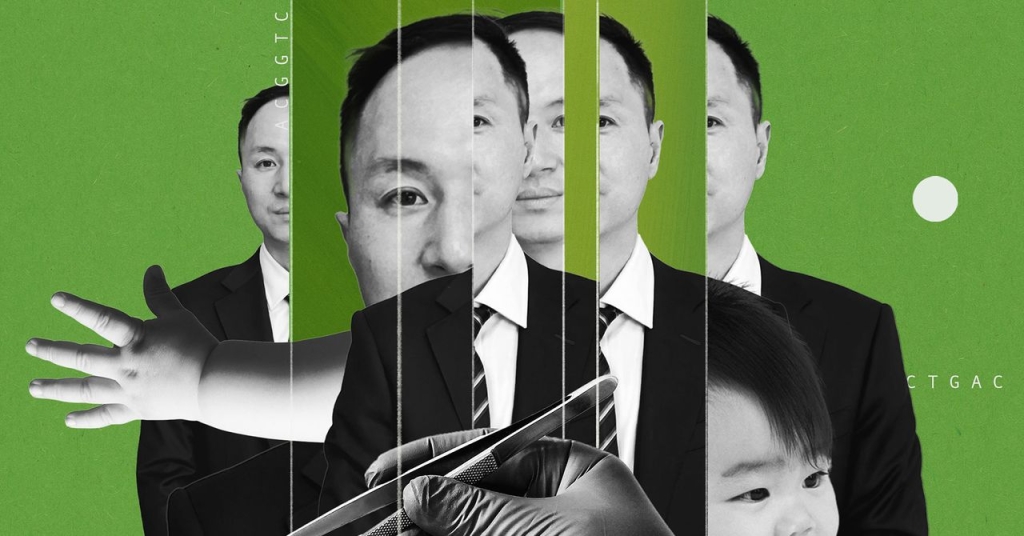
The Controversial Pioneer: He Jiankui’s Bold Return to Gene Editing and His Vision for Humanity’s Future
Seven years after shocking the world with the birth of the first gene-edited babies, He Jiankui remains one of science’s most polarizing figures—simultaneously condemned as an unethical rogue and celebrated as a revolutionary pioneer who dared to challenge the boundaries of human genetic modification.
The soft-spoken Chinese scientist who once nervously adjusted his microphone before announcing his groundbreaking work at a Hong Kong conference in 2018 has undergone a remarkable transformation. From the anxious researcher facing international condemnation to the self-proclaimed “Chinese Darwin” and “Oppenheimer in China,” He has emerged from prison with an even more ambitious vision for humanity’s genetic future.
The Birth of a Scientific Earthquake
When He Jiankui took that stage in Hong Kong, the scientific community was already buzzing with rumors. But nothing could prepare them for his announcement: three little girls—later identified as Lulu, Nana, and an unnamed third child—had been born with deliberately modified genomes. The modifications targeted the CCR5 gene, a receptor that HIV uses to enter human cells, with the goal of making the children resistant to the virus.
The implications were staggering. Not only had He crossed the line from somatic gene editing (which affects only the individual) to germline editing (which passes modifications to future generations), but he had done so without the broad scientific consensus that such technology was ready for human application.
The Chinese government responded swiftly and decisively. He was sentenced to three years in prison and fined 3 million yuan (approximately $430,000). The Chinese Ministry of Science and Technology banned all clinical applications of human embryo gene editing. The scientific community, while divided, largely condemned his actions as premature and ethically reckless.
Life After Prison: A Man with a Mission
Since his release in 2022, He has been anything but quiet. He claims to have established an independent laboratory in southern Beijing and has been documenting his journey extensively on social media platforms. His posts range from scientific updates to philosophical musings about his place in history.
“I did not violate ethics, I overturned it,” reads one of his more provocative statements accompanying an image of himself in an empty laboratory—a stark visual metaphor for his isolation from mainstream scientific institutions.
More recently, He has embraced a more flamboyant persona. One particularly striking image shows him seated on an elaborate throne, prehistoric animals at his feet, a rainbow beaming down on his crown, and a double helix adorning his purple robe. The image, posted on X (formerly Twitter), represents a dramatic departure from the austere lab coat photos that once defined his public image.
The Duchenne Muscular Dystrophy Project
He claims to be working on a gene therapy for Duchenne muscular dystrophy, a devastating genetic disorder that primarily affects boys. The disease causes progressive muscle degeneration and weakness, typically becoming apparent in early childhood. While He has not published any results or shared data publicly, he maintains that a pharmaceutical company has taken on this research and that funding is readily available.
This work, if genuine, represents a more conventional approach to gene therapy—targeting somatic cells rather than germline modifications. However, given He’s controversial history, many in the scientific community remain skeptical of his claims until peer-reviewed data becomes available.
The Alzheimer’s Prevention Vision
Perhaps even more ambitious than his HIV resistance project is He’s current focus on preventing Alzheimer’s disease through germline editing. He is working with the APP-A673T mutation, a genetic variant discovered in Icelandic populations. People carrying this mutation show remarkable resistance to Alzheimer’s disease and even demonstrate increased longevity.
“The Icelandic population has this natural protection,” He explains. “Why shouldn’t we give future generations the same advantage?”
The mutation affects the amyloid precursor protein (APP), which plays a crucial role in the development of Alzheimer’s disease. By introducing this protective mutation into human embryos, He believes he can create a generation of people who will never develop Alzheimer’s.
The Ethics Debate: Revolutionary or Reckless?
When asked about the maturity of gene-editing technology, He draws parallels to other groundbreaking innovations. “Anyone who is the first in the world, no one can say it’s mature,” he argues. “The Wright brothers who made the first flight, was it mature? Of course not, but they made history.”
This perspective fundamentally challenges the conventional approach to scientific progress, which typically emphasizes extensive testing, peer review, and broad consensus before human application. He’s view suggests that waiting for universal agreement would mean missing crucial opportunities to advance human health and longevity.
Currently, germline editing is prohibited in nearly every country, including the United States, China, and most of Europe. The international scientific community has established strict guidelines against heritable genetic modifications, citing concerns about unintended consequences, ethical implications, and the potential for creating genetic inequality.
The Children: Living Testimonies
He maintains regular contact with the families of the three gene-edited children. According to him, the girls are healthy and attending primary school. The families, he says, are satisfied with the outcomes.
However, a crucial detail remains unresolved: the children themselves do not know they were gene-edited. This raises profound ethical questions about consent, identity, and the right to know one’s genetic history. As these children grow older, they will inevitably discover their unique status, potentially facing social, psychological, and medical implications that are difficult to predict.
The Path Forward: Hundreds of Gene-Edited Babies?
Perhaps most controversially, He suggests that it’s time to move beyond the three children and begin trials with hundreds of gene-edited babies. “We have observed them for seven, eight years now,” he argues. “So I think it’s time to move on to hundreds of gene-edited babies. We should give a trial to maybe 300 now.”
This proposal represents a dramatic escalation of his original work and would likely face even more intense international opposition. The scientific community’s concerns about off-target effects, long-term consequences, and ethical implications would only intensify with larger-scale applications.
The Social Media Strategist
Throughout his journey, He has maintained an active presence on social media, using platforms like X to shape his narrative and connect with supporters. His posts reveal a man deeply invested in his historical legacy, frequently positioning himself alongside other scientific revolutionaries.
His relationship with Cathy Tie, the Canadian biotech entrepreneur and self-styled “biotech Barbie,” garnered significant attention. Tie, a former Thiel fellow, co-founded a human embryo editing startup, creating an interesting parallel between the two figures pushing the boundaries of genetic modification.
The Scientific Community’s Response
While He presents himself as a misunderstood pioneer, the broader scientific community remains deeply divided. Many researchers argue that his work bypassed essential safety protocols and ethical considerations. The potential for off-target genetic modifications, unintended health consequences, and the creation of genetic inequality are serious concerns that cannot be dismissed.
However, some scientists acknowledge that He’s work, however controversial, has forced the international community to grapple with questions that were previously theoretical. The reality of gene-edited humans is now undeniable, and the ethical frameworks that govern such technology must evolve accordingly.
The Future of Human Genetic Modification
As He continues his work in his Beijing laboratory, the fundamental questions he raised in 2018 remain unresolved. Should humanity embrace the ability to eliminate genetic diseases before birth? What are the risks of unintended consequences that might not manifest for generations? How do we balance the potential benefits against the ethical concerns about playing God with human genetics?
He’s vision extends beyond treating individual patients to fundamentally reshaping the human genome for future generations. Whether this vision represents scientific progress or dangerous hubris depends largely on one’s perspective on the role of technology in human evolution.
Conclusion: A Revolution in Progress
Seven years after his historic announcement, He Jiankui remains a figure of intense controversy and fascination. His journey from imprisoned scientist to self-proclaimed revolutionary reflects the complex and often contradictory nature of scientific progress.
Whether history will remember him as a dangerous rogue or a visionary pioneer remains to be seen. What is certain is that he has permanently altered the conversation about human genetic modification and forced the world to confront the reality that the ability to edit human embryos is no longer a matter of “if” but “when” and “how.”
As He continues his work on Alzheimer’s prevention and potentially plans for larger-scale human embryo editing, the international scientific community watches closely, grappling with the same fundamental questions that He himself seems to have answered: Are we ready to take control of our genetic destiny? And if so, who gets to decide how that destiny unfolds?
Tags
Gene editing, CRISPR babies, He Jiankui, human embryo modification, Alzheimer’s prevention, germline editing, genetic engineering, scientific controversy, biotechnology revolution, designer babies, genetic modification ethics, human evolution, scientific pioneers, genetic therapy, embryo editing technology
Viral Sentences
“I did not violate ethics, I overturned it”
“Chinese Darwin”
“Oppenheimer in China”
“China’s Frankenstein”
“We should give a trial to maybe 300 now”
“The Wright brothers who made the first flight, was it mature? Of course not, but they made history”
“Anyone with this mutation is free of Alzheimer’s and even lives longer”
“The families are very happy with it”
“They go to primary school”
“No one can say it’s mature when you’re the first in the world”
“I’m lucky that Lulu, Nana, and the third girl were healthy; they’re normal”
“We have observed them for seven, eight years now”
“The new lab is germline gene editing—embryo gene editing”
“The Icelandic population has this natural protection”
“Why shouldn’t we give future generations the same advantage?”
,

Leave a Reply
Want to join the discussion?Feel free to contribute!