
The Search for Alien Artifacts Is Coming Into Focus
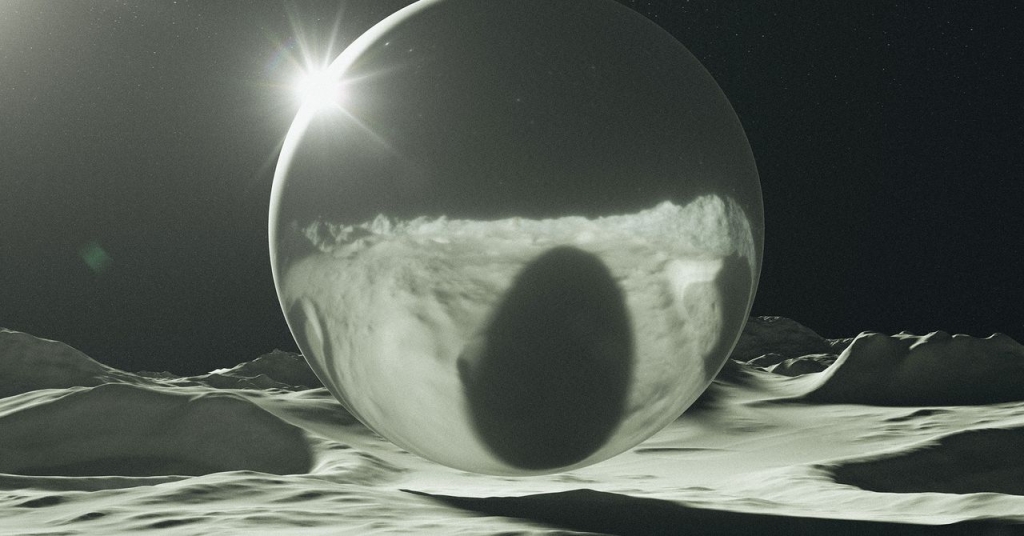
Alien Artifacts in Our Backyard? Scientists Debate the Search for Extraterrestrial Remnants in Earth’s Orbit
In the vast expanse of science fiction, few concepts captivate the imagination quite like alien artifacts—those mysterious remnants of extraterrestrial civilizations that have graced the pages of Arthur C. Clarke’s classics and the digital worlds of franchises like Mass Effect and Outer Wilds. These objects, often imbued with advanced technology far beyond human understanding, represent humanity’s deepest hopes and fears about our place in the cosmos.
Now, as we stand on the precipice of potentially groundbreaking discoveries, the line between science fiction and scientific inquiry has begun to blur. The detection of interstellar objects within our solar system over the past decade has ignited speculation that these cosmic visitors could be more than mere space rocks—perhaps they’re alien spacecraft or artifacts deliberately sent to explore our cosmic neighborhood.
While the scientific consensus maintains that these interstellar visitors—including ‘Oumuamua in 2017 and Comet 2I/Borisov in 2019—have natural explanations, the mere possibility has reignited a conversation that’s been simmering since the dawn of the space age. Scientists have long anticipated the chance encounter with extraterrestrial technology, and now, with increasingly sophisticated detection methods, that possibility seems closer than ever.
“We’ve been thinking about this for decades,” explains Adam Frank, a professor of astrophysics at the University of Rochester. “We’ve been waiting for this to happen. But being responsible scientists means holding to the highest standards of evidence and also not crying wolf.”
This delicate balance between open-minded curiosity and rigorous skepticism defines the current state of the search for alien artifacts. The challenge is formidable: these potential technosignatures could range from microscopic alloy flecks to massive spacecraft, or perhaps materials so advanced they defy our current understanding of physics and engineering.
To tackle this cosmic mystery, researchers are developing innovative techniques to scour our solar system for signs of alien remnants. Among the most intriguing approaches is the work of Beatriz Villarroel, an assistant professor of astronomy at the Nordic Institute for Theoretical Physics, who has turned to a largely untapped resource: historical images of the sky captured before humanity’s space age began.
Villarroel leads the Vanishing & Appearing Sources during a Century of Observations project (VASCO), which initially aimed to identify stars or natural objects that might have mysteriously vanished from historical astronomical plates. However, her research took an unexpected turn when she discovered inexplicable “transients”—objects that appear to be artificial satellites orbiting Earth, yet were captured in photographs taken decades before Sputnik’s historic 1957 launch.
“That’s when I realized this is actually a fantastic archive, not for searching for vanishing stars, but for looking for artifacts,” Villarroel explains. Her team’s 2021 discovery, published in scientific journals including The Publications of the Astronomy Society of the Pacific, Monthly Notices of the Royal Astronomical Society, and Scientific Reports, has generated intense debate within the scientific community.
The transient objects Villarroel identified defy easy explanation. While some researchers have proposed alternative theories—ranging from instrumental errors and meteor trails to debris from nuclear tests—the possibility that these could be genuine alien artifacts cannot be entirely dismissed. The objects appear in multiple photographic plates from different observatories, suggesting they were real phenomena rather than mere photographic artifacts.
One particularly intriguing possibility would be a dedicated mission to search for artifacts in geosynchronous orbit, approximately 22,000 miles above Earth. This region, where satellites maintain a fixed position relative to the planet’s surface, could potentially harbor ancient alien technology that has remained undetected for millennia. However, Villarroel remains skeptical about the likelihood of such a mission receiving funding in the near future.
“There’s so much taboo that nobody’s ever going to take such results seriously until you bring down such a probe,” she notes, highlighting the significant social and institutional barriers that researchers face when investigating potential alien artifacts.
Adam Frank echoes this concern about the stigmatization of the search for extraterrestrial technology, while also recognizing it as a natural part of scientific discourse. “The pushback over research into alien artifacts is counterproductive,” he argues, “but it’s also a healthy and natural part of scientific inquiry.”
This tension between scientific curiosity and institutional caution reflects a broader challenge in the search for extraterrestrial intelligence (SETI). Researchers must navigate not only the technical difficulties of detecting potential alien artifacts but also the social and political implications of claiming such a discovery.
The stakes couldn’t be higher. If we were to definitively identify an alien artifact, it would represent the most profound discovery in human history—proof that we are not alone in the universe and that other civilizations have achieved technological capabilities far beyond our own. Such a discovery would fundamentally alter our understanding of our place in the cosmos and could potentially accelerate human technological development by centuries.
Yet the path to such a discovery remains fraught with challenges. Scientists must develop increasingly sophisticated detection methods, create frameworks for verifying potential discoveries, and prepare for the profound social and philosophical implications of finding evidence of extraterrestrial intelligence.
As our observational capabilities continue to improve and our understanding of the universe expands, the search for alien artifacts represents one of the most exciting frontiers in modern science. Whether these mysterious transients in historical photographs turn out to be genuine alien technology or simply unexplained natural phenomena, the investigation itself pushes the boundaries of our scientific understanding and our conception of what’s possible in the universe.
The question remains: are we on the verge of discovering that we’re not alone, or are we simply seeing patterns in the cosmic noise? Only continued research, rigorous scientific methodology, and perhaps a bit of that science fiction-inspired imagination will tell.
Tags & Viral Phrases:
- Are we alone in the universe?
- Alien artifacts discovered in Earth’s orbit?
- Scientists find mysterious objects predating Sputnik
- The search for extraterrestrial technology heats up
- Could ancient alien satellites be watching us?
- Breakthrough discovery challenges everything we know
- Scientists debate controversial findings
- The truth is out there—and it might be closer than we think
- Game-changing evidence of alien visitation
- Mystery objects captured on film decades before space age
- Scientific community divided over shocking discovery
- Are UFOs actually ancient alien technology?
- The ultimate cosmic mystery deepens
- Prepare for the most profound discovery in human history
- What if we’re not the first technological civilization?
- The taboo topic scientists are afraid to touch
- Revolutionary research challenges scientific orthodoxy
- Could alien artifacts be hiding in plain sight?
- The search for extraterrestrial intelligence enters a new era
- Science fiction becomes science fact?
,

Leave a Reply
Want to join the discussion?Feel free to contribute!