
The Reason Why OLED TVs Are So Expensive
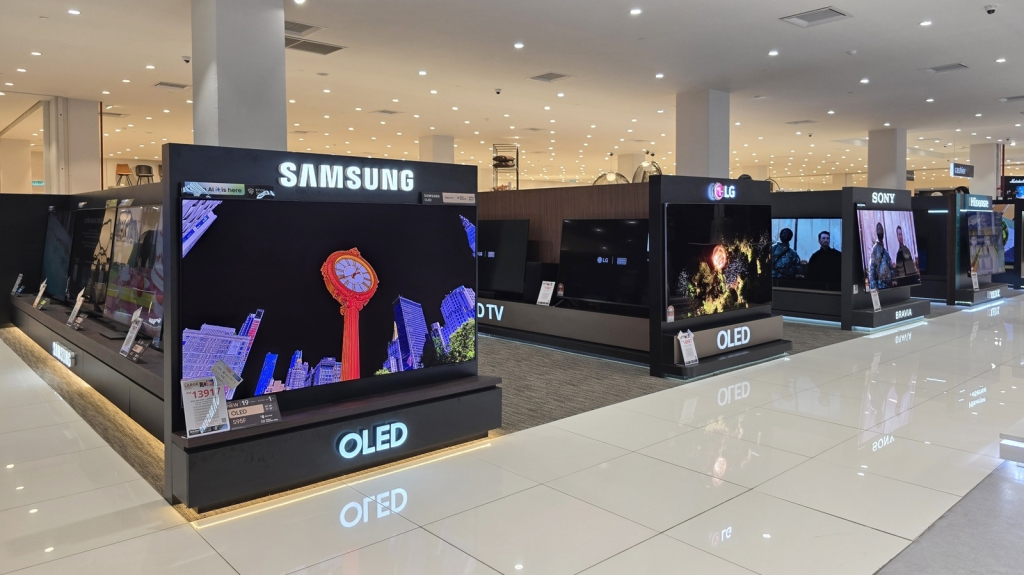
The Hidden Truth Behind OLED TV Pricing: Why These Premium Displays Cost So Much
OLED TVs have become the holy grail of home entertainment, promising unparalleled picture quality with perfect blacks, infinite contrast, and breathtaking color accuracy. Yet despite tempting Black Friday deals and Super Bowl season discounts, these premium displays remain significantly more expensive than their LCD counterparts. The question on every consumer’s mind remains: why do OLED TVs command such premium prices, and will they ever become truly affordable?
The Manufacturing Challenge: Precision at a Premium
The answer lies deep within the manufacturing process itself. Creating OLED panels is an extraordinarily complex operation that demands microscopic precision and cutting-edge technology. Unlike traditional LCD manufacturing, where liquid crystals are sandwiched between glass layers and illuminated by LED backlights, OLED production involves depositing organic compounds onto substrates through a process called vacuum thermal evaporation.
This process is notoriously difficult to control. Even microscopic imperfections during manufacturing can render an entire panel useless. Industry insiders reveal that the yield rates—the percentage of usable panels from each production batch—have historically been a major factor in OLED’s high costs. Samsung’s QD-OLED yield, for instance, stood at just 68% in 2022, meaning over 30% of panels were discarded or recycled. By 2023, this improved to 84%, enabling a remarkable 30% price reduction for 65-inch QD-OLED panels.
LG Display, another major player in the OLED market, has also made significant strides. The company reported a 30% reduction in production costs after improving yields, according to industry analysts. However, even with these improvements, one of LG’s OLED factories operated at only 50% capacity as of 2022, while still bearing the same fixed infrastructure costs. This creates a paradox where increased efficiency doesn’t immediately translate to lower consumer prices.
The Size Factor: Bigger Screens, Bigger Problems
Screen size dramatically impacts OLED pricing due to the fundamental economics of panel production. A Gen 8.5 production line—the industry standard for large-format displays—can produce either six 55-inch panels or three 65-inch panels per sheet. The larger the screen, the fewer panels per sheet, and the higher the per-unit cost.
This explains why a 65-inch OLED panel alone cost approximately $1,000 to manufacture in 2020, dropping to about $600 by 2024. In contrast, a complete 65-inch LCD TV can be purchased for under $500 today. The disparity becomes even more pronounced with larger screens. A 77-inch OLED TV commanded a staggering $20,000 price tag in 2016 due to the exponentially higher material requirements and manufacturing complexity. Even today, a 97-inch OLED screen still retails for around $25,000, while 98-inch quantum-dot LCD TVs cost approximately $2,200—a fraction of the price.
Why OLED Outperforms LCD: The Technical Advantage
Despite the premium pricing, OLED technology offers compelling advantages that justify the investment for many consumers. The fundamental difference lies in how each technology produces light. OLED pixels emit their own light and can be completely turned off, achieving what manufacturers call “infinite contrast.” This means true black levels that LCD technology simply cannot match, as even the best LCDs use LED backlights that remain partially illuminated.
Color reproduction is another area where OLED excels. These displays cover significantly wider color gamuts, producing more vibrant and accurate colors. The energy efficiency story is nuanced—while OLED screens consume no power when displaying black, they can use more power for bright content. A typical 65-inch OLED might consume up to 150 watts during normal viewing, compared to 200 watts for a similarly sized LCD.
Response time is where OLED truly shines, with pixel transition speeds as fast as 0.1 milliseconds—nearly instantaneous compared to LCD’s 3-5 milliseconds. This makes OLED ideal for fast-paced content like sports and action movies, eliminating motion blur that can plague LCD displays.
Modern OLED innovations have further narrowed the gap with LCD technology. LG’s WOLED panels with MLA (Micro Lens Array) technology now achieve brightness levels of 1,300 to 1,500 nits, catching up to LCD’s traditionally superior brightness capabilities.
Beyond Picture Quality: The Complete OLED Experience
Choosing an OLED TV involves more than just comparing picture quality specifications. It requires careful consideration of your specific needs, viewing environment, and usage patterns. For smaller spaces, OLED might not be practical—screens smaller than 55 inches are rare in OLED technology, forcing consumers to opt for LCD alternatives.
The sweet spot for OLED pricing currently falls in the 55-inch to 65-inch range, where prices typically range from $1,000 to $3,000. Larger OLED TVs become exponentially more expensive, with 75-inch to 85-inch models costing $3,000 to $8,000. By comparison, large-screen LCD TVs offer a more budget-friendly alternative, with 75-inch models available for under $1,000 and 85-inch versions topping out around $3,000.
Your viewing environment plays a crucial role in determining whether OLED is worth the premium. These displays excel in controlled lighting conditions, making them perfect for living rooms where you can manage ambient light. Movie enthusiasts and gamers particularly benefit from OLED’s wide viewing angles and superior contrast ratios. However, for brightly lit rooms, outdoor viewing, or situations where the TV remains on the same channel for extended periods, LCD technology might be the safer choice due to reduced burn-in risk.
The Future of OLED: Will Prices Ever Drop?
The trajectory of OLED pricing suggests gradual improvement rather than revolutionary change. As manufacturing yields continue to improve and production scales up, prices will likely decrease incrementally. However, OLED will probably always command a premium over LCD technology due to the inherent complexity of organic material deposition and the precision required in the manufacturing process.
Emerging technologies like MicroLED promise even better performance than OLED but come with astronomical price tags—89-inch MicroLED displays are expected to cost around $80,000, placing them firmly in the luxury category for the foreseeable future.
For now, OLED remains the premium choice for consumers who prioritize picture quality above all else and are willing to pay for the privilege. As the technology matures and production becomes more efficient, we may see OLED become more accessible, but the gap between OLED and LCD pricing is likely to persist for years to come.
Tags: OLED TV technology, premium displays, home entertainment, TV pricing explained, manufacturing costs, picture quality, contrast ratio, color accuracy, response time, viewing angles, burn-in risk, LCD vs OLED, TV buying guide, display technology, consumer electronics
Viral Sentences: OLED TVs are still way too expensive for most people; The real reason OLED TVs cost so much will shock you; Why you might be better off with an LCD TV instead; This one manufacturing secret explains OLED’s high price tag; The future of TV is here, but it’ll cost you; OLED vs LCD: The battle that could save you thousands; These new OLED improvements might finally make them affordable; The hidden costs behind your dream TV; Why bigger OLED TVs cost exponentially more; The truth about OLED burn-in that manufacturers don’t want you to know; This emerging TV technology costs $80,000 and it’s not OLED; The perfect TV setup that most people get wrong; Why your living room setup determines if OLED is worth it; The game-changing feature that makes OLED worth the premium; What TV manufacturers don’t tell you about display technology
,


Leave a Reply
Want to join the discussion?Feel free to contribute!