
Is Orion’s heat shield really safe? New NASA chief conducts final review on eve of flight.
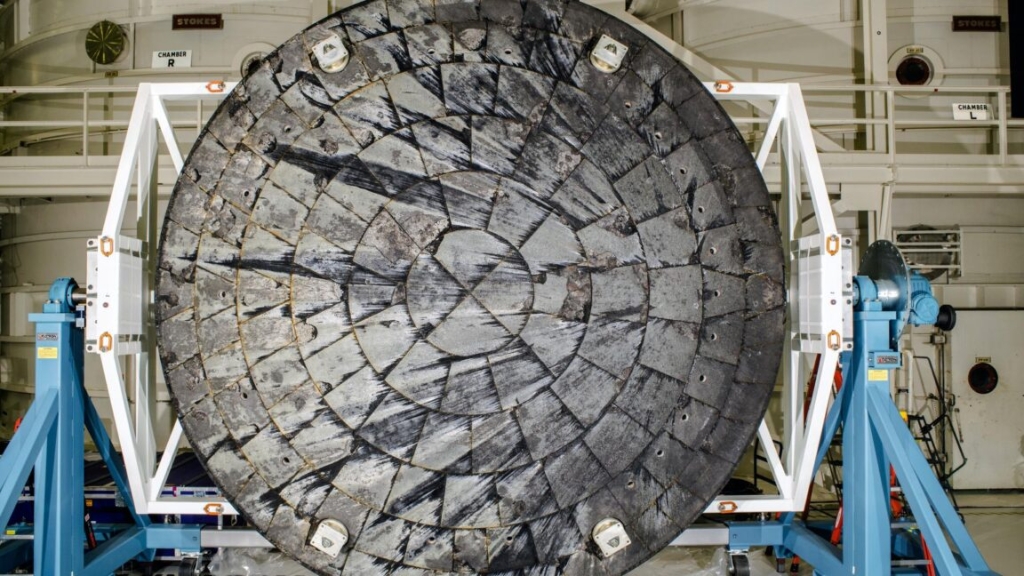
NASA’s Heat Shield Revelation: The Hidden Flaw That Nearly Grounded Artemis II
In a stunning revelation that has sent shockwaves through the aerospace community, NASA officials have disclosed that the Artemis II heat shield harbors a critical flaw that was actually detected years before the mission’s scheduled launch. The discovery, made public during a tense technical briefing on Thursday, has exposed a complex web of engineering challenges, bureaucratic decision-making, and the razor-thin margins that define modern space exploration.
The Devil in the Technical Details
The Thursday briefing quickly devolved into what one observer described as “rocket science at its most granular.” Engineers and NASA officials spent hours dissecting the minutiae of thermal protection systems, from the composition of Avcoat ablative material to the intricate process of tamp planes—the method of packing this specialized material into precisely engineered blocks.
The conversation touched on esoteric concepts like “early char loss” and “spallation,” terms that would make most people’s eyes glaze over but represent life-or-death considerations for spacecraft returning from lunar missions. The heat shield must withstand temperatures exceeding 5,000 degrees Fahrenheit during reentry, making every microscopic detail of its composition and construction critical.
The 2019 Warning Sign That Was Missed
Perhaps the most alarming revelation from the briefing was that a test conducted in 2019—three full years before Artemis I’s launch—had actually detected “hints” of the char loss problem that would later manifest during flight. This finding, however, was described by NASA officials as “not unequivocal” and failed to trigger the kind of immediate response that hindsight suggests it should have.
“Think of it like finding a small crack in a dam,” explained one engineer who spoke on condition of anonymity. “It’s concerning, but you need to determine if it’s structural or superficial. In this case, the initial assessment leaned toward superficial, but we now know that was incorrect.”
The delayed recognition of this issue has raised uncomfortable questions about NASA’s testing protocols and risk assessment procedures. When you’re dealing with spacecraft that cost billions of dollars and human lives, even subtle warning signs demand immediate and thorough investigation.
The Science Behind the Flaw
At the heart of the problem lies the Avcoat ablative material—a proprietary blend of epoxy novolac resin and fiberglass that has been NASA’s go-to heat shield material since the Apollo era. The material works by charring and eroding away during reentry, carrying heat away from the spacecraft through a process called pyrolysis.
However, the Artemis missions introduced new challenges. The longer-duration missions, higher reentry velocities, and different flight profiles created conditions that pushed the Avcoat material beyond its tested limits. The result was unexpected outgassing—the release of trapped gases within the material that created voids and weakened the structural integrity of the heat shield.
The Visual Evidence
Accompanying the technical briefing was striking imagery of technicians meticulously inspecting the Artemis II heat shield. The photograph, taken at Kennedy Space Center in July 2020, shows engineers in protective gear carefully examining the shield’s surface, their expressions betraying the intense scrutiny required for such critical work.
The image serves as a powerful reminder that behind every space mission are countless hours of human effort, attention to detail, and the constant battle against the unforgiving nature of physics and engineering tolerances.
NASA’s Response and Future Plans
The message from NASA leadership, including Acting Administrator Janet Isaacman and Associate Administrator Jim Free, was carefully calibrated. They acknowledged the imperfection in the heat shield design while simultaneously expressing confidence in the mission’s safety.
“This heat shield was not perfect,” Isaacman stated bluntly. “If we had known several years ago what we know now, the design would have incorporated permeability features to prevent the outgassing problems we observed.”
The acknowledgment represents a significant shift in NASA’s public communication strategy. Rather than downplaying the issue or minimizing its significance, the agency has chosen transparency, perhaps recognizing that in the age of social media and instant information sharing, attempting to conceal such problems would be both futile and damaging to public trust.
The Artemis III Solution
The lessons learned from Artemis II are already being incorporated into the Artemis III mission’s heat shield design. The new shield will feature permeable Avcoat material that allows trapped gases to escape during the extreme heating of reentry, preventing the buildup of pressure that led to the char loss observed in testing.
Additional modifications are being implemented to increase overall reliability, though NASA officials were careful to note that these changes represent evolution rather than revolution in heat shield technology. The fundamental principles remain sound; it’s the specific application to Artemis mission profiles that required adjustment.
The Flight Rationale Decision
In NASA terminology, “flight rationale” represents the comprehensive justification that a mission can proceed safely despite known issues. The agency’s decision to proceed with Artemis II, even with the imperfect heat shield, reflects a calculated risk assessment that weighs the benefits of continued progress against the potential dangers of delay.
“We have rigorous processes in place to evaluate these decisions,” explained Kshatriya. “The flight rationale for Artemis II is based on extensive testing, analysis, and contingency planning. We would not proceed if we weren’t confident in the mission’s safety.”
The What-If Scenarios
The briefing also revealed that NASA leadership had seriously considered alternative approaches to managing the heat shield issue. These options included:
- Flying Artemis II in low-Earth orbit to test life support systems while minimizing stress on the heat shield
- Conducting a second robotic mission around the Moon to gather additional data
- Swapping in the Artemis III spacecraft, which features the improved permeable Avcoat design
Each option carried its own set of complications and trade-offs. The low-Earth orbit approach would have provided valuable data but would have significantly delayed the Artemis program’s progress toward lunar landing objectives. The additional robotic mission would have been expensive and time-consuming. The spacecraft swap, while seemingly straightforward, proved to be logistically complex.
Why the Spacecraft Swap Wasn’t Viable
When pressed on why NASA didn’t simply use the Artemis III spacecraft for the Artemis II mission, Kshatriya provided a detailed explanation that illuminated the complexity of spacecraft design and mission planning.
“The Artemis III spacecraft, designated CSM 3, has unique capabilities that Artemis II doesn’t require,” he explained. “It includes docking systems that would have been unnecessary for a free-return trajectory mission like Artemis II. Retrofitting Artemis II’s spacecraft, CSM 2, with these systems would have been extremely difficult due to the unique design of the docking tunnel.”
The explanation reveals the intricate interdependencies in spacecraft design, where changes to one system often cascade into required modifications across multiple subsystems. What might appear to be a simple swap from the outside represents a complex engineering challenge that could have delayed the mission by years rather than months.
The Pressure to Progress
Underlying all of these technical discussions is the intense pressure NASA faces to maintain momentum in the Artemis program. The agency is operating under ambitious timelines, competing international priorities, and the weight of public expectations that have been building for decades.
“We’re trying to get uphill as quickly as we can,” Kshatriya acknowledged, using terminology that suggests both the technical challenges and the metaphorical climb toward returning humans to the Moon. The phrase captures the sense of urgency that permeates NASA’s current operations, balanced against the equally important need for safety and reliability.
The Broader Implications
The heat shield revelation has implications that extend far beyond the immediate Artemis program. It raises questions about the reliability of long-standing aerospace technologies when pushed to new extremes, the effectiveness of NASA’s testing and evaluation processes, and the balance between innovation and proven solutions in space exploration.
For the commercial space industry watching closely, the situation serves as both a cautionary tale and a learning opportunity. Companies developing their own spacecraft and heat shield technologies will be analyzing NASA’s experience carefully, looking to avoid similar pitfalls in their own development programs.
Public Trust and Transparency
NASA’s decision to be forthright about the heat shield issues represents a calculated bet on transparency. In an era where misinformation spreads rapidly and public trust in institutions faces numerous challenges, the agency appears to have concluded that honesty about problems, even potentially embarrassing ones, is preferable to the alternative.
“This is how progress happens in aerospace,” one official noted. “We identify problems, we solve them, and we move forward smarter than before. The fact that we found this issue and are addressing it openly demonstrates the strength of our processes, not their weakness.”
Looking Forward
As Artemis II’s launch date approaches, all eyes will be on that heat shield. The extensive testing, analysis, and contingency planning that NASA has conducted will be put to the ultimate test during reentry, when the spacecraft will face temperatures that could melt steel and forces that would crush a human instantly.
The success or failure of this mission will have ramifications that extend far beyond the immediate program. It will influence public support for space exploration, affect international partnerships in space, and potentially impact the timeline for NASA’s ambitious goal of establishing a sustainable presence on the Moon.
For now, NASA remains confident. The flight rationale has been established, the modifications have been implemented, and the agency is moving forward with what it believes is a safe and achievable mission. Whether that confidence is justified will be determined in the crucible of lunar reentry, where theory meets reality and where the true test of engineering excellence occurs.
Tags: #ArtemisII #NASA #HeatShield #SpaceExploration #MoonMission #AerospaceEngineering #Avcoat #ThermalProtection #SpaceTechnology #NASAWatch #Moon2024 #SpaceRace #EngineeringChallenges #SpaceSafety #NASAUpdates
Viral Sentences: NASA’s heat shield flaw was detected THREE YEARS before launch but wasn’t flagged as critical. NASA considered scrapping Artemis II and using Artemis III’s spacecraft instead. The heat shield problem could have grounded the entire Artemis program. NASA officials admit they would design the heat shield differently if they knew then what they know now. The Artemis II heat shield will fly anyway – NASA says it’s safe enough. NASA’s transparency about the flaw is being praised as a new era of honesty. The heat shield issue raises questions about NASA’s testing protocols. Commercial space companies are watching NASA’s heat shield drama closely. The flaw was found in a 2019 test but wasn’t considered serious at the time. NASA weighed flying Artemis II in low-Earth orbit instead of around the Moon. The Artemis III heat shield will feature permeable Avcoat to prevent outgassing. Technicians are meticulously inspecting every inch of the Artemis II heat shield. NASA’s decision to proceed with Artemis II despite the flaw is controversial. The heat shield must withstand temperatures over 5,000 degrees Fahrenheit.
,

Leave a Reply
Want to join the discussion?Feel free to contribute!