
Here are the launches and landings we’re most excited about in 2026
🚀 2026: The Year Humanity Reaches for the Stars Like Never Before
Buckle up, space enthusiasts — 2026 is shaping up to be the most electrifying chapter in the story of human spaceflight since the Apollo era. With NASA, SpaceX, Blue Origin, and a constellation of other innovators pushing boundaries, we’re on the cusp of witnessing history unfold in real time. From the first crewed lunar flyby in over half a century to groundbreaking orbital refueling demonstrations, the cosmos is calling — and this year, we’re answering louder than ever.
🌙 Artemis II: Humanity’s Return to Deep Space
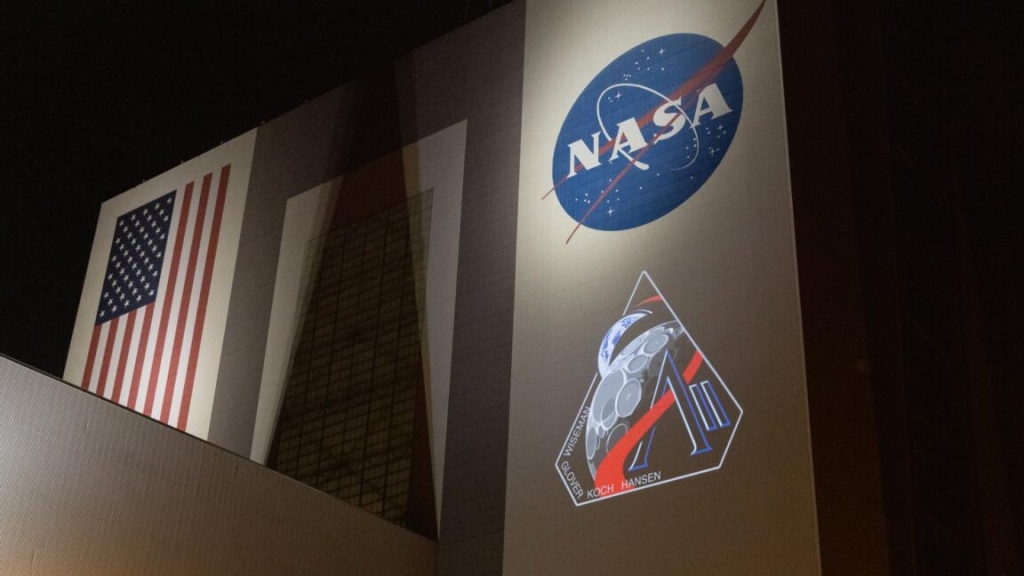
The heartbeat of 2026’s space ambitions pulses strongest with Artemis II — NASA’s bold mission to send four astronauts on a 10-day journey around the Moon and back. This isn’t just another flight; it’s the first crewed mission aboard the Space Launch System (SLS) rocket and Orion spacecraft, marking humanity’s return to deep space after a 54-year absence.
Inside the cavernous Vehicle Assembly Building at Kennedy Space Center, the SLS rocket and Orion capsule stand fully integrated, a towering testament to decades of engineering prowess. Final preparations are in overdrive, with a critical countdown dress rehearsal slated for the next few weeks. If all goes according to plan, Artemis II could ignite its engines and thunder skyward as early as February 2026, carrying astronauts Reid Wiseman, Victor Glover, Christina Koch, and Jeremy Hansen on a voyage that will take them farther from Earth than any humans have traveled since Apollo.
Even if February slips by, the mission remains on track for a spring or summer launch — a testament to NASA’s meticulous planning and the resilience of the Artemis program. This mission isn’t just about circling the Moon; it’s about proving that humanity can once again operate beyond low Earth orbit, laying the groundwork for future lunar landings and, ultimately, Mars missions.
Probability of Artemis II launching in 2026: 90% — a near-certainty that has space fans worldwide holding their breath.
🛰️ Starship Refueling Demo: The Key to the Solar System
If Artemis II is the headline act, then SpaceX’s Starship refueling demonstration is the revolutionary tech demo that could redefine space exploration forever. This mission, targeted for 2026, is a critical milestone on SpaceX’s roadmap to making Starship the workhorse of deep space travel.
Here’s the challenge: to send humans to the Moon — or even Mars — Starship needs to refuel in orbit. No spacecraft has ever attempted large-scale cryogenic refueling in the vacuum of space before. This demo will see two Starship vehicles launch from separate pads (likely in Texas, possibly Florida), rendezvous in orbit, and attempt to transfer super-cold methane and liquid oxygen propellants between them.
Why is this so crucial? Because without mastering orbital refueling, Starship’s promise as a lunar lander (under NASA’s contract) and as a Mars-colonizing vehicle remains theoretical. This demo is the linchpin — the moment where science fiction edges into reality.
Probability of the refueling demo occurring in 2026: 50% — a coin flip, but one with universe-altering stakes.
🔭 New Windows on the Universe
Beyond these marquee missions, 2026 promises a cascade of scientific breakthroughs. New rockets are poised to debut, carrying cutting-edge telescopes and probes designed to peer deeper into the cosmos than ever before. From studying the atmospheres of distant exoplanets to unraveling the mysteries of dark matter and dark energy, this year could redefine our understanding of the Universe.
Private companies like Blue Origin are also stepping up, with plans for lunar landers and orbital habitats that could accelerate the transition from exploration to permanent presence in space. The race to the Moon is no longer just a government endeavor — it’s a global, commercial, and collaborative sprint.
🌍 Why 2026 Matters
This isn’t just about rockets and robots. It’s about humanity’s next giant leap. The missions of 2026 represent a pivot point — from the era of flags and footprints to one of sustainable exploration and, eventually, settlement. We’re not just visiting space; we’re learning to live there.
The excitement is palpable. Social media is ablaze with speculation, engineers are burning the midnight oil, and space fans are counting down the days. Whether you’re a seasoned astronomer or someone who just loves a good story of human ingenuity, 2026 is your year.
So, keep your eyes on the skies — and your notifications on. The next chapter of the space age is about to begin, and you won’t want to miss a single launch.
Tags: #ArtemisII #SpaceX #Starship #NASA #BlueOrigin #SpaceExploration #LunarMission #2026Missions #OrbitalRefueling #DeepSpace #Moon2026 #SpaceTech #RocketScience #FutureOfSpace #MarsBound #CosmicMilestones #SpaceRace2026 #HumanSpaceflight #SpaceInnovation #UniverseUnlocked
Viral Sentences: 🚀 Artemis II could launch as early as February 2026 — humanity’s first deep space crew mission in 54 years! 🛰️ SpaceX’s orbital refueling demo could unlock the entire solar system for exploration. 🌙 NASA’s SLS and Orion are ready to take astronauts farther than ever before. 🌍 2026: The year we stop visiting space and start living there. 🔭 New telescopes and rockets will open unprecedented windows on the Universe. 🌌 The race to the Moon is now a global, commercial sprint — and we’re all invited to watch history unfold.
,

Leave a Reply
Want to join the discussion?Feel free to contribute!