
Apple Intelligence accidentally launches in China before regulatory approval
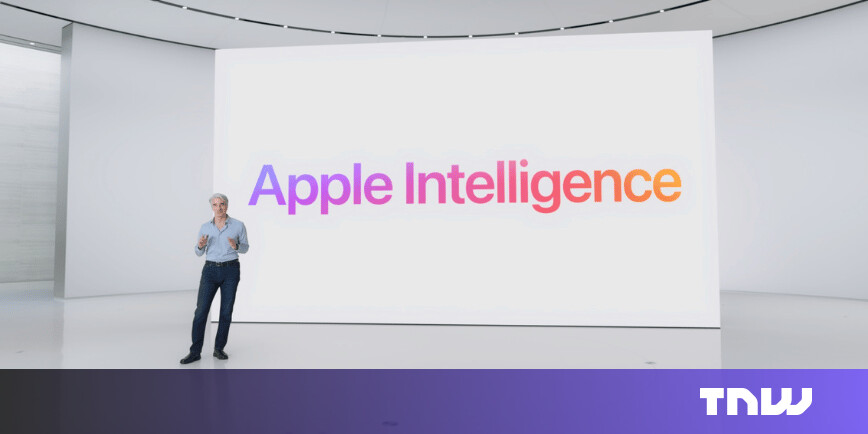
Apple Intelligence Accidentally Rolls Out in China, Then Vanishes — Leaving Regulatory Chaos in Its Wake
In the dead of night, just as millions of Chinese iPhone users were settling into sleep, Apple Intelligence suddenly flickered to life — only to disappear hours later like a mirage in the digital desert. What was meant to be a tightly controlled, government-approved rollout instead became an accidental flashpoint, exposing Apple to potential regulatory penalties and underscoring the razor-thin tightrope tech giants must walk in China’s heavily policed AI ecosystem.
According to Bloomberg’s Mark Gurman, the unannounced deployment — which Apple swiftly pulled offline — wasn’t just a minor technical hiccup. It was a full-scale, if fleeting, activation of features that had never received the green light from Beijing’s Cyberspace Administration of China (CAC), the gatekeeper of all generative AI services in the country.
The Regulatory Minefield Apple Is Trying to Cross
China’s AI governance is among the strictest in the world. Under the country’s Interim Measures for the Management of Generative AI Services, all AI models must pass a rigorous security evaluation and complete algorithm filing with the CAC before they can be offered to users. Even a brief, unintended release can be interpreted as providing an unlicensed service — a violation that could result in administrative penalties.
Shanghai-based intellectual property lawyer You Yunting warns that Apple’s accidental rollout could be seen as a breach of these rules, potentially triggering an official investigation. For a company that’s already struggling to regain momentum in China’s hyper-competitive smartphone market, this misstep could not have come at a worse time.
A Yearslong Struggle to Launch in China
Apple first unveiled its Apple Intelligence suite in June 2024, launching it in the U.S. that October and expanding to the EU in April 2025. But China — Apple’s largest market outside the U.S. — has proven far more challenging.
Unlike in the West, where Apple can deploy its own AI models, Chinese regulations require all generative AI tools to use domestically approved models and include real-time content filtering to block politically sensitive material. To comply, Apple struck a deal with Alibaba Group in February 2025 to integrate the company’s Qwen large language model into Apple Intelligence. A separate partnership with Baidu for visual intelligence features has also been reported, though details remain scarce.
Even with these partnerships in place, the feature has been technically ready for months but remains stuck in regulatory limbo. CEO Tim Cook acknowledged the delay during a visit to Shanghai in October 2025, telling attendees at the Global Asset Management Forum that Apple was actively working to bring the feature to China — but stopped short of offering a timeline.
The Competitive Cost of Waiting
While Apple waits, its rivals aren’t standing still. Domestic players like Xiaomi, Oppo, and Vivo have been aggressively embedding AI features into their devices, with Oppo integrating Alibaba’s DeepSeek model into its ColorOS system and pledging to bring generative AI to 100 million users globally. Huawei, meanwhile, has reportedly overtaken Apple in Chinese smartphone shipments in 2025, capitalizing on Apple’s absence of AI-driven differentiators.
For Chinese users who managed to download the feature before it vanished, the brief taste of Apple Intelligence included tools like real-time translation, photo editing, writing assistance, and personalized emoji creation — all labeled as beta. Parts of the suite, including writing and image tools, are already available in Hong Kong, highlighting the stark contrast between Apple’s rollout in semi-autonomous regions and mainland China.
What This Means for Apple’s China Strategy
The accidental deployment is more than just an embarrassing glitch — it’s a wake-up call. In a market where over 5,000 algorithms have already been filed with the CAC and enforcement campaigns are active and ongoing, even a momentary lapse can carry real consequences.
For Apple, navigating AI regulation across different jurisdictions demands more than technical readiness. It requires a deep understanding of local laws, proactive engagement with regulators, and flawless execution. The company’s stumble in China is a stark reminder that in the world’s most populous market, the rules are not just different — they are enforced with an iron fist.
As Apple works to untangle this regulatory knot, the clock is ticking. In a market where AI is fast becoming a key differentiator, every delay cedes ground to rivals who are already embedding intelligence into the fabric of their devices. Whether Apple can recover from this misstep — and finally bring Apple Intelligence to China — remains one of the most closely watched stories in tech for 2025.
Tags: Apple Intelligence, China AI regulation, Cyberspace Administration of China, Alibaba Qwen, Apple China strategy, generative AI compliance, Tim Cook, Huawei vs Apple, Xiaomi AI features, Oppo ColorOS, AI rollout error, regulatory penalties, iPhone AI tools, DeepSeek model, Baidu partnership, smartphone market competition, Apple beta features, content filtering, algorithm filing, CAC approval, tech regulation 2025
Viral Sentences:
- Apple Intelligence appeared — and vanished — in China overnight, sparking regulatory chaos.
- The accidental rollout could cost Apple big in the world’s toughest AI market.
- While Apple waits, rivals like Huawei and Xiaomi are racing ahead with AI.
- Even a beta slip-up in China can trigger official penalties.
- Apple’s China AI delay is more than a glitch — it’s a strategic misstep.
- In China, AI isn’t just tech — it’s tightly controlled state infrastructure.
- Apple’s midnight mistake exposes the razor-thin line between innovation and violation.
- The clock is ticking for Apple to catch up in China’s AI arms race.
- A brief beta taste left Chinese users craving more — before Apple pulled the plug.
- Apple’s China AI saga is the cautionary tale of 2025.
,


Leave a Reply
Want to join the discussion?Feel free to contribute!