
GNOME Resources 1.10 Adds Monitoring Support For AMD Ryzen AI NPUs
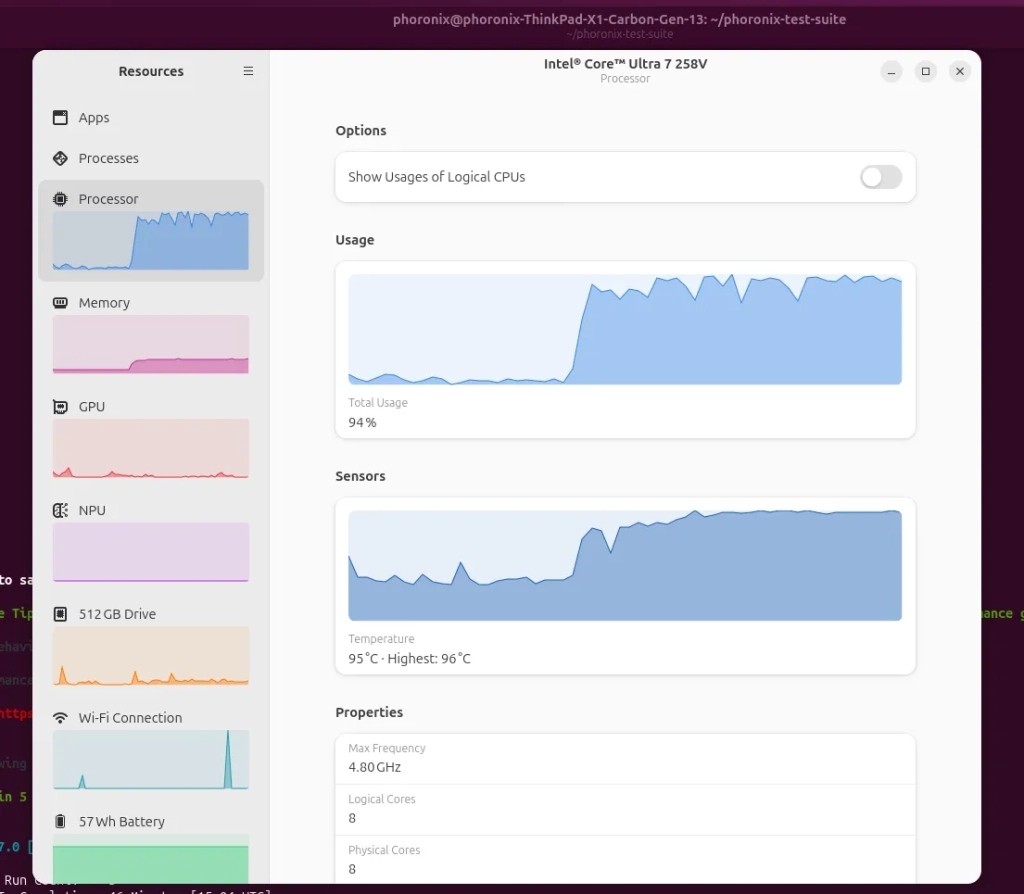
GNOME Resources 1.10: The Ultimate System Monitor Just Got Smarter
In a bold leap forward for desktop performance monitoring, the GNOME team has unveiled Resources 1.10—a major update to their sleek, modern system monitoring application that’s already making waves across the Linux ecosystem. This release comes at a particularly exciting time, as Resources 1.10 is set to become the default system monitor in Ubuntu 26.04 LTS, cementing its place as the go-to tool for millions of users worldwide.
AMD Ryzen AI NPU Support: A Game-Changer for AI Workloads
The headline feature of this release is undoubtedly the groundbreaking support for AMD Ryzen AI Neural Processing Units (NPUs). For the first time, users with AMD Ryzen AI SoCs can now monitor their NPU utilization directly within the GNOME desktop environment, bringing AMD users on par with their Intel counterparts who’ve enjoyed similar capabilities for Core Ultra processors.
This integration isn’t just a checkbox feature—it’s a sophisticated implementation that requires a recent kernel with the AMDXDNA kernel driver and the AMD Ryzen AI NPU firmware loaded. Once configured, users gain unprecedented visibility into how their AI accelerator is performing, enabling better optimization of AI workloads, machine learning tasks, and other compute-intensive operations that leverage the NPU’s specialized architecture.
The addition of AMD NPU monitoring represents a significant step toward democratizing AI capabilities on the desktop. As AI workloads become increasingly common in everyday computing—from intelligent assistants to real-time language translation and advanced image processing—having a clear window into NPU performance becomes essential for both developers and power users.
Multi-Process Search: Efficiency Redefined
Beyond the NPU support, GNOME Resources 1.10 introduces a remarkably practical enhancement to the search functionality. Users can now search for multiple process names simultaneously using the | operator in the search field. This seemingly simple addition dramatically improves workflow efficiency, allowing system administrators and power users to quickly filter and identify related processes without running multiple searches or manually cross-referencing results.
For example, searching for “chrome|firefox|code” instantly surfaces all instances of these applications, making it easier to monitor resource usage across multiple applications simultaneously. This feature demonstrates GNOME’s commitment to listening to user feedback and implementing solutions that genuinely improve daily workflows.
Enhanced Application Detection
The update also brings significant improvements to application detection capabilities. Resources 1.10 now properly identifies AppImage applications, a popular format for distributing portable Linux applications. This enhancement ensures that even applications distributed outside traditional package management systems receive accurate monitoring and representation within the system monitor.
Additionally, the app now detects Portable applications, further expanding its coverage of modern application distribution methods. This comprehensive approach to application detection reflects the evolving landscape of software distribution and ensures that Resources remains relevant regardless of how applications are installed or packaged.
Network Interface Intelligence
Network monitoring receives a subtle but important upgrade with proper detection of LXC bridge network interfaces. For users running Linux Containers (LXC), this means more accurate network monitoring and better visibility into container networking configurations. This improvement is particularly valuable for developers and system administrators working with containerized applications, ensuring that network resource monitoring remains accurate even in complex virtualization scenarios.
Performance Optimizations: The Unsung Hero
Perhaps the most impactful improvements in Resources 1.10 are the ones users might not immediately notice but will certainly appreciate. The development team has significantly reduced the CPU usage of Resources’ companion process, addressing a common concern among system monitoring applications that can sometimes become resource hogs themselves.
This optimization demonstrates a sophisticated understanding of the paradox inherent in system monitoring: the tool designed to help users optimize their system shouldn’t itself consume excessive resources. By reducing the CPU footprint of the companion process, GNOME has ensured that Resources remains a net positive for system performance, even during extended monitoring sessions.
Technical Debt Reduction
The development team has also streamlined the codebase by reducing Rust Cargo dependencies. This move not only improves build times and reduces the application’s attack surface but also makes the codebase more maintainable for future development. In an era where software bloat is a growing concern, this commitment to lean, efficient code is particularly commendable.
The Bigger Picture: GNOME’s Ecosystem Strategy
The timing of this release is particularly noteworthy given its adoption as the default system monitor in Ubuntu 26.04 LTS. This partnership between the GNOME project and Ubuntu represents a strategic alignment that benefits both parties and, most importantly, end users. Ubuntu’s massive user base will now experience the refined, feature-rich monitoring capabilities of Resources by default, potentially exposing millions of users to the GNOME desktop environment’s sophisticated approach to system management.
This collaboration also signals GNOME’s growing influence in the Linux desktop ecosystem and its ability to produce applications that meet the exacting standards of major distributions. The fact that Ubuntu has chosen Resources over alternatives speaks volumes about the application’s maturity, reliability, and user experience.
Looking Ahead: The Future of Desktop Monitoring
With Resources 1.10, GNOME has set a new standard for desktop system monitoring. The combination of AI accelerator support, enhanced search capabilities, improved application detection, and performance optimizations creates a comprehensive tool that addresses the needs of modern computing environments.
As we move further into an era dominated by AI workloads, containerized applications, and diverse software distribution methods, tools like Resources will become increasingly vital. The application’s ability to adapt to these changing paradigms while maintaining a focus on performance and usability positions it as a critical component of the modern Linux desktop experience.
Downloads and Community Impact
The release is available immediately through GitHub, with installation packages and source code accessible to users and distributions alike. The open-source nature of the project ensures that the improvements made in Resources 1.10 will likely find their way into other distributions and potentially inspire similar enhancements in competing system monitoring tools.
For the Linux community, this release represents more than just a software update—it’s a statement about the maturity and sophistication of open-source desktop applications. Resources 1.10 demonstrates that free and open-source software can compete with, and often surpass, proprietary alternatives in terms of features, performance, and user experience.
Tags & Viral Phrases
AMD Ryzen AI NPU monitoring breakthrough
GNOME Resources 1.10 game-changing features
Ubuntu 26.04 LTS default system monitor
AI accelerator desktop integration revolution
Linux system monitoring reimagined
GNOME desktop ecosystem dominance
AMD vs Intel NPU support parity achieved
System monitoring without the performance penalty
Open source innovation leads the way
Next-generation desktop performance optimization
AI workloads finally get the visibility they deserve
Linux containers network monitoring perfected
AppImage and Portable app detection excellence
Rust-powered system monitoring efficiency
The future of desktop AI is here
GNOME Resources sets new industry standards
Performance monitoring that doesn’t monitor itself
Multi-process search transforms system administration
LXC bridge interface detection breakthrough
CPU usage reduction that actually matters
GNOME Resources 1.10 download now available
Ubuntu’s bold choice for system monitoring excellence
Desktop AI acceleration monitoring made simple
The ultimate system monitor just got upgraded
GNOME continues to dominate Linux desktop innovation
Resources 1.10 proves open source can outperform
AI NPU monitoring for the masses
System monitoring for the AI era
The GNOME advantage in desktop computing
Why Resources 1.10 matters for every Linux user
From concept to default: Resources’ incredible journey
Breaking down barriers in desktop system monitoring
The technical debt reduction revolution
Cargo dependencies trimmed, performance maximized
GNOME’s ecosystem strategy pays off big time
Desktop monitoring that understands modern computing
The silent revolution in system resource management
Resources 1.10: Small changes, massive impact
Linux desktop monitoring enters a new dimension
The NPU monitoring feature everyone’s been waiting for
GNOME proves once again why it’s the gold standard
Ubuntu 26.04 LTS users get the best by default
System monitoring that keeps up with technological evolution
The open source advantage in desktop innovation
Resources 1.10: Where performance meets intelligence
Desktop monitoring for the AI-powered future
The GNOME Resources phenomenon explained
Why every Linux user needs to upgrade now
The system monitor that finally gets it right
,


Leave a Reply
Want to join the discussion?Feel free to contribute!