
America’s Largest Hospital System Ready to Start Replacing Radiologists With AI, Its CEO Says
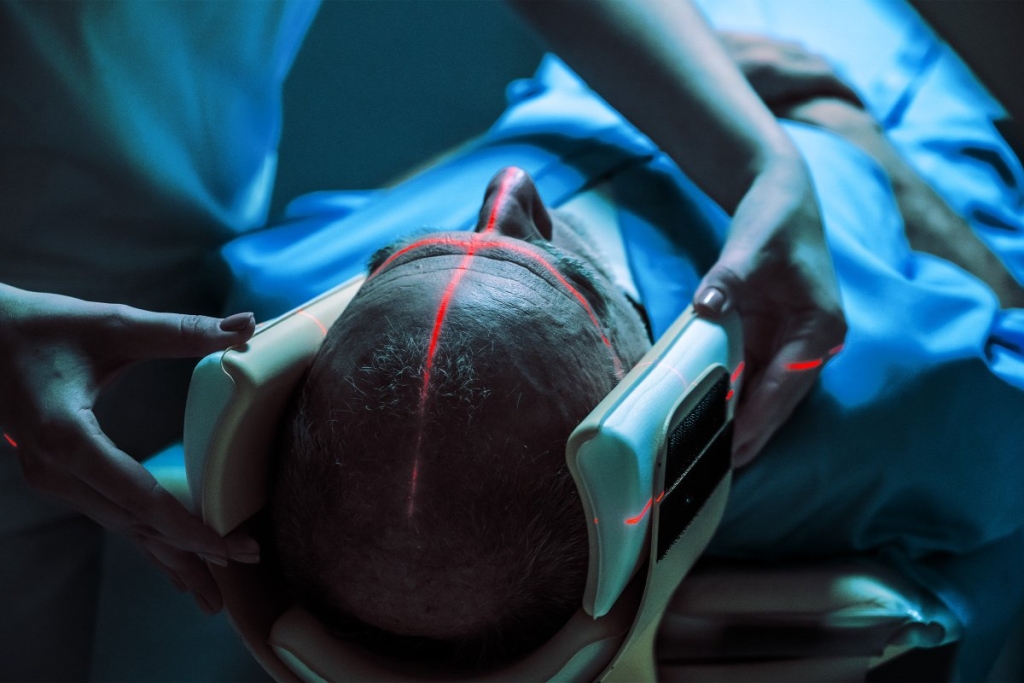
NYC Hospital CEO Envisions AI Replacing Radiologists, Sparking Fierce Debate Over Patient Safety
In a move that has sent shockwaves through the medical community, Mitchell Katz, president and CEO of NYC Health + Hospitals—the largest public hospital system in the United States—has openly advocated for replacing human radiologists with artificial intelligence. Speaking at a panel hosted by Crain’s New York Business, Katz declared that AI technology is already advanced enough to take over a significant portion of radiological duties, provided regulatory hurdles can be cleared.
“We could replace a great deal of radiologists with AI at this moment, if we are ready to do the regulatory challenge,” Katz stated, according to Radiology Business. He pointed to breast cancer screening as a prime example, suggesting that AI could automate the initial analysis of mammograms, flagging only abnormal results for human review. The potential for “major savings” was a key driver behind his proposal.
However, Katz’s vision has been met with fierce resistance from medical professionals. Mohammed Suhail, a radiologist at North Coast Imaging in San Diego, lambasted the idea as “undeniable proof that confidently uninformed hospital administrators are a danger to patients.” Suhail warned that any attempt to implement AI-only readings would lead to “patient harm and death,” accusing hospital executives of being “easily duped by AI companies that are nowhere near capable of providing patient care.”
The controversy surrounding AI in radiology is not new, but recent research has raised even more alarming concerns. A yet-to-be-peer-reviewed study from Stanford University has uncovered a phenomenon dubbed the “AI mirage,” where advanced AI models can ace medical benchmark tests without ever seeing actual X-ray images. Instead, these models generate plausible-sounding explanations for findings they have no real data to support—a step beyond mere hallucinations into a realm of epistemic mimicry.
“In this epistemic mimicry, the model simulates the entire perceptual process that would have led to the answer,” the Stanford researchers wrote. “This helps explain why reasoning traces, on their own, cannot certify visual reasoning: the trace may be fluent, coherent, and apparently image-based while being anchored to no image at all.”
This discovery has profound implications for any hospital considering AI as a cost-cutting measure in radiology. The risk is not just of occasional errors, but of a systemic failure to accurately interpret medical images—potentially leading to misdiagnoses, delayed treatments, and, ultimately, patient harm.
The debate over AI in healthcare is intensifying, with some seeing it as a revolutionary tool for efficiency and others warning of a dangerous over-reliance on unproven technology. As hospitals across the country grapple with staffing shortages and rising costs, the allure of AI as a solution is undeniable. But as the backlash from radiologists and the findings from Stanford suggest, the stakes are nothing less than patient safety.
The future of radiology may well hinge on how these competing visions are reconciled—and whether the promise of AI can be harnessed without compromising the care that patients deserve.
Tags & Viral Phrases:
AI replacing radiologists, hospital CEO AI vision, NYC Health + Hospitals, radiology automation, breast cancer screening AI, patient safety AI, AI mirage phenomenon, Stanford AI research, medical imaging errors, healthcare cost-cutting, radiologist backlash, AI hallucinations, epistemic mimicry, medical benchmark tests, AI in healthcare debate, hospital administrators AI, AI companies healthcare, patient harm AI, radiology unit AI, life-threatening medical emergencies AI, ChatGPT health failures.
,


Leave a Reply
Want to join the discussion?Feel free to contribute!