
How Many AA Batteries Does It Take To Power A PC? This YouTuber Found The Answer
How Many AA Batteries Does It Take To Power A PC? This YouTuber Found The Answer
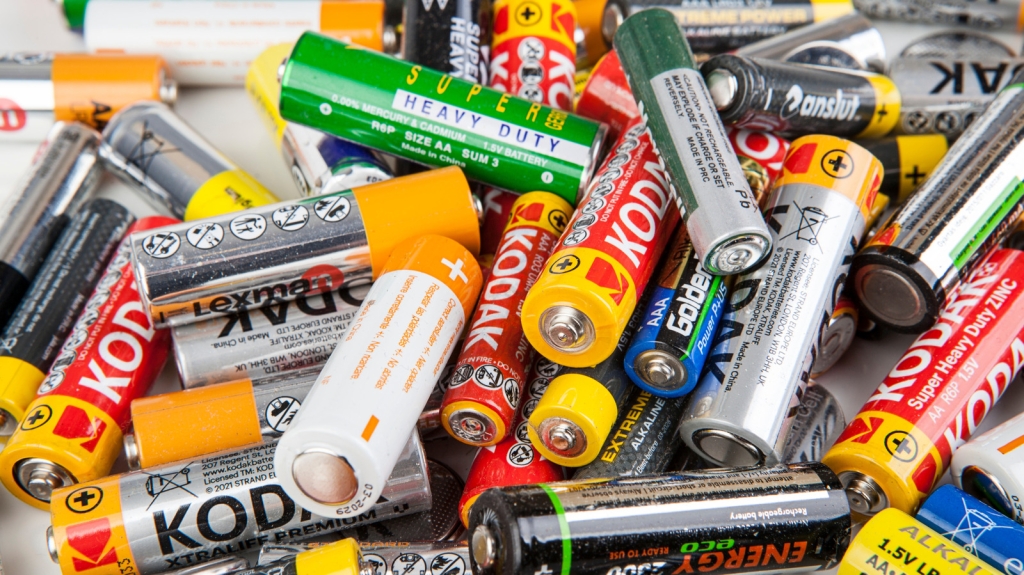
In a fascinating experiment that pushes the boundaries of unconventional computing, YouTuber ScuffedBits has demonstrated that it’s possible to power an entire desktop PC using nothing but AA batteries. The answer? A staggering 56 AA batteries were required to keep the system running long enough to complete a single level of Minesweeper.
The Setup: Stripping Down to Battery Power
ScuffedBits began with a modest desktop PC setup featuring an Intel CPU, two RAM modules, and a SATA SSD mounted on a motherboard. The system originally came equipped with a 450-watt Corsair CX430 power supply unit (PSU), but that was about to be completely removed from the equation.
Rather than attempting to create some kind of battery-to-PSU converter, ScuffedBits took a more direct approach. Since PCs actually operate on low-voltage power (which the PSU converts from standard wall outlet voltage), he could bypass the traditional power supply entirely. The PSU was completely removed and replaced with a custom cable that connected directly to the motherboard, along with numerous 3D-printed battery holders.
The experiment began modestly with just eight 1.5V AA batteries, but this initial attempt would prove to be woefully inadequate for the task at hand.
The Failed Attempts: Learning Through Trial and Error
The first attempt with only eight AA batteries was predictably unsuccessful. While the system showed brief signs of life—the fan spun for a few seconds and the motherboard’s cue light illuminated—the PC failed to boot properly. This initial failure led to a series of iterative improvements.
Increasing the battery count to 24 didn’t yield any better results, and even switching from carbon-zinc batteries to higher-current alkaline batteries failed to provide sufficient power. Each failed attempt provided valuable data about the power requirements of even a basic desktop system.
The breakthrough came when ScuffedBits began implementing additional modifications beyond simply adding more batteries. He incorporated two capacitors into the circuit to help manage power delivery and stability. Additionally, he increased the number of wires connecting the batteries to reduce resistance and improve current flow.
The Breakthrough: 56 Batteries and a Clever Workaround
After numerous failed attempts and modifications, ScuffedBits finally arrived at a configuration using 56 AA batteries. However, even this substantial battery array wasn’t quite enough to boot the PC directly from battery power alone.
The solution required a clever workaround: ScuffedBits used an external power supply to initially boot the PC and launch the game, then disconnected the external power once the system was running. At this point, the PC continued operating entirely on the 56 AA batteries.
This approach allowed the system to run long enough to complete a level of Minesweeper, though the total runtime was less than five minutes. The experiment demonstrated that while possible, battery-powered desktop computing is far from practical for extended use.
The Limitations: Why This Isn’t a Practical Solution
The experiment revealed several important limitations that explain why we don’t see battery-powered desktop PCs in the real world. When ScuffedBits attempted to add an entry-level graphics card and run the more demanding game “A Short Hike,” the system shut down in just a few seconds, even with all 56 batteries connected.
This dramatic reduction in runtime with increased power demands illustrates the fundamental challenge of battery-powered desktop computing. Desktop components, particularly discrete graphics cards, simply consume too much power for practical battery operation.
The Bigger Picture: Appreciating Modern Computing
While the experiment was ultimately successful in proving that a PC can run on AA batteries, it serves as a powerful reminder of why laptops exist and are so valuable. The convenience of having a portable, battery-powered computer that can run for hours on a single charge is something we often take for granted.
Consider the logistics of using 56 AA batteries every time you wanted to use your computer for a short period. Not only would this be incredibly expensive over time, but the environmental impact of disposing of that many batteries would be significant. Modern laptops, by contrast, can run for 8-12 hours on a single charge using rechargeable lithium-ion batteries that are far more environmentally friendly and cost-effective.
Technical Insights: Understanding Power Requirements
The experiment provides fascinating insights into the power requirements of desktop computers. Even a modest system with integrated graphics requires substantial power to operate, particularly during the boot process when components are initializing and drawing maximum current.
The need for capacitors in the circuit highlights the importance of power stability in computing. Sudden voltage drops or fluctuations can cause system instability or crashes, which is why traditional power supplies include sophisticated circuitry to maintain clean, stable power delivery.
The Future of Alternative Power Sources
While AA batteries may not be the future of PC power delivery, experiments like this one spark interesting discussions about alternative power sources for computing. As energy costs rise and environmental concerns grow, the computing industry continues to explore more efficient and sustainable power solutions.
From solar-powered laptops to systems that can harvest energy from ambient sources, the quest for alternative power continues. While 56 AA batteries may not be practical, the experiment demonstrates that with enough ingenuity, almost anything is possible in the world of technology.
Tags and Viral Phrases
- “56 AA batteries power PC experiment”
- “YouTube tech experiment gone viral”
- “Can you run a computer on batteries?”
- “Tech YouTuber pushes boundaries”
- “AA batteries vs desktop PC power”
- “Why laptops exist explained”
- “Crazy tech experiments that actually worked”
- “The most batteries ever used to power a PC”
- “Tech innovation or just a waste of batteries?”
- “When curiosity meets engineering”
- “The ultimate battery life test”
- “Desktop computing’s dirty little secret”
- “Why your PC needs that big power supply”
- “The math behind battery-powered computing”
- “Tech experiments that make you go ‘why?'”
- “From wall power to battery power”
- “The limitations of battery technology”
- “Why we don’t use batteries for desktop PCs”
- “The cost of curiosity in tech”
- “When engineers get bored”
- “The most inefficient way to power a computer”
- “Tech experiments that prove the obvious”
- “Why your laptop battery lasts longer than you think”
- “The physics of powering modern electronics”
- “Battery technology challenges in computing”
- “The hidden costs of alternative power sources”
- “Why desktop PCs aren’t portable (and never will be)”
- “The environmental impact of battery experiments”
- “Tech curiosity: worth the cost?”
- “When YouTube experiments teach real lessons”
- “The future of alternative power in computing”
,


Leave a Reply
Want to join the discussion?Feel free to contribute!