
Fungus could be the insecticide of the future
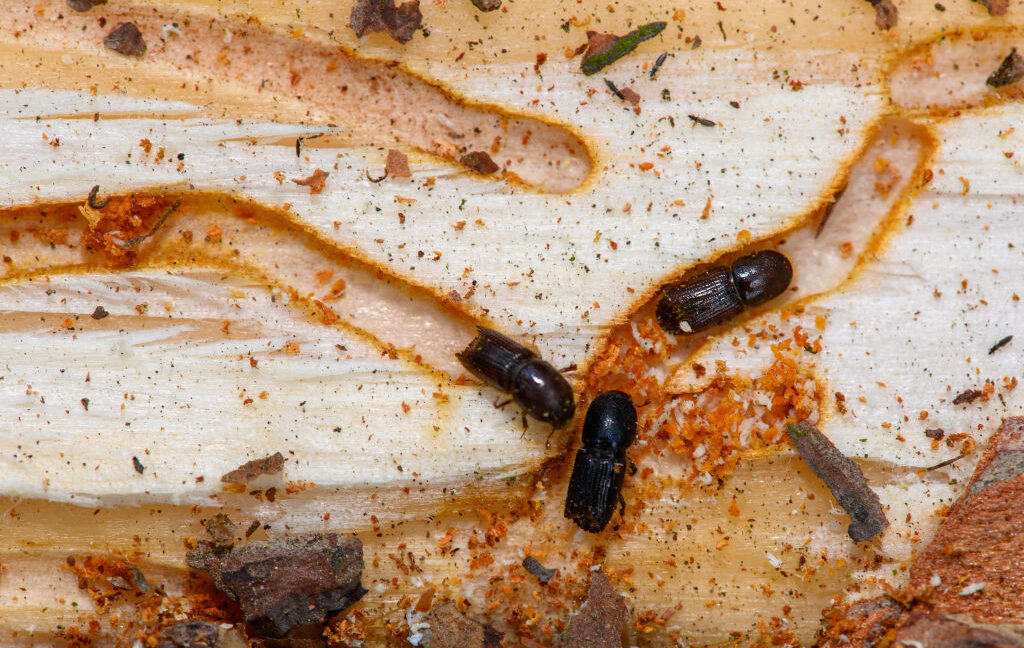
Deadly Fungus Turns the Tables on Bark Beetles, Offering Eco-Friendly Pest Control
In a remarkable twist of nature, scientists have discovered a biological weapon that could revolutionize pest control: a fungus that outsmarts one of the most destructive insects plaguing our forests. While exterminators continue to battle wood-eating pests like beetles, termites, and carpenter ants, a new study reveals how certain fungal strains can defeat these invaders by neutralizing their chemical defenses.
The Beetle’s Secret Weapon—And Its Achilles’ Heel
For years, Eurasian spruce bark beetles (Ips typographus) have thrived by exploiting a clever survival strategy. These tiny insects feed on spruce bark rich in phenolic compounds—organic molecules that normally protect trees by acting as powerful antioxidants and antimicrobials. Rather than being harmed by these defensive chemicals, the beetles have evolved to metabolize them into even more potent antimicrobial substances, creating what researchers call a “borrowed defense” system.
This biochemical trickery made the beetles seem virtually invulnerable to fungal pathogens. After all, how could a fungus survive in an environment where the host insect had already enhanced the tree’s natural antimicrobial defenses?
The Fungal Counter-Attack
An international research team led by biochemist Ruo Sun from the Max Planck Institute for Chemical Ecology in Jena, Germany, has uncovered how certain strains of the fungus Beauveria bassiana manage to overcome this formidable defense. Their findings, published in the Proceedings of the National Academy of Sciences, reveal a sophisticated biological arms race playing out in our forests.
“Insect herbivores have long been known to accumulate plant defense metabolites from their diet as defenses against their own enemies,” Sun explained in the study. “However, as shown here for B. bassiana, fungal pathogens are able to circumvent the toxicity of these dietary defenses and cause disease.”
Climate Change Fuels the Crisis
The timing of this discovery couldn’t be more critical. Bark beetle populations have exploded across temperate forests in recent years, a direct consequence of climate change. Warmer temperatures and drought stress have weakened trees, making them more susceptible to infestation while simultaneously creating ideal conditions for beetle reproduction.
The Norway spruce (Picea abies), a keystone species in many European forests, has been particularly hard hit. These trees produce two main classes of defensive compounds: stilbenes and flavonoids. Stilbenes are hydrocarbons that function as secondary metabolites, while flavonoids are polyphenols that often serve as antioxidants. The spruce trees cleverly link both compound classes with sugar molecules, creating a biochemical defense system that relies on their combined antibacterial and antifungal properties.
The Chemistry of Survival
When bark beetles consume this chemically fortified bark, they employ a process called hydrolysis to remove the sugar molecules, converting the compounds into aglycones—forms that are even more toxic to microscopic invaders. This metabolic transformation represents a sophisticated evolutionary adaptation that has allowed the beetles to thrive for millennia.
Yet some fungal strains have evolved their own countermeasures. Certain B. bassiana variants can deactivate these enhanced compounds, effectively neutralizing the beetles’ biochemical shield. This discovery opens up exciting possibilities for biological pest control that could reduce our reliance on synthetic insecticides.
A Natural Solution to an Escalating Problem
The implications of this research extend far beyond academic interest. Traditional pest control methods typically involve broad-spectrum insecticides that can harm beneficial insects, contaminate soil and water, and pose risks to human health. A targeted fungal solution would represent a major step toward more sustainable forest management.
B. bassiana is already known as an entomopathogenic fungus—one that acts as a parasite on insects. Different strains show varying degrees of effectiveness against different insect species, suggesting the potential for developing specialized treatments for specific pest problems.
The Future of Forest Protection
This discovery represents just the beginning of what could be a new era in pest management. Researchers are now working to understand exactly how B. bassiana neutralizes the beetles’ enhanced defenses. Is it through enzymatic breakdown of the aglycones? Production of counteracting compounds? Or some other mechanism entirely?
Understanding these mechanisms could lead to the development of even more effective fungal strains or synthetic compounds that mimic the fungus’s neutralizing effects. Such advances would be particularly valuable as climate change continues to stress forest ecosystems and alter the dynamics between trees, pests, and their natural enemies.
Beyond Beetles: Broader Applications
While the current research focuses on spruce bark beetles, the principles uncovered could apply to other pest species that use similar biochemical strategies. Termites, for instance, often incorporate defensive compounds from their food sources, as do many other wood-boring insects.
The study also highlights the importance of preserving biodiversity—not just for its own sake, but because it represents a vast library of biochemical solutions to problems we’re only beginning to understand. The fungus that can defeat these chemically sophisticated beetles likely evolved its capabilities over millions of years, fine-tuning its biochemical toolkit through countless generations of evolutionary pressure.
A Delicate Balance
As we look to harness this natural solution, researchers emphasize the need for careful study to ensure that introducing or enhancing fungal populations won’t have unintended consequences for forest ecosystems. The goal is targeted intervention, not wholesale disruption of existing ecological relationships.
The discovery also serves as a reminder of nature’s complexity and resilience. Even as human activities threaten forest health through climate change and habitat destruction, nature continues to evolve solutions—sometimes in ways we’re only beginning to comprehend.
The Bigger Picture
This research exemplifies how understanding fundamental biological processes can lead to practical solutions for pressing environmental challenges. By studying how organisms interact at the molecular level, scientists can uncover natural mechanisms that might otherwise remain hidden.
As forest managers and conservationists face increasing pressure to protect woodlands from multiple threats, tools like B. bassiana could become invaluable allies. The fungus represents a form of biological control that works with natural systems rather than against them—a philosophy that may prove essential as we navigate the environmental challenges of the coming decades.
The battle between beetles and fungi in our forests is just one front in a much larger story about how life adapts to changing conditions. As climate change accelerates and ecosystems face unprecedented stress, understanding and working with these natural processes may be our best hope for preserving the world’s forests for future generations.
Tags: #BiologicalPestControl #ForestHealth #ClimateChange #SustainableAgriculture #Mycology #Entomology #EcoFriendlySolutions #NaturalDefenses #Forestry #EnvironmentalScience #ClimateCrisis #Biodiversity #SustainableForestry #GreenTechnology #NatureInnovation #PestManagement #ForestConservation #BiologicalWarfare #EcoSolutions #ClimateAction
Viral Phrases: “Nature’s perfect assassin,” “The fungus that fights back,” “Beetles’ secret weapon neutralized,” “Climate change’s tiny victims,” “Forests’ new best friend,” “The ultimate biological warfare,” “From destroyer to defender,” “Nature’s own pesticide,” “The silent forest guardian,” “Evolutionary arms race,” “The beetle’s worst nightmare,” “Fungal superpower revealed,” “Green solution to a growing crisis,” “The microscopic warrior,” “Nature always finds a way,” “The future of pest control,” “Saving forests one spore at a time,” “The hidden battle in our trees,” “Science meets nature’s genius,” “The eco-friendly exterminator”
,

Leave a Reply
Want to join the discussion?Feel free to contribute!