
Tiny 436-Million-Year-Old Fish Fossil Rewrites the Origins of Vertebrates
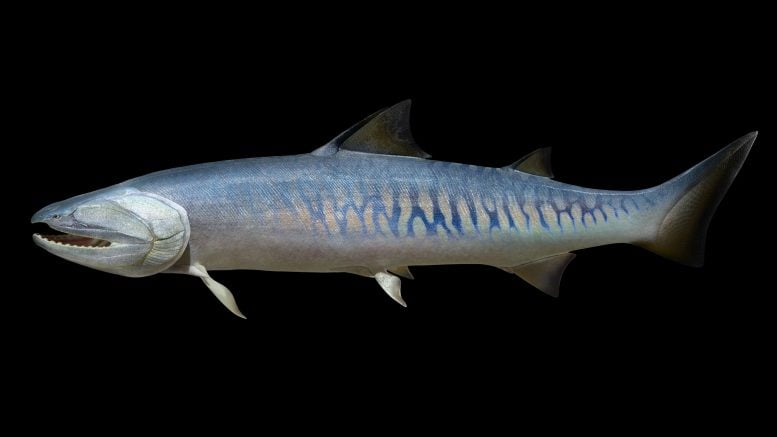
Ancient 436-Million-Year-Old Fish Fossil Rewrites the Origins of Vertebrates
In a groundbreaking discovery that has sent ripples through the scientific community, researchers have unearthed a 436-million-year-old fish fossil in South China that is fundamentally reshaping our understanding of vertebrate evolution. This remarkable find, led by an international team of paleontologists from the Institute of Vertebrate Paleontology and Paleoanthropology (IVPP) at the Chinese Academy of Sciences, offers unprecedented insights into the early development of jaws, teeth, and other key vertebrate features that paved the way for the diverse array of life forms we see today.
The fossil, discovered in the Silurian strata of Chongqing and Guizhou provinces, belongs to a previously unknown species of early bony fish. Named Megamastax amblyodus, this ancient creature is not only the oldest known jawed vertebrate but also provides critical evidence about the evolutionary steps that led to the emergence of modern vertebrates, including humans.
A Window into the Past
The Silurian period, spanning from approximately 443.8 to 419.2 million years ago, was a pivotal era in Earth’s history. It marked the transition from the dominance of jawless fish to the rise of jawed vertebrates, a group that would eventually give rise to all bony fish, amphibians, reptiles, birds, and mammals. Until now, the fossil record from this period has been sparse, leaving significant gaps in our understanding of how these transformative features evolved.
The discovery of Megamastax amblyodus fills one of these critical gaps. The fossil is exceptionally well-preserved, allowing researchers to study its anatomy in exquisite detail. The fish possessed a robust jaw structure with teeth, a feature that was previously thought to have evolved much later. This finding suggests that the development of jaws and teeth occurred earlier than previously believed, providing a crucial link in the evolutionary chain.
Implications for Vertebrate Evolution
The significance of this discovery extends far beyond the study of ancient fish. Jaws and teeth are defining characteristics of vertebrates, enabling them to exploit a wide range of ecological niches and driving the diversification of life on Earth. By pushing back the timeline for the emergence of these features, Megamastax amblyodus challenges long-held assumptions about the pace and sequence of vertebrate evolution.
One of the most intriguing aspects of the fossil is its jaw structure. The fish’s jaws were equipped with sharp, pointed teeth, suggesting that it was a predator. This finding supports the hypothesis that the evolution of jaws was driven by the need for more efficient feeding mechanisms, allowing early vertebrates to capture and consume prey more effectively. The presence of teeth also indicates that the fish had a complex feeding strategy, further highlighting the sophistication of early vertebrates.
A Collaborative Effort
The discovery of Megamastax amblyodus is the result of years of painstaking research and collaboration between scientists from China, the United States, and the United Kingdom. The team, led by Prof. Min Zhu, Prof. Jing Lu, and Dr. You’an Zhu, employed cutting-edge techniques, including high-resolution CT scanning and 3D reconstruction, to analyze the fossil in unprecedented detail.
Prof. Min Zhu, the lead author of the study, emphasized the importance of this discovery: “This fossil provides a crucial piece of the puzzle in understanding the origins of vertebrates. It shows that the key features we associate with modern vertebrates, such as jaws and teeth, were already present in some of the earliest jawed fish. This challenges our previous understanding and opens up new avenues for research.”
Rewriting the Textbook
The implications of this discovery are profound. It suggests that the evolutionary innovations that gave rise to modern vertebrates occurred earlier and more rapidly than previously thought. This has significant implications for our understanding of the evolutionary processes that shaped life on Earth.
For example, the presence of jaws and teeth in Megamastax amblyodus suggests that the ecological pressures driving their evolution were already in place during the Silurian period. This raises new questions about the environmental conditions and ecological interactions that may have spurred these innovations. It also highlights the importance of continued exploration and study of the fossil record, as each new discovery has the potential to reshape our understanding of life’s history.
The Road Ahead
The discovery of Megamastax amblyodus is just the beginning. The research team plans to continue their work in South China, where the Silurian fossil record is exceptionally well-preserved. They hope to uncover more fossils that will further illuminate the early stages of vertebrate evolution.
Dr. You’an Zhu, a co-author of the study, expressed his excitement about the future: “This discovery is a testament to the power of paleontology to uncover the secrets of our past. We are only scratching the surface of what the Silurian fossil record has to offer, and I am confident that future discoveries will continue to reshape our understanding of vertebrate evolution.”
Conclusion
The discovery of Megamastax amblyodus is a landmark moment in the field of paleontology. It not only provides new insights into the origins of vertebrates but also challenges our understanding of the pace and sequence of evolutionary change. As researchers continue to explore the fossil record, we can expect more revelations that will deepen our appreciation for the complexity and diversity of life on Earth.
This ancient fish, with its powerful jaws and sharp teeth, serves as a reminder of the incredible journey that life has taken over millions of years. From the depths of the Silurian seas to the bustling ecosystems of today, the story of vertebrate evolution is one of innovation, adaptation, and resilience. And thanks to discoveries like Megamastax amblyodus, we are now better equipped than ever to understand and appreciate this remarkable journey.
Tags and Viral Phrases:
- Ancient fish fossil
- 436-million-year-old discovery
- Vertebrate evolution
- Silurian period
- Jaws and teeth evolution
- Megamastax amblyodus
- Paleontology breakthrough
- Chinese Academy of Sciences
- Evolutionary biology
- Fossil record
- Early vertebrates
- Jawed fish
- Ecological niches
- Evolutionary innovations
- Silurian seas
- Prehistoric predators
- Vertebrate origins
- Fossil analysis
- 3D reconstruction
- High-resolution CT scanning
- Evolutionary timeline
- Life on Earth
- Scientific discovery
- Paleontology research
- Ancient ecosystems
- Evolutionary history
- Vertebrate diversity
- Fossil preservation
- Ecological pressures
- Evolutionary processes
- Scientific collaboration
- Paleontological techniques
- Ancient marine life
- Evolutionary milestones
- Vertebrate anatomy
- Prehistoric biodiversity
- Evolutionary adaptations
- Fossil excavation
- Silurian fossils
- Vertebrate paleontology
- Evolutionary biology research
- Ancient predators
- Evolutionary breakthroughs
- Fossil analysis techniques
- Prehistoric fish
- Evolutionary insights
- Vertebrate diversification
- Ancient ecosystems exploration
- Evolutionary discoveries
- Fossil record gaps
- Vertebrate evolutionary history
,


Leave a Reply
Want to join the discussion?Feel free to contribute!