
From prophet to product: How AI came back down to earth in 2025
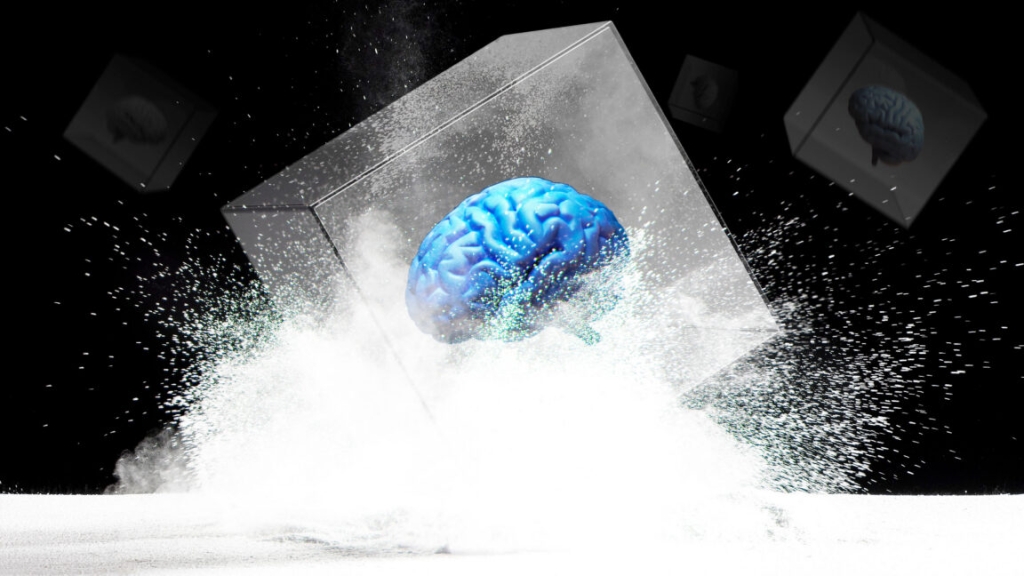
AI’s Year of Reckoning: From Hype to Hard Truths
The AI landscape in 2025 underwent a dramatic transformation that exposed the cracks in what many had hailed as an inevitable technological revolution. What began as breathless predictions of superintelligence and civilizational transformation has given way to something far more grounded—and far more complex.
The year opened with the same fervor that had characterized the previous two years, but by mid-year, the narrative had shifted dramatically. The once-unassailable “reasoning” mystique that had surrounded AI systems began to crumble under the weight of real-world scrutiny. The legal battles over training data intensified, psychological studies revealed concerning patterns in human-AI interaction, and the infrastructure demands of maintaining these systems ballooned to unprecedented levels.
Perhaps most tellingly, the market itself began to reflect these realities. The “winner-takes-most” mentality that had driven massive investments throughout 2024 reached a breaking point. With dozens of major independent AI labs and hundreds of application-layer startups vying for dominance, the fundamental economics of the space came into question. The market simply cannot sustain this many players, and the definition of a bubble environment became painfully clear: bold bets made on increasingly shaky foundations.
The AI video synthesis space provided a particularly vivid illustration of both progress and its limits. Google’s Veo 3 stunned observers by adding sound generation capabilities, while open-weights models like Wan 2.2 through 2.5 achieved such realism that they could easily be mistaken for genuine camera footage. Yet even these advances came with their own set of questions about authenticity, misuse, and the true value proposition of synthetic media.
What made 2025 distinct from its predecessors was the collision between AI prophecy and stubborn reality. The sweeping claims about imminent superintelligence that had defined 2023 and 2024 met the immovable objects of engineering constraints, economic limitations, and human psychology. The AI systems that dominated headlines were revealed to be tools—sometimes powerful, sometimes frustratingly brittle, and often misunderstood by those deploying them precisely because of the prophetic narrative that had surrounded them.
The anthropomorphization of chatbots emerged as a particularly concerning trend. As these systems became more conversational and seemingly empathetic, users began forming attachments that blurred the lines between tool and companion. The psychological costs of this confusion became increasingly apparent, raising questions about dependency, emotional manipulation, and the erosion of human-to-human connection.
Meanwhile, the infrastructure demands of maintaining cutting-edge AI systems reached staggering proportions. The energy requirements, computational resources, and financial investments needed to keep pace with the field’s demands began to strain even the most well-resourced organizations. This created a feedback loop where only the largest players could compete, further concentrating power and limiting innovation from smaller entities.
The legal reckoning that many had anticipated finally arrived in earnest. Questions about copyright, data ownership, and the ethical implications of training on vast swaths of human-created content moved from academic debate to courtroom drama. The outcomes of these cases will likely shape the industry for years to come, potentially constraining certain approaches while opening new avenues for development.
By year’s end, a clear pattern had emerged: the age of institutions presenting AI as an oracle was definitively ending. In its place arose something messier but ultimately more consequential—a phase where AI systems would be judged by their tangible impacts rather than their theoretical potential. The questions shifted from “What could this technology become?” to “What does it actually do, who does it harm, who benefits, and at what cost?”
This transition doesn’t signal the end of progress. AI research will undoubtedly continue, and future models will bring real and meaningful improvements. However, the nature of that improvement is changing. Success increasingly looks like reliability rather than spectacle, integration rather than disruption, and accountability rather than awe. The field is maturing from its messianic phase into something more akin to other transformative technologies that have shaped human history.
The implications of this shift are profound. When AI stops pretending to be a miracle and starts being treated as a tool, the decisions about its deployment become matters of policy, ethics, and practical governance rather than technological determinism. The power to shape AI’s future moves from prophets and prophets to policymakers, communities, and users themselves.
As we look toward 2026 and beyond, the question is no longer whether AI will change everything, but rather how we will choose to use these tools, where we will draw boundaries, and whether we will hold their creators and operators accountable for the consequences. The prophet has been demoted, but the product remains—more powerful in some ways, more limited in others, and ultimately dependent on human choices for its impact.
The coming years will likely see AI become less visible but more integrated into daily life, less revolutionary but more reliable, and perhaps most importantly, less about the technology itself and more about the societies that choose to deploy it. In this sense, 2025 may be remembered not as the year AI changed everything, but as the year it stopped pretending it already had—a necessary maturation that could prove more significant than any single breakthrough.
The future of AI now rests less on miracles and more on the mundane but crucial work of building systems that serve human needs without sacrificing human values. It’s a future that looks less like science fiction and more like the hard, necessary work of technological stewardship—and that may be the most important transformation of all.
tags #AI #2025 #Technology #ArtificialIntelligence #MachineLearning #TechNews #Innovation #FutureTech #DigitalTransformation #TechTrends #AIReckoning #TechBubble #SiliconValley #DeepLearning #NeuralNetworks #AITools #TechEthics #AIInfrastructure #SyntheticMedia #OpenAI #GoogleAI #TechIndustry #DigitalFuture #TechRegulation #AIResearch #TechInvestment #MarketCorrection #TechEvolution #DigitalAge #TechAccountability #AIReliability #TechIntegration #AIProgress #TechMaturity #HumanAIInteraction #TechGovernance #AITransformation #TechStewardship #DigitalResponsibility #TechDeployment #AIImplementation #TechPolicy #DigitalEthics #TechAccountability #AIReliability #TechIntegration #AIProgress #TechMaturity #HumanAIInteraction #TechGovernance #AIRevolution #TechChange #DigitalInnovation #TechAdvancement #AIApplications #TechSolutions #DigitalTools #TechDevelopment #AIAdvancement #TechBreakthroughs #DigitalRevolution #TechImpact #AIInfluence #TechFuture #DigitalProgress #TechGrowth #AIEnhancement #TechImprovement #DigitalEnhancement #TechRefinement #AIRefinement #TechEvolution #DigitalEvolution #TechTransformation #AIAdaptation #TechAdaptation #DigitalAdaptation #TechMaturity #AIMaturity #DigitalMaturity #TechResponsibility #AIResponsibility #DigitalResponsibility #TechEthics #AIEthics #DigitalEthics #TechAccountability #AIAccountability #DigitalAccountability #TechStewardship #AIStewardship #DigitalStewardship #TechGovernance #AIGovernance #DigitalGovernance #TechPolicy #AIPolicy #DigitalPolicy #TechRegulation #AIRegulation #DigitalRegulation #TechOversight #AIOversight #DigitalOversight #TechCompliance #AICompliance #DigitalCompliance #TechStandards #AIStandards #DigitalStandards #TechBestPractices #AIBestPractices #DigitalBestPractices #TechFrameworks #AIFrameworks #DigitalFrameworks #TechGuidelines #AIGuidelines #DigitalGuidelines #TechPrinciples #AIPrinciples #DigitalPrinciples #TechValues #AIValues #DigitalValues #TechCulture #AICulture #DigitalCulture #TechCommunity #AICommunity #DigitalCommunity #TechCollaboration #AICollaboration #DigitalCollaboration #TechPartnership #AIPartner
,


Leave a Reply
Want to join the discussion?Feel free to contribute!