
The Ancient Towers That Inspired the Story of the Tower of Babel
Ancient Ziggurats: The Towering Marvels That Shaped the Myth of Babel
In the cradle of civilization, where the Tigris and Euphrates rivers carved the fertile crescent of Mesopotamia, ancient architects raised colossal stepped structures that would not only define the skyline of the ancient world but also ignite the imagination of cultures for millennia. These were the ziggurats—monumental, tiered temples that served as bridges between heaven and earth, anchoring the spiritual, political, and architectural identity of some of humanity’s earliest empires.
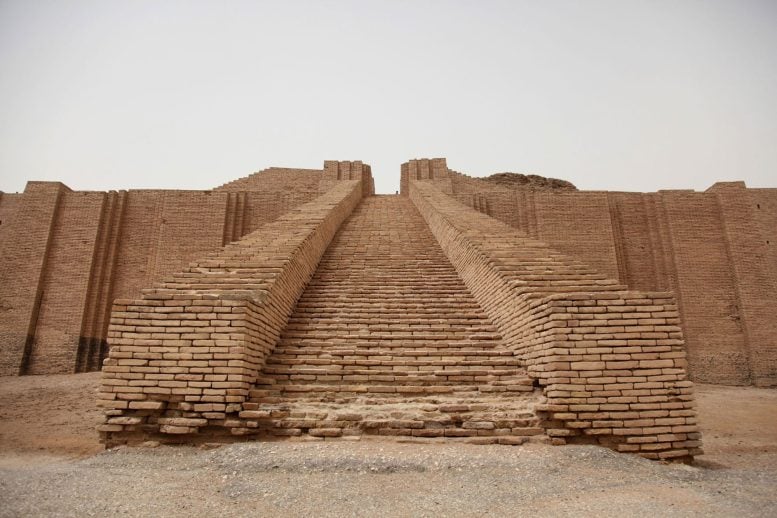
A ziggurat (also spelled ziqqurat) was far more than a building; it was a sacred mountain made by human hands. These stepped pyramids, constructed from sun-baked mud bricks, rose dramatically from the flat Mesopotamian plains. Each ziggurat featured a series of receding levels, with a shrine or temple crowning the summit. Unlike the smooth-sided pyramids of Egypt, ziggurats were characterized by their distinctive stepped profile, with each level smaller than the one below, creating a striking silhouette against the horizon.
The most famous of these ancient wonders is the Ziggurat of Ur, located in present-day Iraq. Built around 2100 BCE by King Ur-Nammu of the Third Dynasty of Ur, this structure stood as a testament to the power and piety of the Sumerian civilization. Over the centuries, it was rebuilt and restored by subsequent rulers, including the Babylonian king Nabonidus in the 6th century BCE. Today, the ziggurat of Ur remains one of the best-preserved examples of this architectural form, offering a tangible link to the world of the ancient Near East.
Ziggurats were not merely places of worship; they were the epicenters of city life. Each major city-state in Mesopotamia boasted its own ziggurat, dedicated to its patron deity. The ziggurat of Babylon, for instance, was dedicated to Marduk, the chief god of the Babylonians, while the ziggurat of Ur honored Nanna, the moon god. These structures symbolized the divine right of kings and the central role of religion in governance. Priests and priestesses conducted rituals atop these sacred platforms, seeking the favor of the gods for their people and rulers.
The construction of a ziggurat was a monumental undertaking. Builders used millions of mud bricks, often baked in the sun and sometimes fired for added durability. The core of the structure was made of sun-dried bricks, while the exterior was faced with fired bricks, often glazed in vibrant colors such as blue, red, or gold. This not only protected the core from the elements but also created a dazzling visual effect, especially when viewed from a distance or under the blazing Mesopotamian sun.
The influence of ziggurats extended far beyond their physical presence. Their stepped design inspired architectural innovations across the ancient world, from the stepped pyramids of Egypt to the temple mounds of the Americas. Moreover, the ziggurat’s role as a cosmic axis—connecting the earthly realm with the divine—resonated deeply in the mythologies of neighboring cultures.
One of the most enduring legacies of the ziggurat is its connection to the biblical story of the Tower of Babel. According to the Book of Genesis, humanity, united by a single language, attempted to build a tower that would reach the heavens. God, seeing their hubris, confounded their speech and scattered them across the earth. Many scholars believe this tale was inspired by the ziggurats of Mesopotamia, particularly the Etemenanki, the ziggurat of Babylon. The Hebrew word for Babel, “Bavel,” is closely related to the Akkadian “bab-ili,” meaning “gate of the gods”—a fitting description for these monumental gateways to the divine.
The ziggurats of Mesopotamia were not only feats of engineering but also masterpieces of cultural expression. They embodied the values, beliefs, and ambitions of the civilizations that built them. For over two thousand years, these structures stood as symbols of human ingenuity and devotion, shaping the religious and political landscapes of the ancient Near East.
Today, the legacy of the ziggurat endures. Archaeologists continue to uncover new sites, revealing the complexity and sophistication of these ancient builders. Modern architects and historians study their design principles, seeking inspiration for sustainable and resilient construction. And for people around the world, the story of the Tower of Babel—rooted in the reality of the ziggurat—remains a powerful reminder of humanity’s aspirations and limitations.
Tags and Viral Phrases:
- Ancient ziggurats
- Tower of Babel origins
- Mesopotamian architecture
- Ziggurat of Ur
- Etemenanki Babylon
- Sumerian temples
- Biblical archaeology
- Stepped pyramids
- Mudbrick marvels
- Gateways to the gods
- Ancient Near East wonders
- King Ur-Nammu legacy
- Marduk and Nanna worship
- Archaeological discoveries
- Sun-baked bricks
- Glazed brick technology
- Divine right of kings
- Cosmic axis symbolism
- Mesopotamian city-states
- Babylonian mythology
- Sumerian civilization
- Ancient engineering feats
- Religious architecture
- Cultural heritage
- Historical mysteries
- Viral history facts
- Must-see ancient sites
- Timeless architectural inspiration
- Humanity’s first skyscrapers
- Echoes of Babel
,

Leave a Reply
Want to join the discussion?Feel free to contribute!