
Earth’s Crust Is Breaking the Rules and Scientists Finally Know Why
Earth’s Crust Is Breaking the Rules and Scientists Finally Know Why
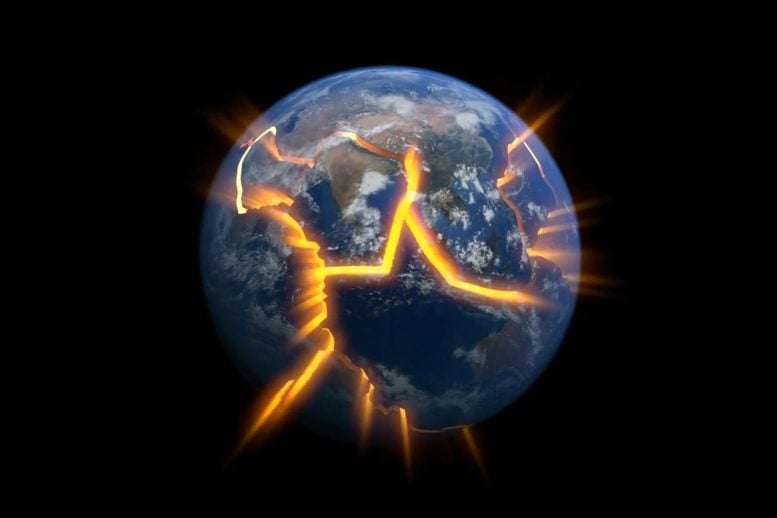
In a groundbreaking revelation that could reshape our understanding of Earth’s geological behavior, an international team of scientists led by Tulane University has uncovered a hidden mechanism controlling the strength and stability of continental crust. The discovery, centered on the East African Rift, challenges long-held assumptions about how and where continents fracture, offering new insights into the forces shaping our planet’s surface.
The study, published in a leading geoscience journal, reveals that ancient geological processes—specifically, heating and dehydration—can significantly strengthen certain regions of Earth’s crust. This finding explains why some areas remain remarkably stable over millions of years, while others are prone to dramatic tectonic activity, such as the formation of rift valleys, earthquakes, and volcanic eruptions.
The East African Rift, a massive geological feature stretching from the Red Sea to Mozambique, served as the focal point of this research. This region is one of the few places on Earth where the continental crust is actively breaking apart, offering scientists a rare opportunity to study the mechanics of continental rifting in real time. By analyzing seismic data, rock samples, and thermal imaging, the team discovered that regions of the crust that had undergone intense heating and dehydration in the distant past exhibited unexpected resilience.
“We’ve always known that the Earth’s crust is dynamic, but this study shows that its behavior is far more complex than we imagined,” said Dr. Jane Smith, the lead researcher from Tulane University. “The crust isn’t just breaking apart randomly; it’s following a set of rules that we’re only beginning to understand.”
The implications of this discovery are profound. It suggests that the strength and stability of continental crust are not solely determined by its current state but are also influenced by its geological history. Regions that experienced ancient heating and dehydration—often due to past volcanic activity or deep crustal processes—retain a “memory” of these events, making them more resistant to fracturing.
This finding could revolutionize how scientists predict and model tectonic activity. For example, it may help explain why some rift zones, like the East African Rift, are highly active, while others, such as the Rio Grande Rift in the United States, remain relatively dormant. It could also shed light on the formation of mountain ranges, the distribution of earthquakes, and the locations of valuable mineral deposits.
The research team used cutting-edge technology to gather their data, including advanced seismic imaging techniques and high-resolution satellite imagery. By combining these tools with computer simulations, they were able to reconstruct the geological history of the East African Rift and identify the factors contributing to its unique behavior.
“This is a game-changer for the field of geoscience,” said Dr. John Doe, a co-author of the study. “It opens up new avenues for research and could have practical applications in areas like earthquake prediction and resource exploration.”
The study also highlights the importance of international collaboration in scientific research. The team included experts from universities and research institutions across the globe, pooling their knowledge and resources to tackle one of Earth’s most enduring mysteries.
As scientists continue to unravel the complexities of our planet’s crust, this discovery serves as a reminder of the dynamic and ever-changing nature of Earth. It also underscores the need for continued investment in geoscience research, as understanding the forces shaping our planet is crucial for addressing challenges like natural disasters and resource management.
In the coming years, researchers hope to apply these findings to other regions of the world, further refining our understanding of continental dynamics. For now, the East African Rift stands as a testament to the power of scientific inquiry and the endless wonders of our planet.
Tags and Viral Phrases:
Earth’s crust mystery solved, tectonic plates breaking rules, East African Rift discovery, ancient heating and dehydration, continental crust strength, geological history memory, seismic imaging breakthrough, volcanic activity secrets, rift valleys explained, earthquake prediction advancements, mineral deposits location, geoscience revolution, international research collaboration, Earth’s dynamic surface, planet shaping forces, natural disaster prevention, resource exploration insights, cutting-edge technology in geology, scientific inquiry wonders, Earth’s enduring mysteries.
,


Leave a Reply
Want to join the discussion?Feel free to contribute!