
14 Years Later than Planned, NexPhone is Up for Preorder
The NexPhone Returns: A 14-Year-Old Dream of Convergence Finally Materializes
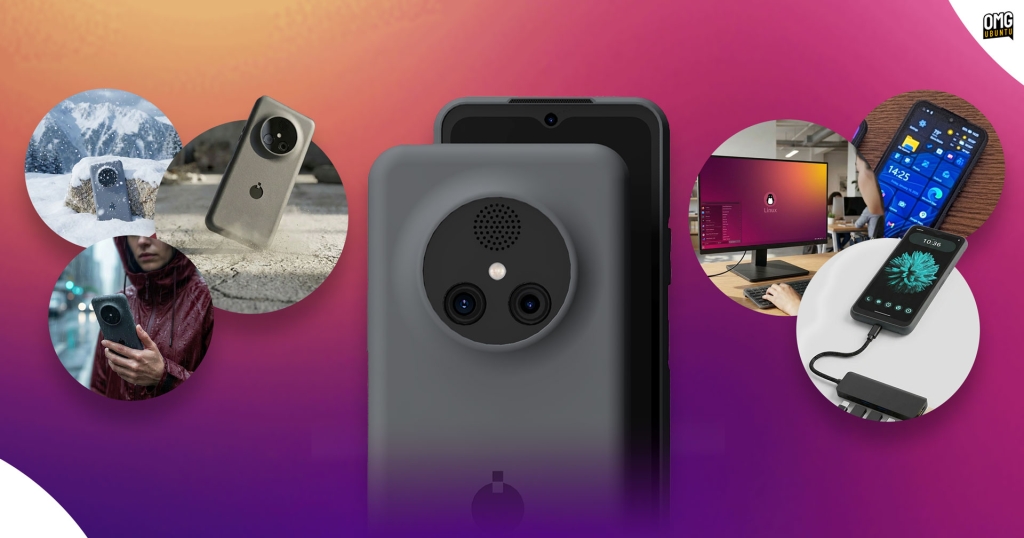
After a staggering 14-year wait, the NexPhone is finally available for pre-order, bringing to life a vision that first captivated tech enthusiasts back in 2012. This ambitious device promises to deliver what Canonical’s Ubuntu Phone once aspired to achieve: transforming your smartphone into a full-fledged PC when connected to a monitor—a concept known as “convergence.”
The journey of the NexPhone began in 2012 when it was first announced with plans to ship with Ubuntu for Android. Created by Nex Computer, the innovative minds behind the NexDock laptop shells, the NexPhone aimed to revolutionize how we interact with our mobile devices. The original concept was revolutionary: a single device that could function as a smartphone, tablet, laptop, and desktop PC, all powered by Ubuntu’s mobile operating system.
Fast forward to 2026, and the proposition has evolved significantly. The NexPhone now runs Android 16 as its primary operating system, complemented by Debian Linux and Windows 11—all on the same device. This triple-OS approach is made possible through a fully-featured USB Type-C cable that enables a seamless desktop experience when connected to a monitor and paired with keyboard and mouse.
The Triple-OS Powerhouse
The NexPhone’s most compelling feature is undoubtedly its ability to run three major operating systems. Android 16 serves as the primary mobile interface, complete with Android Desktop mode for convergence-style computing. Debian Linux runs as an app with GPU acceleration on top of Android, transforming into a full Linux desktop experience when connected to external displays. For those who prefer the Windows ecosystem, the device can reboot into Windows 11, complete with a custom grid-based UI designed specifically for handheld use.
This Windows 11 implementation is particularly noteworthy. When booted on the handset alone, it features a Metro-style grid interface reminiscent of the beloved Windows Phone Live Tiles. Connect it to a screen, and it transforms into the traditional Windows 11 desktop, offering “proper” productivity capabilities. For Windows Phone enthusiasts who mourned the platform’s demise, this represents the closest thing to a Lumia 950 XL successor in over a decade.
Linux users aren’t left out either. While tools like Termux and Andronix have allowed tech-savvy users to run Debian containers on Android for years, the NexPhone offers a pre-baked, GPU-accelerated solution that eliminates the complexity of managing proot environments.
Hardware Specifications
The NexPhone employs a 2021 Qualcomm QCM6490 processor, an interesting choice given that this chip is primarily designed for IoT devices. The FairPhone 5 also utilizes this chipset. Built on the Snapdragon 778G architecture, it features eight cores:
- 1x Cortex-A78 core @ 2.7GHz
- 3x Cortex-A78 cores @ 2.4GHz
- 4x Cortex-A55 efficiency cores @ 1.9GHz
The choice of this enterprise-grade SoC is strategic—it’s currently the only chip that readily supports all three operating systems. The UEFI/EDK2 support allows native Windows 11 on ARM booting, and Qualcomm’s commitment to supporting the QCM6490 until 2036 ensures longevity.
Performance expectations should be tempered. The device will handle everyday phone use and simple desktop tasks admirably, including coding work. However, demanding operations like kernel compilation or extensive video editing might push its limits, especially considering the finite nature of phone batteries.
The device packs 12GB of RAM and 256GB of onboard storage, expandable via microSD card. The 6.58-inch LCD screen offers 1080×2403 resolution with up to 120Hz refresh rate. Camera capabilities include a 64MP wide rear camera (Sony IMX787), a 13MP ultrawide (Samsung S5K3L6XX), and a 10MP front-facing camera for selfies.
Additional features include a fingerprint scanner, NFC, Wi-Fi 6E, Bluetooth 5.2 LE, GPS, and comprehensive sensor support (accelerometer, gyroscope, ambient light, proximity).
Availability and Pricing
The NexPhone is currently priced at $549, though potential buyers should note that we’re in 2026, where tariffs and market conditions can shift rapidly. While small production runs of niche hardware rarely come cheap, this price point feels reasonable for the ambitious technology being offered.
However, there’s a significant caveat: manufacturing hasn’t begun yet, with production scheduled for the latter half of the year. Prospective buyers can place a $199 refundable deposit today, with the remainder due upon shipping readiness. Early-bird depositors receive a “free” USB-C dock, though these peripherals are readily available on AliExpress for minimal cost.
Is It Worth It?
The answer largely depends on your specific needs and expectations. Nex Computing positions this as an ideal secondary phone or rugged backup device rather than a primary smartphone replacement for flagship devices from major manufacturers. They seem confident in finally delivering on this long-gestating dream, conveniently backed by their existing inventory of “brainless” laptop shells ready to complement the NexPhone.
The timing presents both opportunity and risk. While the convergence concept remains compelling, the five-year-old chip design might feel dated by the time the device ships. For a product positioned as a long-term investment, this could be a significant consideration for potential buyers.
The NexPhone represents more than just another smartphone—it’s the realization of a 14-year-old dream that has seen multiple attempts and failures from various tech giants. Whether it succeeds where others have stumbled remains to be seen, but its mere existence proves that the convergence concept still resonates with enough people to justify bringing it to market.
For those intrigued enough to place a deposit, the NexPhone website offers the opportunity to be among the first to experience this ambitious convergence device. The question isn’t whether the technology works—it demonstrably does—but whether enough consumers are willing to embrace this vision of unified computing in an era of increasingly specialized devices.
Tags: #NexPhone #Convergence #Ubuntu #Android #Windows11 #Linux #TechInnovation #Smartphone #PCReplacement #FutureOfComputing #TechNews #Gadget #MobileComputing #DeviceConvergence #NexComputer
Viral Sentences:
- “The phone that becomes your PC is finally here after 14 years!”
- “Three operating systems in one device—Android, Debian, and Windows 11!”
- “The closest thing to a Lumia 950 XL successor in a decade!”
- “Convergence dream that Canonical couldn’t achieve, now reality!”
- “Your phone, your tablet, your laptop, your desktop—all in one!”
- “The IoT chip that powers the future of mobile computing!”
- “Pre-order now and join the convergence revolution!”
- “The device that proves one gadget can rule them all!”
- “From Ubuntu Phone to NexPhone—the convergence journey continues!”
- “Tech enthusiasts have waited 14 years for this moment!”
,

Leave a Reply
Want to join the discussion?Feel free to contribute!