
Loongson 3B6000 Benchmarks: How China’s LoongArch CPU Compares To AMD Zen 5, Intel Arrow Lake & Raspberry Pi 5 Review
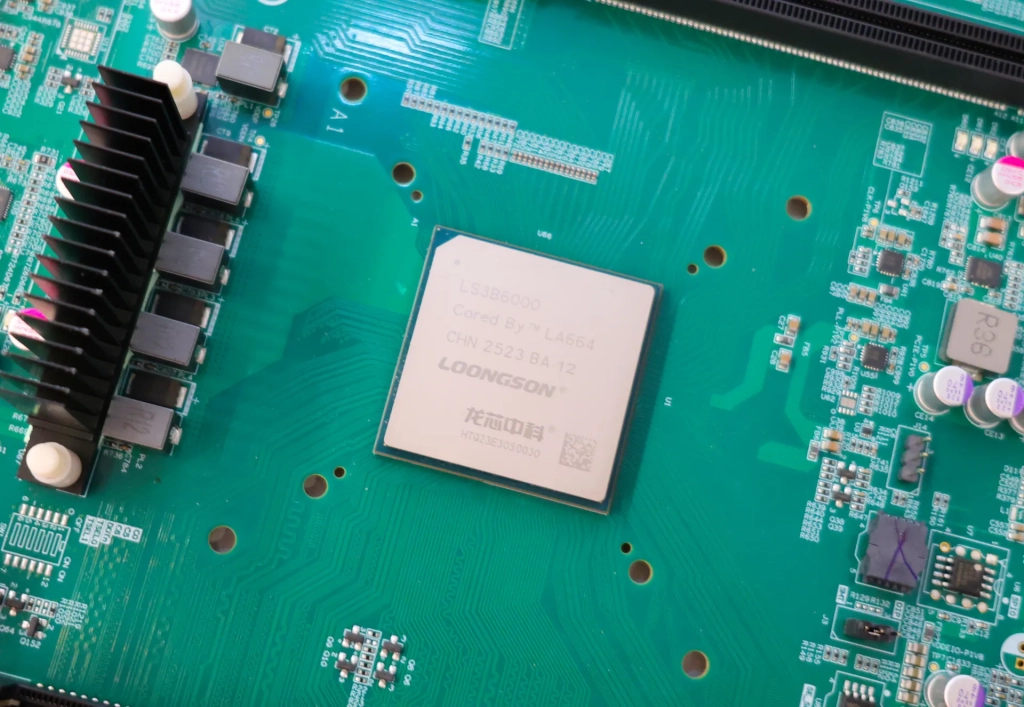
Breaking: Loongson 3B6000 LoongArch CPU Faces Off Against AMD Zen 5 and Intel Arrow Lake in First Independent Linux Benchmark Test
In a landmark moment for open-source computing and geopolitical tech independence, the first independent Linux benchmarks of China’s homegrown LoongArch processor have just dropped—and the results are nothing short of fascinating.
The Loongson Hobbyists Community has delivered a review sample of the Loongson 3B6000, a 12-core/24-thread desktop processor built on China’s proprietary LoongArch instruction set architecture (ISA). This marks the first time Phoronix has been able to independently test LoongArch hardware, providing the global tech community with unprecedented insight into China’s silicon ambitions.
The LoongArch Revolution: China’s Answer to Western Dominance
The Loongson 3B6000 represents years of development by Loongson Technology, evolving from their earlier MIPS64 architecture and incorporating design elements inspired by RISC-V and other modern ISAs. Launched in 2025, this processor isn’t just another chip—it’s a statement of technological sovereignty.
What makes this particularly significant is that LoongArch isn’t just a modified version of existing architectures; it’s a completely new instruction set designed to reduce China’s dependence on Western technology amid ongoing semiconductor export restrictions.
Hardware That Packs a Punch
The review sample features the 3B6000x1-7A2000x1-EVB micro-ATX motherboard with the 12-core processor soldered directly onto the board. But don’t let the “12 cores” fool you—this is a different beast entirely.
Loongson’s architecture supports simultaneous multithreading (SMT2), giving users 24 threads to work with. More impressively, the company claims their architecture can scale up to 64 cores in other variants, suggesting this is just the beginning of their desktop lineup.
The motherboard itself is surprisingly well-equipped for a first-generation product. It features dual-channel DDR4 ECC memory support, integrated HDMI and VGA display outputs, two PCI Express x16 slots, one PCI Express x4 slot, an M.2 NVMe slot, four SATA ports, and even a dedicated PCIe slot for WiFi adapters.
The Benchmark Battle: LoongArch vs. The World
Phoronix conducted preliminary benchmarks comparing the Loongson 3B6000 against current-generation hardware including AMD’s Ryzen processors with Zen 5 architecture and Intel’s Core Ultra processors with Arrow Lake. For ARM enthusiasts, they even threw in the Raspberry Pi 5 as a reference point.
The testing methodology was rigorous, conducted entirely under Linux to showcase the processor’s capabilities in the open-source ecosystem where it’s expected to find its primary audience.
What Makes LoongArch Special?
Beyond the geopolitical implications, the LoongArch ISA brings some interesting technical innovations to the table. While details remain somewhat scarce, the architecture appears to incorporate modern RISC design principles while maintaining backward compatibility with certain MIPS64 applications.
The instruction set has been optimized for energy efficiency and performance per watt, which could make it particularly attractive for data center deployments where China is looking to reduce its reliance on Intel and AMD processors.
The Bigger Picture: China’s Silicon Strategy
This isn’t just about one processor—it’s about China’s broader strategy to achieve technological self-sufficiency. With ongoing trade tensions and export controls limiting access to cutting-edge semiconductor technology, domestic alternatives like LoongArch become increasingly critical.
The Loongson 3B6000 represents years of investment in semiconductor design and manufacturing capabilities. While it may not yet match the absolute performance of top-tier Western processors, its existence demonstrates China’s ability to develop competitive alternatives.
What’s Next?
Phoronix promises more comprehensive benchmarking in follow-up articles, including comparisons with older Intel and AMD desktop processors to provide better context for the Loongson 3B6000’s performance. This initial test provides just a tantalizing glimpse of what’s possible with China’s homegrown architecture.
As the global tech landscape continues to fragment along geopolitical lines, processors like the Loongson 3B6000 will play an increasingly important role in shaping the future of computing. Whether you’re interested in open-source software, geopolitical tech independence, or simply curious about the next generation of processors, the LoongArch story is one worth following.
Tags: #Loongson #LoongArch #ChinaTech #LinuxBenchmarks #OpenSourceHardware #SemiconductorIndependence #TechGeopolitics #ProcessorBenchmark #ChineseSilicon #RISCArchitecture #TechInnovation #HardwareReview
Viral Sentences:
- China’s silicon revolution has arrived, and it’s packing 24 threads of pure LoongArch power
- The processor that could break Western tech dominance is finally here
- Forget RISC-V—LoongArch is China’s secret weapon in the semiconductor wars
- 12 cores, 24 threads, zero Western dependencies: meet the processor changing the game
- When geopolitical tensions meet silicon innovation, the result is pure technological poetry
- The Loongson 3B6000 isn’t just a processor—it’s a declaration of computing independence
- AMD and Intel should be watching their backs as China’s homegrown CPU takes center stage
- From MIPS to LoongArch: China’s journey to silicon sovereignty reaches a critical milestone
- This isn’t just benchmarking—it’s a glimpse into the future of fractured computing
- The processor that proves China doesn’t need Western tech to compete at the highest level
,


Leave a Reply
Want to join the discussion?Feel free to contribute!