
Narwhals become quieter as the Arctic Ocean grows louder
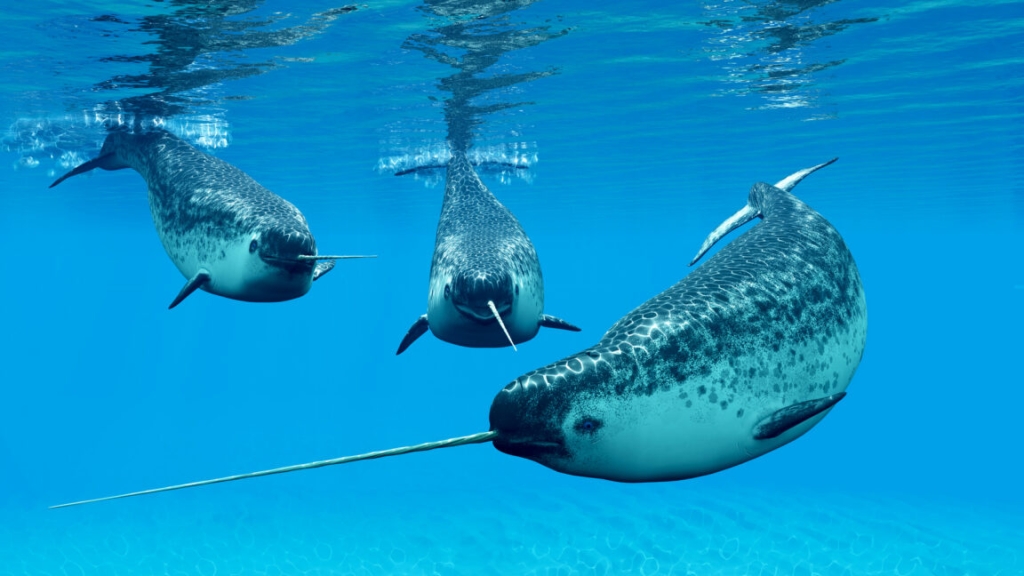
Arctic Shipping Noise Forces Narwhals to Go Silent, Threatening Survival of “Sea Unicorns”
As the Arctic’s icy waters grow increasingly noisy with industrial shipping, narwhals—the elusive “unicorns of the sea”—are responding in a way that alarms marine biologists and Indigenous communities alike: they’re going silent. A groundbreaking study published in Nature reveals that narwhals, already vulnerable to climate change and human activity, are altering their behavior dramatically in response to vessel traffic, raising urgent questions about the future of these iconic Arctic mammals.
The research, conducted over several years in Eclipse Sound, Nunavut, Canada, found that narwhals stop vocalizing and feeding when ships approach within 20 kilometers—a distance far greater than scientists previously believed. “These animals are hearing and responding to ships from distances much further than we would have predicted,” said Joshua Jones, a researcher at the Scripps Institution of Oceanography and one of the study’s authors. “We learned that narwhals go quiet or move away when a ship is within about 20 kilometers of the site.”
The implications are profound. Narwhals rely on echolocation and vocalizations to navigate the dark, icy waters of the Arctic, communicate with each other, and locate food. When they fall silent, they lose critical tools for survival. The study also documented that narwhals ceased their deep dives to feed during ship transits, a behavior that could have long-term consequences for their health and reproductive success.
Industrial Shipping and Tourism Amplify the Noise
Much of the vessel traffic in Eclipse Sound is linked to the Mary River Mine, a massive iron ore operation on Baffin Island operated by Baffinland Iron Mines Corp. But the problem isn’t limited to industrial shipping. Alex Ootoowak, an Inuk hunter from Nunavut and co-author of the study, noted that tourism vessels—including cruise ships, private yachts, sailboats, and speedboats—are also increasing in number. “We’re getting about 30 cruise ships a year now,” Ootoowak said. “Our waters are a lot louder than they traditionally were.”
For Indigenous communities in Canada and Greenland, the changes are deeply concerning. Narwhals have been hunted for generations to sustain families through harsh Arctic winters and high living costs. Ootoowak fears that the noise pollution may be driving narwhals away from their traditional calving grounds in Eclipse Sound. “Neighboring communities in Greenland are already reporting what they describe as ‘foreign narwhals’ appearing in their waters—animals that match the behavior and appearance of those from Eclipse Sound,” he said.
A Call for Action
The World Wildlife Fund (WWF) has mapped these critical migration routes, which it calls Arctic “blue corridors,” and shared them with the International Maritime Organization (IMO) to help guide ship operators. While existing IMO guidelines urge mariners to take special care around sensitive habitats, including migration routes, conservation groups argue that more awareness is needed about where and when whales are likely to be present. “If concrete measures are not adopted to limit the impacts of vessel traffic, underwater noise will continue to hurt whales, as well as other marine life, including fish and crustaceans,” said Lancaster, a marine conservation expert.
The study’s findings underscore the urgent need for stricter regulations on Arctic shipping, including speed limits, designated shipping lanes, and seasonal restrictions in critical habitats. Without such measures, the Arctic’s marine ecosystems—and the communities that depend on them—face an uncertain future.
The Silent Crisis Beneath the Ice
As the Arctic warms and sea ice melts, the region is becoming more accessible to shipping, fishing, and resource extraction. But this newfound accessibility comes at a cost. The narwhal’s response to shipping noise is a stark reminder that human activity is reshaping even the most remote corners of the planet. For these “sea unicorns,” silence may no longer be golden—it could be a death knell.
As Ootoowak put it, “We need to act now to protect these animals and the way of life that depends on them. The Arctic is changing fast, and we can’t afford to wait.”
Tags & Viral Phrases:
- Narwhals going silent
- Arctic shipping noise crisis
- “Sea unicorns” in danger
- Climate change and marine life
- Indigenous communities at risk
- Eclipse Sound narwhal study
- Underwater noise pollution
- Mary River Mine impact
- Arctic “blue corridors”
- IMO shipping guidelines
- Narwhal echolocation disrupted
- Industrial shipping in the Arctic
- Tourism vessels threatening wildlife
- Narwhals abandoning calving grounds
- “Foreign narwhals” in Greenland
- Urgent call for Arctic conservation
- Scripps Institution of Oceanography research
- Oceans North study
- Baffinland Iron Mines Corp. controversy
- Arctic marine ecosystems under threat
,

Leave a Reply
Want to join the discussion?Feel free to contribute!