
NY Prosecutors Raise Alarm over GENIUS Act on Fraud: Report
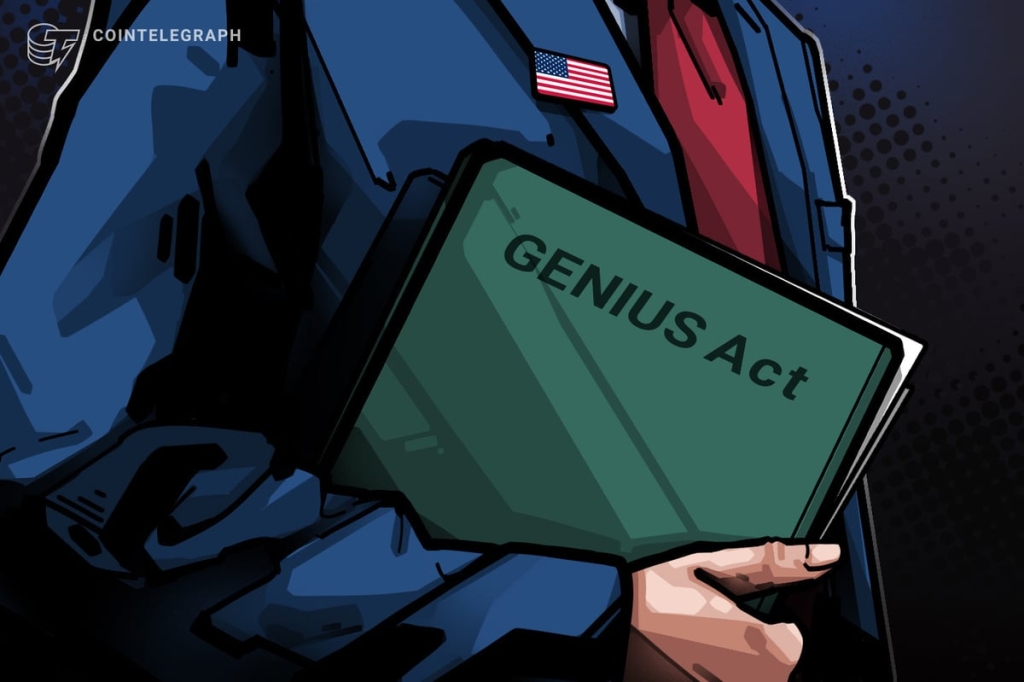
New York Attorneys General Sound Alarm Over GENIUS Act: “Legal Cover for Stablecoin Fraud” in $150B Market
In a dramatic escalation of the ongoing battle between cryptocurrency innovators and state regulators, New York Attorney General Letitia James has joined forces with four district attorneys to deliver a blistering critique of the federal GENIUS Act—the landmark stablecoin legislation signed by President Trump in July 2024. The bipartisan coalition of legal authorities is warning that the law could create a regulatory loophole allowing stablecoin giants Tether and Circle to operate with impunity while victims of crypto fraud are left without recourse.
The controversy centers on a fundamental question that has plagued cryptocurrency regulation since Bitcoin’s inception: who bears responsibility when digital assets are used for criminal activity? The New York attorneys argue the GENIUS Act fails to provide clear answers, potentially leaving consumers vulnerable in a market that has ballooned to over $150 billion in circulating stablecoins.
The Heart of the Controversy: Selective Justice in Crypto Markets
According to CNN’s exclusive reporting, the attorneys general’s letter paints a disturbing picture of selective enforcement by stablecoin issuers. The coalition specifically targeted Tether, the world’s largest stablecoin issuer with over $96 billion in USDT (Tether) tokens circulating globally.
“Tether currently decides on a case-by-case basis when they will assist law enforcement in recovering funds for victims, and nothing prevents them from stopping all reissuance entirely,” the letter reportedly states. This accusation strikes at the core of what critics call the “Wild West” nature of cryptocurrency markets—where enforcement appears arbitrary and victims have little recourse.
The attorneys general’s concerns are not theoretical. Recent data from blockchain analytics firm Chainalysis indicates that cryptocurrency-related crime reached $14 billion in 2023, with stablecoins increasingly becoming the preferred vehicle for illicit transactions due to their price stability and ease of transfer.
Circle Under Fire: “Ally” or Enabler?
While Tether faces the harshest criticism, Circle—issuer of the second-largest stablecoin USDC—also came under fire in the attorneys’ letter. The coalition claims that despite Circle’s public statements positioning itself as a partner in combating financial fraud, the company’s actual policies are “significantly worse than those of Tether for victims of fraud.”
This accusation is particularly striking given Circle’s efforts to position itself as the more compliant, regulated alternative to Tether. The company has obtained licenses in multiple jurisdictions and maintains that it holds 100% of USDC reserves in cash and short-term U.S. government securities—a claim that has helped USDC maintain its reputation as the “safe” stablecoin.
Circle’s Chief Strategy Officer, Dante Disparte, pushed back forcefully against the allegations. “We have followed prevailing rules as a US regulated financial institution, and we will continue to advance these standards,” Disparte stated, emphasizing that the GENIUS Act “makes clear that stablecoin issuers must abide by applicable financial integrity rules for combating illicit activity.”
Tether’s Defense: Jurisdiction and Technical Limitations
Tether’s response to the attorneys general’s accusations highlights the complex jurisdictional challenges facing cryptocurrency regulation. The company, headquartered in El Salvador, argues that it lacks “a blanket legal obligation to comply with state-level civil or criminal processes in the way a US-regulated financial institution would.”
This jurisdictional argument underscores a fundamental tension in cryptocurrency regulation: companies can operate globally while regulators remain bound by national and state borders. Tether maintains that it “takes fraud, consumer harm, and the misuse of USDT extremely seriously” and operates under a “zero-tolerance policy toward illicit activity.”
However, the company’s defense also reveals the technical limitations of stablecoin freezing mechanisms. While Tether can freeze tokens on the Ethereum blockchain, it cannot prevent the creation of new USDT tokens or their transfer to different addresses—a limitation that frustrates law enforcement efforts to recover stolen funds.
GENIUS Act: Promise and Peril
The GENIUS Act, which stands for Guiding and Establishing National Innovation for US Stablecoins, was heralded as a breakthrough in federal cryptocurrency regulation when President Trump signed it into law. The legislation establishes a comprehensive framework for payment stablecoins, requiring issuers to maintain adequate reserves, undergo regular audits, and comply with anti-money laundering (AML) regulations.
However, the New York attorneys general argue that the Act’s implementation timeline creates dangerous gaps in consumer protection. The law requires implementation 18 months after enactment or 120 days after US agencies approve regulations related to the law—whichever comes first. This delayed implementation could leave consumers vulnerable during a critical period of market growth and innovation.
Political Earthquake: Crypto Lawyer Challenges NY AG
The controversy takes on added significance against the backdrop of a potential political shakeup in New York. Former Coinbase policy lawyer Khurram Dara has announced his intention to challenge Letitia James in the 2026 election, positioning himself as a pro-crypto alternative to what he characterizes as James’s “lawfare” against the industry.
Dara’s candidacy represents a significant shift in the political landscape surrounding cryptocurrency regulation. As a former insider at one of the industry’s most prominent exchanges, he brings deep technical knowledge and industry connections to the race. His platform reportedly emphasizes balanced regulation that protects consumers while fostering innovation—a message that could resonate with both crypto enthusiasts and moderate voters concerned about New York’s business climate.
The timing of Dara’s announcement is particularly noteworthy, coming just months after James’s office launched several high-profile investigations into cryptocurrency companies operating in New York. The potential challenge could force James to moderate her approach to crypto regulation or risk alienating a growing constituency of tech-savvy voters and industry professionals.
Global Implications: The US vs. China Crypto Race
The stablecoin debate occurs against the backdrop of intensifying competition between the United States and China for dominance in digital finance. President Trump’s statement that “the US has to ‘make it so that China doesn’t get the hold’ of crypto” reflects growing concerns about China’s digital yuan and its potential to challenge the US dollar’s global reserve currency status.
Stablecoins, particularly those pegged to the US dollar, have emerged as a critical battleground in this competition. They offer the benefits of cryptocurrency—fast, borderless transactions—while maintaining the stability and widespread acceptance of traditional fiat currency. However, their potential for misuse in criminal activities has made them a target for regulators worldwide.
The Technical Reality: Blockchain’s Double-Edged Sword
The controversy highlights the unique challenges posed by blockchain technology. Unlike traditional financial systems where transactions can be reversed and accounts frozen through centralized control, blockchain transactions are irreversible and pseudonymous. This creates a paradox: the same features that make blockchain attractive for legitimate users—transparency, immutability, and decentralization—also make it appealing for criminals.
Stablecoin issuers like Tether and Circle have developed sophisticated monitoring systems to detect suspicious activity, but their ability to intervene is limited by the technical architecture of blockchain networks. They can freeze tokens on certain blockchains and block addresses from accessing their services, but they cannot prevent the creation of new tokens or their transfer through decentralized exchanges.
This technical reality creates a situation where stablecoin issuers can claim to be fighting fraud while victims find themselves without practical recourse. The attorneys general’s letter argues that this gap between policy and practice must be addressed through stronger federal legislation.
Market Impact: Investor Confidence at Stake
The controversy has already begun to impact stablecoin markets. Trading volumes for both USDT and USDC have shown increased volatility as investors weigh the regulatory risks. Some institutional investors have reportedly begun diversifying into alternative stablecoins or traditional assets pending clarification of the regulatory landscape.
The uncertainty also affects the broader cryptocurrency ecosystem. Many DeFi (decentralized finance) protocols rely heavily on stablecoins for liquidity and price stability. Any disruption to stablecoin markets could have cascading effects throughout the crypto economy, potentially undermining confidence in the entire asset class.
Looking Forward: The Path to Comprehensive Regulation
The attorneys general’s letter and the emerging political challenge to James signal that the debate over stablecoin regulation is far from settled. Industry advocates argue that overly restrictive regulation could drive innovation offshore, while consumer protection advocates warn that lax oversight could enable widespread fraud and financial crime.
The path forward likely involves finding a middle ground that addresses legitimate concerns about fraud and money laundering while preserving the benefits of cryptocurrency innovation. This might include:
- Enhanced transparency requirements for stablecoin issuers, including real-time disclosure of reserve holdings and transaction data
- Clearer jurisdictional frameworks that define the responsibilities of issuers operating across multiple jurisdictions
- Improved cooperation mechanisms between federal and state regulators, as well as international law enforcement agencies
- Technical solutions that enhance the ability to trace and recover stolen funds without compromising the fundamental properties of blockchain technology
The Stakes: More Than Just Crypto
The outcome of this regulatory battle will have implications far beyond the cryptocurrency industry. Stablecoins represent a potential bridge between traditional finance and the emerging digital economy. How they are regulated could determine whether the United States maintains its leadership in financial innovation or cedes ground to more permissive jurisdictions.
Moreover, the debate touches on fundamental questions about the nature of money, the role of government in regulating emerging technologies, and the balance between innovation and consumer protection. These are not merely technical or economic questions but philosophical ones that will shape the future of finance and society.
As the April 6 filing deadline approaches for potential candidates in the New York Attorney General race, and with the GENIUS Act’s implementation timeline ticking forward, the pressure is mounting for clear answers to these complex questions. The cryptocurrency industry, regulators, and consumers alike are watching closely to see how this pivotal moment in financial history will unfold.
Tags & Viral Phrases:
- GENIUS Act controversy
- Stablecoin fraud warning
- Tether vs NY AG showdown
- Circle under regulatory fire
- Crypto lawfare intensifies
- $150B stablecoin market at risk
- Blockchain freezing limitations exposed
- US vs China crypto race heats up
- Pro-crypto challenger emerges
- Digital dollar dominance threatened
- Consumer protection vs innovation
- Cryptocurrency regulation battle
- Stablecoin oversight gap
- Blockchain crime investigation challenges
- Financial innovation crossroads
- Regulatory uncertainty impacts markets
- Crypto political earthquake
- Federal vs state jurisdiction clash
- Digital finance future at stake
- Money laundering in crypto spotlight
,


Leave a Reply
Want to join the discussion?Feel free to contribute!