
Old Hair Reveals How Toxic America Once Was
Decades of Human Hair Reveal the Shocking Scale of America’s Lead Crisis — and How Regulation Saved Lives
A groundbreaking new study has turned to an unlikely archive — human hair — to reveal the staggering extent of lead contamination in America during the 20th century. Researchers examining hair samples collected over a 100-year span have uncovered compelling evidence that before environmental protections were enforced, Americans were exposed to lead at levels up to 100 times higher than today.
The research, published in the Proceedings of the National Academy of Sciences, analyzed hair strands from museum collections, historical archives, and archaeological sites. These samples, some dating back to the late 1800s, act as time capsules, locking in chemical signatures from the bloodstream at the time of growth. By studying these biological records, scientists have reconstructed a detailed timeline of America’s toxic past.
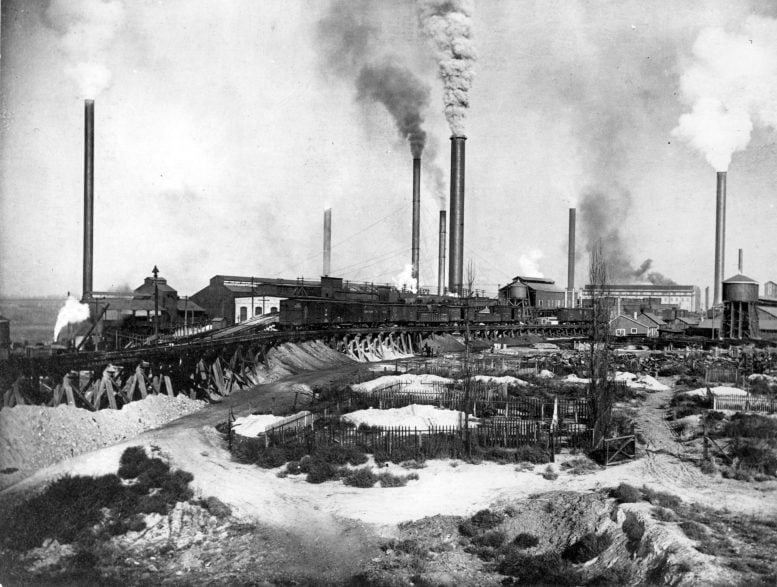
Before the Environmental Protection Agency (EPA) was established in 1970, lead pollution was woven into the fabric of daily American life. Industrial plants belched lead-laden smoke into the air, lead-based paint coated the walls of homes and schools, aging water pipes leached the metal into drinking water, and — perhaps most insidiously — vehicle exhaust pumped millions of tons of lead into the atmosphere as a gasoline additive.
Leaded gasoline, introduced in the 1920s, became one of the largest sources of environmental lead exposure. For decades, cars burned fuel laced with tetraethyl lead, releasing lead particles that settled on streets, playgrounds, and even inside homes. Children, whose developing brains are especially vulnerable to lead’s neurotoxic effects, were at the highest risk.
The hair analysis paints a grim picture. In the early-to-mid 20th century, average lead concentrations in human hair were many times higher than what is considered safe today. In some urban areas with heavy industrial activity, levels were so elevated that researchers describe them as “biologically shocking.”
But the data also tells a hopeful story. After the EPA was created and regulations such as the Clean Air Act were enforced, lead levels in hair — and by extension, in the human body — began to plummet. The phase-out of leaded gasoline in the 1970s and 1980s, followed by stricter controls on industrial emissions and the banning of lead-based paint in residential buildings, led to dramatic reductions in exposure.
By the early 2000s, lead concentrations in the American population had dropped by up to 100-fold compared to the pre-regulation era. The transformation is one of the great public health success stories of the modern age — yet it’s a victory that is often underappreciated.
Lead is a potent neurotoxin. Even low levels of exposure can impair cognitive development in children, reduce IQ, and increase the risk of behavioral problems. In adults, chronic exposure is linked to cardiovascular disease, kidney damage, and reproductive issues. The economic and social costs of lead poisoning are enormous, making the regulatory actions of the 1970s not just an environmental milestone, but a lifesaving intervention.
The study’s authors emphasize that hair analysis offers a unique and powerful tool for understanding historical pollution. Unlike blood or bone samples, which are harder to obtain from past populations, hair is often preserved in museum collections and archaeological sites. It provides a direct, personal record of an individual’s exposure at a specific point in time.
This research also serves as a stark reminder of the consequences of unregulated industrial activity. In today’s world, where debates over environmental policy and industrial oversight continue, the story of lead in America is a cautionary tale. It shows how quickly pollution can become embedded in the environment — and how decisively it can be reduced when science, policy, and public will align.
As the world faces new environmental challenges — from microplastics to forever chemicals — the lessons from America’s lead crisis are more relevant than ever. The data locked in a century of human hair is not just a record of the past; it’s a roadmap for the future.
Tags & Viral Phrases
Old hair reveals toxic America, lead exposure history, EPA created 1970, leaded gasoline phase-out, human hair as pollution archive, lead poisoning public health, Clean Air Act impact, industrial pollution past, neurotoxic lead effects, museum hair samples study, environmental regulation success, lead in gasoline history, children at risk lead, lead-based paint ban, historical pollution data, PNAS lead study, America’s toxic past revealed, lead exposure reduction 100x, hair analysis environmental science, tetraethyl lead dangers, pre-EPA America pollution, lead in drinking water, cardiovascular disease lead, kidney damage lead exposure, cognitive development lead, behavioral problems lead, industrial emissions control, environmental policy lessons, forever chemicals warning, microplastics pollution, public health intervention lead, biological record pollution, urban lead exposure, environmental protection agency impact, blood lead levels history, lead phase-out success story, environmental science breakthrough, lead regulation life-saving, America’s lead crisis timeline, toxic metal exposure past, lead pollution industrial age, museum collections pollution study, archaeological hair samples, environmental health milestone, lead in everyday life, leaded gasoline dangers, lead contamination timeline, lead exposure children risk, IQ reduction lead, reproductive issues lead, economic cost lead poisoning, environmental policy debate, industrial oversight consequences, pollution reduction roadmap, environmental challenges today, lead in atmosphere history, public will environmental change, science policy alignment, lead exposure biomarkers, historical toxicology research, lead phase-out public health, lead pollution legacy, lead exposure prevention, environmental regulations effectiveness, lead in soil and air, lead poisoning prevention success, lead in consumer products, environmental health research, lead exposure biomarkers, lead pollution in cities, lead exposure timeline America, environmental science history, lead regulation impact study, lead exposure data analysis, lead in human biology, lead exposure biomarkers, lead in historical populations, lead pollution reduction success, lead exposure prevention strategies, lead in consumer goods history, lead in household dust, lead exposure risk factors, lead poisoning symptoms, lead exposure long-term effects, lead in water pipes history, lead in paint history, lead in fuel history, lead exposure measurement methods, lead in the environment, lead exposure health effects, lead exposure prevention measures, lead exposure sources history, lead exposure risk reduction, lead exposure public health crisis, lead exposure environmental justice, lead exposure vulnerable populations, lead exposure prevention education, lead exposure policy solutions, lead exposure research methods, lead exposure data interpretation, lead exposure historical context, lead exposure modern implications, lead exposure future challenges, lead exposure scientific discoveries, lead exposure regulatory impact, lead exposure societal costs, lead exposure environmental legacy, lead exposure prevention strategies, lead exposure ongoing risks, lead exposure scientific understanding, lead exposure public awareness, lead exposure global perspective, lead exposure policy debates, lead exposure scientific evidence, lead exposure historical lessons, lead exposure future directions, lead exposure scientific advancements, lead exposure public health priorities, lead exposure environmental sustainability, lead exposure scientific consensus, lead exposure policy recommendations, lead exposure research priorities, lead exposure scientific challenges, lead exposure public engagement, lead exposure environmental protection, lead exposure scientific innovation, lead exposure policy implementation, lead exposure research collaboration, lead exposure public communication, lead exposure environmental responsibility, lead exposure scientific rigor, lead exposure policy evaluation, lead exposure research funding, lead exposure public trust, lead exposure environmental stewardship, lead exposure scientific integrity, lead exposure policy accountability, lead exposure research transparency, lead exposure public participation, lead exposure environmental ethics, lead exposure scientific progress, lead exposure policy effectiveness, lead exposure research excellence, lead exposure public education, lead exposure environmental awareness, lead exposure scientific discovery, lead exposure policy reform, lead exposure research impact, lead exposure public health promotion, lead exposure environmental conservation, lead exposure scientific collaboration, lead exposure policy innovation, lead exposure research dissemination, lead exposure public advocacy, lead exposure environmental advocacy, lead exposure scientific leadership, lead exposure policy leadership, lead exposure research leadership, lead exposure public leadership, lead exposure environmental leadership, lead exposure scientific excellence, lead exposure policy excellence, lead exposure research excellence, lead exposure public excellence, lead exposure environmental excellence, lead exposure scientific achievement, lead exposure policy achievement, lead exposure research achievement, lead exposure public achievement, lead exposure environmental achievement
,


Leave a Reply
Want to join the discussion?Feel free to contribute!