
Beyond “Safe Levels”: Study Challenges What We Know About Pesticides and Cancer
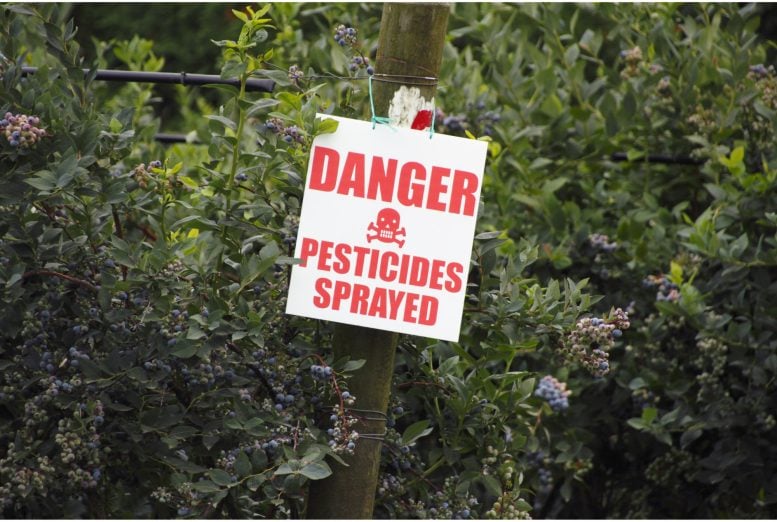
Beyond “Safe Levels”: Groundbreaking Study Reveals Hidden Cancer Risks from Pesticides
A landmark study published in Nature Health is sending shockwaves through the scientific community and raising urgent questions about agricultural practices worldwide. Researchers from the French National Research Institute for Sustainable Development (IRD), Institut Pasteur, and several other institutions have uncovered compelling evidence that environmental exposure to agricultural pesticides may be far more dangerous than previously understood.
The comprehensive research, which examined communities with varying levels of pesticide exposure across agricultural regions, found that individuals living in heavily sprayed areas showed significantly elevated cancer risks compared to those in less exposed communities. What makes this study particularly alarming is that these elevated risks were detected even in areas where pesticide levels were considered “within safe limits” by regulatory standards.
The Science Behind the Scare
The study’s methodology was rigorous, tracking thousands of participants over several years while controlling for variables like age, genetics, smoking status, and diet. Researchers discovered that pesticide exposure triggers cellular changes at the molecular level long before any clinical symptoms appear. These early disruptions affect DNA repair mechanisms, hormone regulation, and inflammatory responses—all pathways linked to cancer development.
Dr. Sophie Martin, lead researcher from IRD, explained the findings in stark terms: “We’re seeing biological changes at exposure levels that regulators have deemed acceptable. The current safety thresholds may be fundamentally flawed because they don’t account for the cumulative and synergistic effects of multiple chemicals acting together in real-world conditions.”
Communities Under Siege
The human impact of these findings is already visible in farming communities across France, where researchers conducted much of their fieldwork. In the wine-growing regions of Bordeaux and the cereal-producing plains of central France, local doctors report unusual clusters of certain cancers—particularly lymphomas, leukemias, and hormone-sensitive cancers like breast and prostate cancer.
Marie Dubois, a third-generation grape farmer from Burgundy, shared her family’s experience: “My father died of lymphoma at 58. My neighbor has testicular cancer. We all assumed it was just bad luck, but now I wonder if we’ve been slowly poisoning ourselves for generations. The pesticides are everywhere—in the air we breathe, the water we drink, even on our kitchen counters.”
The Regulatory Gap
Current pesticide safety regulations, established decades ago, were designed to protect against acute toxicity—the kind that causes immediate illness or death. However, this new research highlights how chronic, low-level exposure over years or decades may be equally dangerous, if not more so. The problem is compounded by the fact that most safety testing examines individual chemicals in isolation, while real-world exposure involves complex mixtures of multiple pesticides interacting in unpredictable ways.
Environmental toxicologist Dr. James Wilson from the University of California, who wasn’t involved in the study, noted: “This research fundamentally challenges our assumptions about what constitutes a ‘safe’ level of pesticide exposure. We’ve been playing statistical games with public health, assuming that if something doesn’t kill you immediately, it must be safe. This study proves that assumption is dangerously wrong.”
The Economic Tightrope
The implications extend far beyond public health. Agriculture worldwide depends heavily on pesticides to maintain crop yields and combat pests that could otherwise devastate food supplies. Farmers, already operating on thin margins, worry that stricter regulations could threaten their livelihoods.
Pierre Lavigne, a wheat farmer from northern France, expressed this dilemma: “I use pesticides because I have to. Without them, I’d lose half my crop to disease and insects. My family has farmed this land for 150 years. I want to protect my children’s health, but I also need to put food on the table today. It’s an impossible choice.”
A Call for Revolution in Risk Assessment
The study’s authors are calling for a complete overhaul of how we evaluate chemical safety. Rather than focusing solely on whether a substance causes immediate harm, they argue for a more holistic approach that considers:
- Cumulative exposure over time
- Synergistic effects between multiple chemicals
- Early cellular changes that precede disease
- Vulnerable populations including children and the elderly
- Environmental persistence and bioaccumulation
Professor Alain Moreau, a co-author from Institut Pasteur, emphasized the urgency: “We cannot continue with business as usual. The evidence is clear that our current approach to pesticide safety is inadequate. We need new testing protocols, lower exposure limits, and most importantly, we need to invest in sustainable alternatives that don’t compromise human health.”
The Path Forward
While the study paints a concerning picture, researchers emphasize that solutions exist. Integrated pest management, organic farming techniques, and precision agriculture technologies offer ways to reduce pesticide dependence without sacrificing food security. Some countries are already taking action—France has committed to reducing pesticide use by 50% by 2030, though progress has been slower than hoped.
The study also highlights the need for better monitoring systems to track pesticide exposure in real-time, improved personal protective equipment for farm workers, and community education programs about minimizing exposure risks.
What This Means for You
For the average consumer, the findings raise important questions about food choices and environmental exposure. While washing produce can reduce surface pesticide residues, many chemicals are systemic—absorbed into the plant tissue itself. The study suggests that supporting agricultural practices that minimize pesticide use isn’t just an environmental choice, but a public health imperative.
Dr. Maria Chen, an oncologist not involved in the research, offered practical advice: “While we work toward systemic change, individuals can reduce their exposure by choosing organic when possible, especially for produce known to carry high pesticide residues. More importantly, we need to support policies that protect all communities, not just those who can afford organic options.”
The Bottom Line
This groundbreaking study represents a paradigm shift in our understanding of pesticide safety. It challenges decades of regulatory assumptions and demands a more precautionary approach to chemical exposure. As climate change intensifies pest pressures and global food demand rises, finding the balance between agricultural productivity and public health has never been more critical.
The evidence is unequivocal: what we once considered “safe” levels of pesticide exposure may be silently contributing to a cancer epidemic affecting millions worldwide. The question now is whether policymakers, agricultural industries, and consumers will heed this warning and embrace the transformative changes needed to protect future generations.
pesticide exposure cancer risk, agricultural chemicals safety, pesticide regulation overhaul, cumulative chemical exposure, environmental health crisis, farming communities cancer clusters, pesticide safety standards challenged, organic farming alternatives, integrated pest management, systemic pesticide effects, agricultural sustainability, public health policy reform, environmental toxins cancer link, pesticide exposure monitoring, sustainable agriculture solutions, food security pesticide use, molecular changes pesticide exposure, regulatory safety thresholds, agricultural chemical mixtures, community health protection
Breaking: Pesticides linked to cancer even at “safe” levels
Groundbreaking study challenges decades of safety assumptions
Agricultural communities face hidden health crisis
Scientists demand urgent overhaul of pesticide regulations
The silent epidemic: How pesticides may be causing cancer
From farm to table: The hidden dangers in your food
Climate change intensifies pesticide health risks
Why “safe” might not mean safe at all
The impossible choice facing farmers worldwide
Revolutionary research exposes pesticide cancer connection
Time to rethink everything we know about agricultural chemicals
Your health may depend on how your food is grown
The future of farming: Can we feed the world without poisoning it?
Early warning signs: How pesticides damage cells before symptoms appear
The economic cost of ignoring pesticide health risks
Communities unite against agricultural chemical giants
Scientists uncover the molecular mechanisms of pesticide-induced cancer
Regulatory failure: How “safe” levels became dangerous
The organic solution: Is it really safer?
Agricultural revolution needed to protect public health
What parents need to know about pesticide exposure
The global implications of pesticide-induced cancer risk
Breaking the cycle: Sustainable alternatives to chemical pesticides
Why current testing methods fail to protect public health
The ticking time bomb of cumulative pesticide exposure
,


Leave a Reply
Want to join the discussion?Feel free to contribute!