
Gil Amelio becomes Apple CEO: Today in Apple history
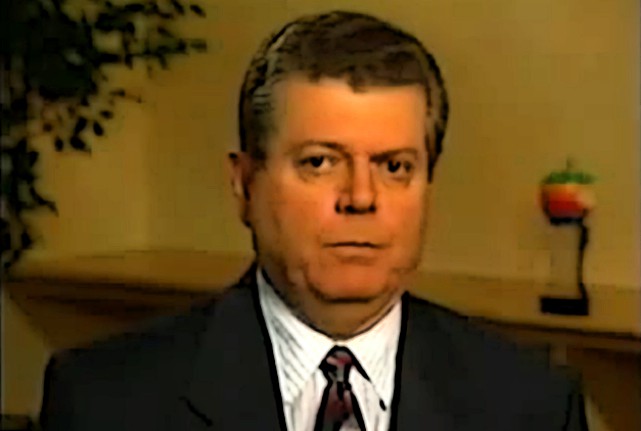
Apple’s 1996 CEO Shakeup: Gil Amelio Takes the Helm in a Desperate Bid to Save the Company
On February 2, 1996, Apple Computer, Inc. made a dramatic leadership change that would prove pivotal in the company’s storied history. The board of directors announced that Gil Amelio would replace Michael “The Diesel” Spindler as CEO of the struggling tech giant, marking yet another attempt to reverse Apple’s declining fortunes during one of its most turbulent periods.
The Desperate State of Apple in 1996
By early 1996, Apple was in serious trouble. The company that had once defined personal computing innovation was hemorrhaging money, losing market share at an alarming rate, and struggling to find its identity in an increasingly Windows-dominated world. Spindler’s tenure had been marked by ambitious but ultimately failed strategies that left Apple weaker than when he took over.
The Mac clone program, which Spindler had championed, had backfired spectacularly. Rather than expanding Apple’s market share, it cannibalized the company’s own hardware sales. Apple’s hardware division wasn’t faring much better—the PowerBook 5300 laptop had become infamous for catching fire, creating a public relations nightmare that rivaled Samsung’s later Note 7 debacle.
Adding to the drama, Spindler had pursued a merger with Sun Microsystems that ultimately collapsed, leaving Apple without a clear path forward. The board, losing patience with his inability to turn things around, asked for his resignation.
Gil Amelio: The Corporate Savior?
Gil Amelio arrived at Apple with an impressive resume and reputation as a turnaround specialist. At National Semiconductor, he had taken a company that had lost $320 million over four years and transformed it into a profitable enterprise. His engineering background was equally impressive—as a Ph.D. student, he had helped invent the charge-coupled device (CCD), the technology that would become fundamental to digital cameras and scanners.
Amelio joined Apple’s board in November 1994, giving him time to assess the company’s problems before taking the top job. He was seen as a no-nonsense executive who could cut through Apple’s notorious internal politics and implement the tough decisions necessary to save the company.
The appointment was announced with typical Apple fanfare, though the mood was decidedly more somber than during the company’s glory days. Industry observers were cautiously optimistic—Amelio had the credentials, but Apple’s problems ran deeper than any single executive could easily fix.
The 500-Day Disaster
Amelio’s tenure as Apple CEO would last just 500 days, but those days would prove crucial in shaping the company’s future. While he made some positive moves—streamlining operations, reducing headcount, and attempting to focus the company’s product line—his leadership was ultimately deemed a failure by the board.
The most significant event during Amelio’s brief reign wasn’t anything he orchestrated, but rather something that happened on his watch: Apple’s acquisition of NeXT Computer in December 1996. This $400 million deal would bring Steve Jobs back to the company he had co-founded, setting in motion the chain of events that would eventually lead to Apple’s remarkable turnaround.
Amelio’s biggest failure was his inability to stem Apple’s financial losses. Under his leadership, Apple posted its worst quarterly loss in company history—a staggering $708 million in the second quarter of Apple’s 1996 fiscal year. The company was burning through cash at an alarming rate, and investors were losing confidence.
The Steve Jobs Factor
What Amelio couldn’t have known when he took the job was that his arrival would ultimately pave the way for Steve Jobs’ return to Apple. Jobs had been pushing for years to regain some influence over the company, and the NeXT acquisition gave him his opening.
Initially, Jobs came back as an “advisor,” but his influence quickly grew. He began making changes almost immediately, and it became clear that he and Amelio had fundamentally different visions for Apple’s future. The tension between them was palpable, and industry insiders began to speculate about how long Amelio would last.
Jobs’ return marked the beginning of the end for Amelio. By July 1997, just months after the NeXT deal closed, Amelio was out, and Jobs was once again running Apple. The company that Jobs inherited was a shadow of its former self—financially crippled, lacking direction, and hemorrhaging talent.
Legacy and What Might Have Been
History has been unkind to Gil Amelio, but the truth is more nuanced than the common narrative suggests. Apple in 1996 was in far worse shape than most people realized. The company’s culture was toxic, its product line was bloated and confusing, and it was losing money at an unsustainable rate.
Amelio made some necessary but unpopular decisions, including significant layoffs and the cancellation of several projects. He also began the process of streamlining Apple’s product line, though he wouldn’t live to see the results of that work.
The real question is whether anyone could have saved Apple in 1996. The company needed more than just operational efficiency—it needed a vision for the future, innovative products, and a leader who could inspire both employees and customers. Amelio had the operational expertise but lacked the visionary qualities that Apple desperately needed.
The Turning Point
Looking back, February 2, 1996, represents a crucial turning point for Apple. While Amelio’s tenure was ultimately unsuccessful, his appointment set in motion the events that would lead to Steve Jobs’ return and Apple’s eventual renaissance. The NeXT acquisition, which occurred during Amelio’s watch, brought not just valuable technology but also the leadership that would transform Apple into the world’s most valuable company.
Apple’s 1990s struggles serve as a reminder that even the most innovative companies can lose their way. The fact that Apple managed to survive this period and emerge stronger is a testament to the resilience of its brand and the enduring appeal of its core mission.
The story of Gil Amelio at Apple is ultimately one of unintended consequences. He came to save the company but instead facilitated the return of the one person who could truly save it. In that sense, his legacy is more complex and perhaps more important than it’s usually given credit for.
Tags: Apple CEO change, Gil Amelio, Michael Spindler, Apple turnaround, 1990s Apple, Steve Jobs return, NeXT acquisition, Mac clone disaster, Apple financial crisis, Silicon Valley drama, tech leadership, Apple history, corporate turnaround, Apple board of directors, PowerBook 5300, Sun Microsystems merger, National Semiconductor, CCD technology, Apple product strategy, tech industry shakeups
Viral Phrases: “The Diesel” Spindler, Apple’s darkest days, the CEO who couldn’t save Apple, how a failed CEO brought back Steve Jobs, the $708 million quarterly loss, when Macs caught fire, the clone Mac disaster, Apple’s desperate Hail Mary, the man who paved the way for Apple’s rebirth, Silicon Valley’s biggest comeback story, the $400 million deal that changed everything, how Apple almost died in the 1990s, the CEO who lasted 500 days, when Apple needed a miracle, the tech industry’s greatest second act.
,
Leave a Reply
Want to join the discussion?Feel free to contribute!