
The Download: Squeezing more metal out of aging mines, and AI’s truth crisis
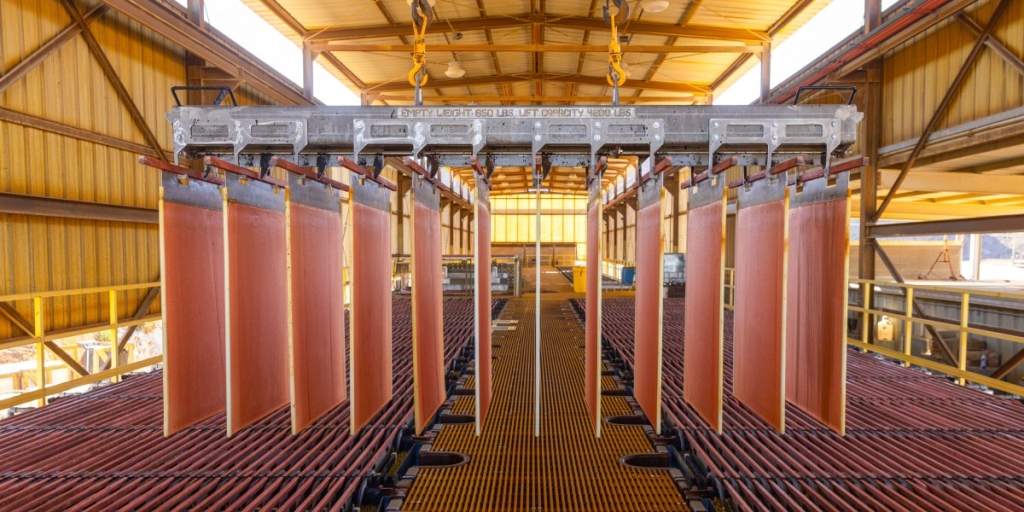
The Nickel Crisis: How Biotech Could Save America’s Only Active Mine
In a quiet pine forest on Michigan’s Upper Peninsula, a ticking time bomb threatens America’s electric vehicle ambitions. The Eagle Mine, the United States’ sole active nickel mine, is running out of time—and metal.
As demand for nickel skyrockets due to the explosive growth of electric vehicles and renewable energy infrastructure, the Eagle Mine faces an existential crisis. The concentration of nickel ore is declining rapidly, and industry experts warn that within months, the metal content could fall below economically viable levels, forcing the mine to close its doors.
“This isn’t just about one mine in Michigan,” explains mining analyst Sarah Chen. “It’s about America’s complete dependence on foreign sources for critical battery metals. When this mine closes, we’ll be entirely reliant on imports from countries like Indonesia and Russia.”
The timing couldn’t be worse. Electric vehicle sales are surging, with major automakers like Tesla, Ford, and General Motors racing to electrify their fleets. Each EV battery requires between 30 to 50 pounds of nickel, making it one of the most critical components in the clean energy transition.
But the Eagle Mine’s predicament reveals a deeper, more troubling trend across the mining industry. The easy-to-extract, high-grade ore deposits that fueled the industrial revolution have largely been depleted. What remains are lower-grade deposits that require more energy, water, and money to process—if they can be processed at all using conventional methods.
This is where biotechnology enters the picture as a potential game-changer. Scientists are developing microbial solutions that could revolutionize metal extraction, making previously uneconomical deposits viable and extending the life of existing mines.
The Microbial Mining Revolution
In laboratories from California to Australia, researchers are harnessing the power of bacteria to extract metals from ore in ways that traditional mining cannot. These microorganisms, some of which have existed for billions of years, naturally produce acids and enzymes that can break down rock and release trapped metals.
“The beauty of biomining is that it works at ambient temperatures and doesn’t require the massive energy inputs of traditional smelting,” says Dr. Emily Rodriguez, a bioleaching specialist at Stanford University. “We’re essentially speeding up a process that nature has been doing for eons.”
The technology, known as bioleaching or biomining, uses specialized bacteria like Acidithiobacillus ferrooxidans and Leptospirillum ferrooxidans to oxidize sulfide minerals and release metals. In heap leaching operations, crushed ore is stacked in massive piles and irrigated with a bacterial solution that percolates through the rock, dissolving valuable metals that can then be collected and refined.
Early trials have shown promising results. At a copper mine in Chile, bioleaching has increased metal recovery rates by up to 20% compared to conventional methods. Similar approaches are being tested for nickel, cobalt, and rare earth elements—metals that are crucial for everything from smartphones to wind turbines.
For the Eagle Mine, biomining could mean the difference between closure and continued operation. The mine’s lower-grade ore, which currently isn’t economical to process, might become viable through microbial extraction. This would not only save jobs in the region but also help secure America’s supply chain for critical battery materials.
The Scale Problem: AI’s Energy Hunger
While biotechnology offers hope for sustainable mining, another crisis looms on the technological horizon. The explosive growth of artificial intelligence is creating an insatiable demand for computing power, driving the construction of massive “hyperscale” data centers that consume staggering amounts of energy.
These aren’t your typical server farms. Hyperscale AI data centers are engineering marvels—buildings the size of multiple football fields packed with specialized computer chips, advanced cooling systems, and enough electrical infrastructure to power small cities. Companies like Google, Microsoft, Amazon, and Meta are racing to build these facilities to train ever-larger AI models and serve billions of users.
The scale is almost incomprehensible. A single hyperscale data center can house hundreds of thousands of servers, each packed with multiple high-performance GPUs or custom AI accelerators. These chips generate enormous heat, requiring sophisticated cooling systems that often consume as much energy as the computers themselves.
“The energy demands are mind-boggling,” says Dr. Michael Thompson, an energy systems researcher at MIT. “We’re talking about facilities that can draw 500 megawatts or more—that’s equivalent to the power consumption of 400,000 homes.”
This energy hunger comes at a critical time when the world is trying to reduce carbon emissions and combat climate change. The International Energy Agency estimates that data centers already account for about 1-1.5% of global electricity consumption, and that figure could rise dramatically as AI adoption accelerates.
The problem extends beyond just electricity. These facilities require vast amounts of water for cooling, strain local power grids, and generate significant electronic waste as hardware becomes obsolete every few years. Some regions are already seeing pushback from communities concerned about the environmental and economic impacts.
The Truth Crisis: When AI Becomes the Liar
Compounding these technological challenges is a growing crisis of trust in the digital age. As AI systems become more sophisticated at generating realistic text, images, and video, distinguishing truth from fiction is becoming increasingly difficult—and the consequences could be catastrophic.
Recent revelations about government agencies using AI-generated content have raised alarm bells across the tech industry. The Department of Homeland Security has been experimenting with AI tools from companies like Google and Adobe to create videos and other media, sparking concerns about the potential for misinformation and manipulation.
“We’re reaching a point where the average person cannot reliably distinguish between authentic and AI-generated content,” warns Dr. Jennifer Lee, a digital forensics expert at Stanford. “And when people can’t trust what they see and hear, it undermines the very foundations of informed democracy.”
The problem isn’t just that AI can create convincing fakes—it’s that these systems are becoming integrated into the information ecosystem in ways that make detection nearly impossible. AI-generated content is being mixed with authentic material, creating a digital landscape where truth and fiction are increasingly indistinguishable.
Social media platforms, already struggling with misinformation, face an even greater challenge as AI makes it easier than ever to produce and distribute convincing falsehoods at scale. The potential for election interference, financial fraud, and social manipulation has never been greater.
The Interconnected Crisis
What makes these challenges particularly daunting is how interconnected they are. The push for clean energy and electric vehicles requires more mining, but traditional mining is becoming less viable. AI promises solutions but creates new problems of its own. And the very technology that could help solve these crises—advanced computing and AI—is contributing to environmental degradation and trust erosion.
Consider the full cycle: We need more batteries for electric vehicles, which requires more nickel and other metals. Mining these metals traditionally consumes enormous energy and creates environmental damage. AI could help optimize mining and make it more efficient, but AI itself requires massive energy consumption through data centers. Meanwhile, the spread of AI-generated misinformation makes it harder for society to have informed discussions about these complex trade-offs.
“It’s a perfect storm of technological challenges,” says Dr. Robert Chang, a systems theorist at Berkeley. “Each solution we develop seems to create new problems, and the problems are becoming more complex and interconnected.”
The Path Forward
Despite these challenges, researchers and industry leaders are working on solutions that could address multiple crises simultaneously. Advanced nuclear reactors could provide clean, reliable power for both mining operations and data centers. Improved recycling technologies could reduce the need for new mining. Better AI detection tools could help combat misinformation.
For the Eagle Mine and similar operations, the integration of biotechnology with traditional mining methods offers a path to sustainability. By using bacteria to extract metals from lower-grade ore, mines could extend their operational life and reduce their environmental footprint. This approach could be particularly valuable for processing mine waste and tailings, turning environmental liabilities into economic assets.
In the data center space, companies are exploring innovative cooling solutions, renewable energy integration, and more efficient chip designs to reduce energy consumption. Some are locating facilities near sources of clean energy or in cooler climates to minimize cooling requirements. Others are developing liquid cooling systems that are far more efficient than traditional air cooling.
To address the truth crisis, researchers are developing AI detection tools and promoting digital literacy. Blockchain technology is being explored as a way to verify the authenticity of digital content. Some platforms are experimenting with labeling AI-generated content and providing context about its origins.
The Stakes Have Never Been Higher
The convergence of these crises—resource depletion, energy consumption, and truth erosion—represents one of the greatest challenges humanity has ever faced. The solutions will require not just technological innovation but also systemic changes in how we approach resource extraction, energy consumption, and information sharing.
The Eagle Mine’s fate may be a microcosm of a larger story about how we balance technological progress with environmental sustainability and social trust. Whether we can develop solutions that address all these challenges simultaneously will determine not just the future of mining or AI, but the future of our civilization itself.
As we stand at this technological crossroads, the choices we make in the coming years will have profound implications for generations to come. The clock is ticking, and the time for action is now.
Tags & Viral Phrases
- Nickel crisis threatens EV revolution
- Biotech mining breakthrough could save America’s only nickel mine
- AI data centers consume power of 400,000 homes each
- Truth decay: When AI becomes the ultimate liar
- Electric vehicle battery shortage looms as mines close
- Microbial mining: Nature’s solution to resource depletion
- Hyperscale AI facilities strain power grids nationwide
- Government using AI to create videos raises alarm
- Clean energy transition hits mining roadblock
- Bacteria could extract metals traditional mining can’t touch
- Data center energy consumption skyrockets with AI growth
- Digital trust crisis: Can we believe anything online?
- Eagle Mine closure would make US dependent on foreign nickel
- AI-generated misinformation threatens democracy
- Sustainable mining through biotechnology
- The interconnected crises of technology and environment
- Mining the future: How microbes could save critical resources
- Energy-hungry AI data centers spark community backlash
- Truth or AI: The new reality verification challenge
- Resource depletion meets technological innovation
- The hidden costs of the AI revolution
- Biomining could extend mine life by decades
- Clean energy’s dirty secret: Mining’s environmental impact
- AI truth crisis: Detection tools struggle to keep up
- The triple threat: Mining, energy, and trust challenges
- Sustainable solutions for a technological world
- How bacteria are revolutionizing metal extraction
- The dark side of the clean energy transition
- Digital age trust deficit: Can technology save itself?
,

Leave a Reply
Want to join the discussion?Feel free to contribute!