
Man at City Council Meeting Makes Devastating Case Against Proposed Local Data Center
The Data Center Backlash Reaches a Boiling Point: One Artist’s Viral Speech Sparks a Nationwide Movement
In a moment that has captured the attention of tech critics and community activists across America, a digital artist’s impassioned speech at a small-town city council meeting has become the rallying cry for a growing movement against the unchecked expansion of artificial intelligence data centers. What began as a routine municipal debate in Ravenna, Ohio—population 11,000—has exploded into a viral phenomenon that’s forcing communities nationwide to confront the true cost of our AI-driven future.
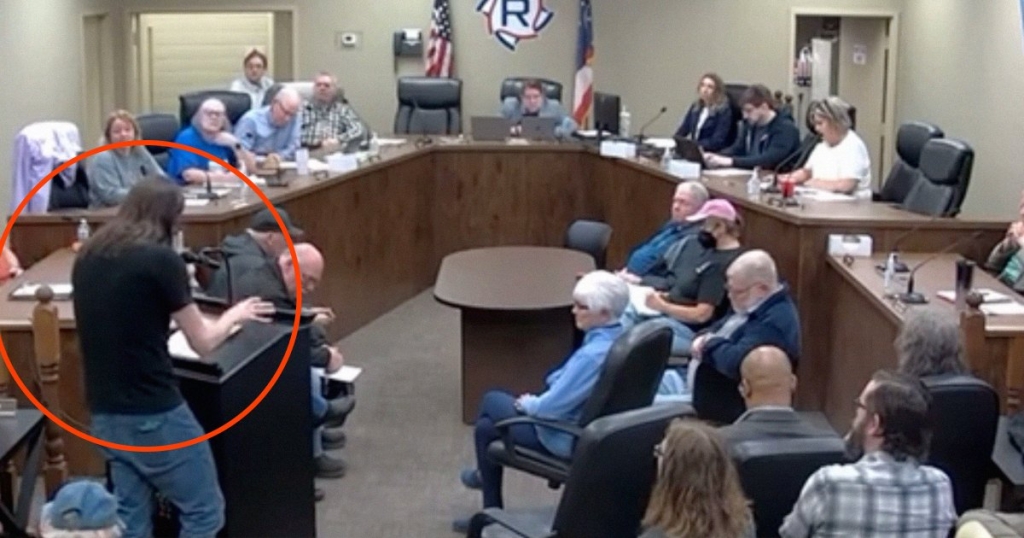
The controversy centers on a proposed 12-month moratorium on data center construction in Ravenna, inspired by similar actions in neighboring communities. But it was Will Hollingsworth, a self-described content creator and digital artist, who transformed a local zoning discussion into a national conversation about corporate accountability, environmental justice, and the human cost of technological progress.
The Hidden Costs Behind the Cloud
Data centers—those sprawling complexes of servers powering everything from ChatGPT to cloud storage—have become the backbone of our digital economy. But as Hollingsworth eloquently articulated during his four-minute address to the Ravenna City Council on April 10, the infrastructure supporting our AI revolution comes with staggering hidden costs.
“These facilities can use millions of gallons of water per day,” Hollingsworth declared, his voice carrying through chambers packed with nearly 100 concerned residents. “We are being asked to drain our reservoirs so a chatbot can write a poem or so our sheriff can generate a picture of himself standing next to Bigfoot.”
The water usage statistics are indeed staggering. A typical hyperscale data center consumes between 3 to 5 million gallons of water daily—equivalent to the water usage of a town of 30,000 to 50,000 people. In drought-prone regions, this consumption has already led to conflicts with local communities over water rights and availability.
From AI Enthusiast to Industry Critic
What makes Hollingsworth’s testimony particularly compelling is his journey from AI advocate to vocal critic. He revealed during his speech that he once relied heavily on AI tools in his professional life, overseeing video content production for a mattress company.
“I used to feed AI image generating app Midjourney prompts to create the perfect commercial, training the very machine that would eventually replace me as three months later they would lay me off,” he admitted. This personal experience lent credibility to his subsequent criticism of the industry he once embraced.
His insider perspective allowed him to speak with authority about the promises made by tech companies and the reality of their operations. “They want us to trust a trillion dollar industry that tells us with a straight face that they can suck five million gallons of water out of our ground a day,” Hollingsworth argued, “use it as a liquid heat sink, and return it to our rivers without a single consequence.”
The Environmental Reality Check
Hollingsworth’s claims about water usage are supported by environmental research. While tech companies often promote their water recycling initiatives, the reality is more complex. Water used in data center cooling systems doesn’t simply circulate indefinitely.
“The water does not stay in the loop,” Hollingsworth explained. “It evaporates into the sky by millions of gallons.” He also raised concerns about chemical contamination, mentioning “forever chemical runoff” used to “bleed the lines to remove toxic sludge.”
These concerns align with findings from environmental scientists who note that data centers contribute to both water scarcity and quality issues. The cooling process requires water treatment chemicals, and the warm water discharged back into local ecosystems can disrupt aquatic habitats.
The Economic False Promise
Perhaps most damning was Hollingsworth’s critique of the economic argument often used to justify data center construction. Local governments frequently offer substantial tax incentives and infrastructure support to attract these facilities, promising job creation and economic development.
“A big employer who uses the water of 50,000 people… which only hires about ten people is not an employer,” Hollingsworth stated bluntly. “They are an extraction.”
This assessment reflects the reality of modern data centers, which are highly automated facilities requiring minimal human labor. While construction creates temporary jobs, the long-term employment benefits are often negligible compared to the ongoing resource consumption.
Community Over Corporate Interests
Hollingsworth’s conclusion resonated deeply with both the council members and viewers who later watched his speech online. “I am not a cynic when it comes to technology,” he declared. “I am a believer in community. I believe that a drop of clean water for a Ravenna child is worth more than a billion AI generated images. Let us choose the child.”
This framing—positioning community well-being against corporate profit—has struck a chord with communities across the country facing similar proposals. The Ravenna City Council’s unanimous vote for a one-year moratorium suggests that Hollingsworth’s arguments carried significant weight.
A Viral Movement Takes Shape
The impact of Hollingsworth’s speech extended far beyond Ravenna’s city limits. Video of his address spread rapidly across social media platforms, garnering millions of views and thousands of supportive comments. Reddit users praised his eloquence and clarity, with one writing, “God damn that was good. Seriously this should be used as a script in every county these corporations are hustling.”
The speech has become a template for community activists organizing against data center proposals in their own areas. Environmental groups have shared the video as part of their organizing toolkits, and local politicians have referenced Hollingsworth’s arguments in debates over similar proposals.
The Broader Context: A National Backlash
Ravenna’s moratorium vote is part of a larger pattern of community resistance to data center expansion. Just days after Hollingsworth’s speech went viral, voters in a small town outside St. Louis, Missouri, expressed their fury over a $6 billion data center approved by their city council. The backlash was so severe that four incumbent council members were voted out of office in the subsequent election.
According to recent reporting, nearly half of the data centers scheduled to open in the United States this year have been canceled or delayed, suggesting that community opposition is having a tangible impact on industry plans.
The Industry Response
Tech companies have generally responded to these criticisms by emphasizing their investments in renewable energy and water recycling technologies. Microsoft, Google, and Amazon—the three largest data center operators—have all announced ambitious sustainability goals and water replenishment projects.
However, critics argue that these initiatives often amount to greenwashing, pointing out that water replenishment projects don’t necessarily benefit the communities where the water is being consumed. Additionally, the energy demands of AI training and inference continue to grow exponentially, potentially outpacing the deployment of renewable energy sources.
Looking Forward: The Path Ahead
The data center debate represents a broader reckoning with the true costs of our AI-driven future. As Hollingsworth noted in a follow-up comment on Reddit, “I do hope other towns stand up and speak out like I did. I know I’m not the only good orator here in the country, maybe this will inspire a wave of political action!”
His optimism may be well-founded. The combination of environmental concerns, economic skepticism, and community activism suggests that the era of unquestioned data center expansion may be coming to an end. Communities are increasingly demanding transparency, accountability, and genuine community benefits in exchange for the resources they’re being asked to sacrifice.
The question now is whether tech companies will adapt to this new reality by developing more sustainable approaches and engaging more authentically with affected communities, or whether they’ll continue to prioritize expansion over environmental and social responsibility. The answer will shape not just the future of AI infrastructure, but the relationship between technology companies and the communities that host them.
As one Reddit user succinctly summarized the sentiment Hollingsworth’s speech inspired: “There it is right there. Lies, lies and more lies from megacorps invested up to their eyeballs in having just a few people in government believe them.” Whether this represents the beginning of a fundamental shift in how we approach technological infrastructure remains to be seen, but the conversation has certainly been changed.
Tags
data center backlash, AI environmental impact, community resistance, water usage crisis, tech industry accountability, Ravenna Ohio, Will Hollingsworth speech, AI data centers controversy, environmental justice, corporate greenwashing, hyperscale facilities, local governance, technological ethics, resource extraction, community activism, viral speech, data center moratorium, AI infrastructure costs, environmental sustainability, community over profit
Viral Sentences
“They want us to trust a trillion dollar industry that tells us with a straight face that they can suck five million gallons of water out of our ground a day.”
“We are being asked to drain our reservoirs so a chatbot can write a poem.”
“A big employer who uses the water of 50,000 people… which only hires about ten people is not an employer. They are an extraction.”
“I believe that a drop of clean water for a Ravenna child is worth more than a billion AI generated images. Let us choose the child.”
“Lies, lies and more lies from megacorps invested up to their eyeballs in having just a few people in government believe them.”
“God damn that was good. Seriously this should be used as a script in every county these corporations are hustling.”
“There it is right there.”
“This should be required viewing for every city council considering these facilities.”
“The water does not stay in the loop. It evaporates into the sky by millions of gallons.”
“They say the water is filled once and recycled forever. In a laboratory, that might be true. But we aren’t living in a laboratory. We’re living in Ohio.”
“I am not a cynic when it comes to technology. I am a believer in community.”
“Maybe this will inspire a wave of political action!”
“Almost Half of US Data Centers That Were Supposed to Open This Year Slated to Be Canceled or Delayed”
,

Leave a Reply
Want to join the discussion?Feel free to contribute!