
Honor’s humanoid robot breaks human half marathon record in 50min 26sec · TechNode
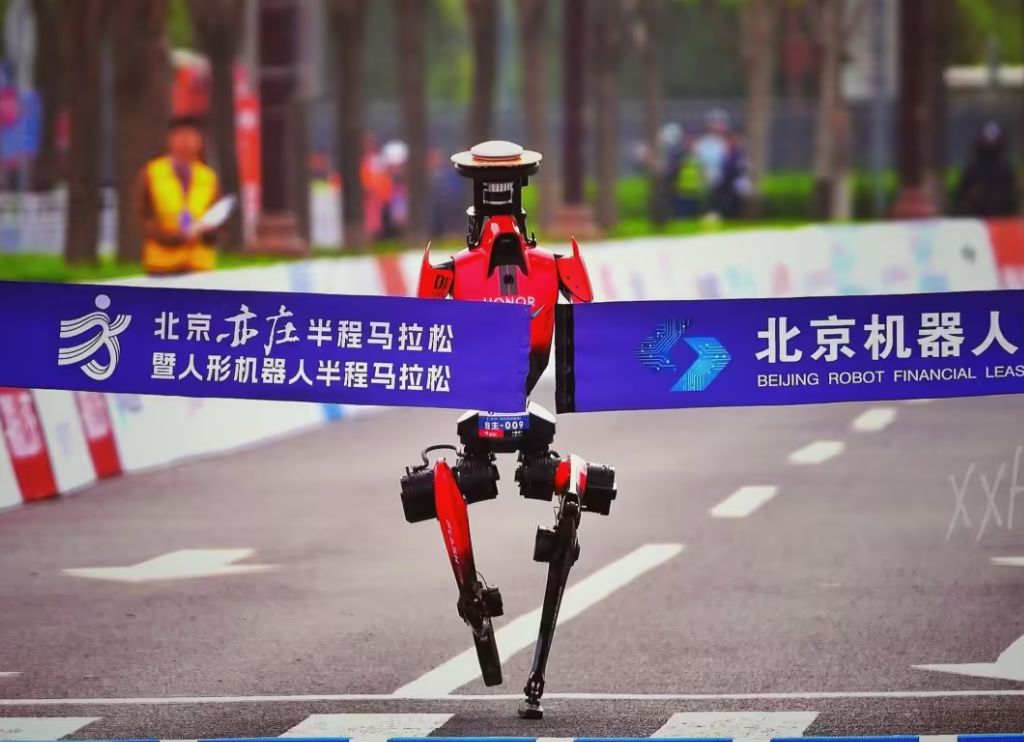
Honor’s “Flash” Robot Shatters Records at Beijing Half Marathon, Outpacing Human Champions
In a groundbreaking moment for robotics and artificial intelligence, Honor’s humanoid robot, “Flash,” has stunned the world by clinching victory at the Beijing Yizhuang Humanoid Robot Half Marathon. Completing the grueling 21.0975-kilometer course in an astonishing 50 minutes and 26 seconds, Flash not only secured the championship but also shattered the human half marathon world record of 56 minutes and 42 seconds. This unprecedented feat marks a pivotal milestone in the evolution of robotics, showcasing the incredible potential of autonomous machines in competitive sports.
The event, held on Sunday in Beijing’s Yizhuang district, was a spectacle of innovation and engineering prowess. The course, designed to test the limits of both human and machine endurance, featured a variety of challenging terrains, including steep inclines, uneven surfaces, and sharp turns. Despite these obstacles, Flash demonstrated remarkable agility, precision, and stamina, leaving spectators and competitors alike in awe.
A Marvel of Engineering: The “Flash” Robot
Standing at an impressive 169 centimeters tall, Flash is a sleek, mech-inspired humanoid robot that embodies the cutting edge of robotics technology. Its design is not just visually striking but also highly functional, optimized for speed, balance, and adaptability. The robot’s exterior is crafted from lightweight yet durable materials, allowing it to maintain stability and efficiency even during high-speed maneuvers.
At the heart of Flash’s performance is its self-developed high-dynamic motion system, a proprietary technology that enables fluid and precise movements. This system integrates advanced actuators, sensors, and control algorithms, allowing Flash to navigate complex terrains with ease. Whether sprinting on flat surfaces or tackling steep inclines, the robot’s motion system ensures optimal performance and energy efficiency.
Autonomous Perception and Navigation: The Brains Behind the Brawn
What truly sets Flash apart is its autonomous perception and navigation capabilities. Equipped with state-of-the-art sensors, including LiDAR, cameras, and ultrasonic detectors, the robot can perceive its environment in real-time. This allows it to identify obstacles, assess terrain conditions, and make split-second decisions to optimize its path. The navigation system is powered by advanced AI algorithms, enabling Flash to adapt to dynamic environments and maintain a consistent pace throughout the race.
The robot’s perception system also includes machine learning models that continuously improve its performance based on real-world data. This means that with each race, Flash becomes more efficient, faster, and better equipped to handle unexpected challenges. The combination of autonomous perception and navigation not only enhances its athletic capabilities but also underscores the potential of AI-driven robotics in real-world applications.
A New Era for Robotics and Sports
The victory of Flash at the Beijing Yizhuang Humanoid Robot Half Marathon is more than just a technological achievement; it represents a paradigm shift in the relationship between humans and machines. For decades, robotics has been confined to industrial and domestic settings, but events like this highlight the potential for robots to excel in dynamic, high-performance environments.
The implications of this achievement are far-reaching. In the realm of sports, it raises questions about the future of competition and the role of technology in pushing the boundaries of human performance. Could we see a future where humanoid robots compete alongside humans in traditional marathons? Or perhaps even surpass them in other athletic disciplines?
Beyond sports, the advancements demonstrated by Flash have significant implications for industries such as logistics, healthcare, and disaster response. The ability to navigate complex environments autonomously could revolutionize tasks that are currently challenging or dangerous for humans. From delivering medical supplies in disaster zones to assisting in search-and-rescue missions, the potential applications of this technology are vast and transformative.
The Road Ahead: Challenges and Opportunities
While Flash’s victory is a remarkable achievement, it also highlights the challenges that lie ahead in the field of robotics. Developing humanoid robots that can match or exceed human performance requires overcoming significant technical hurdles, including energy efficiency, durability, and adaptability. The current iteration of Flash, while impressive, is still a prototype, and further advancements will be needed to make such robots practical for widespread use.
Moreover, the integration of robots into competitive sports raises ethical and regulatory questions. How do we ensure fair competition when machines can outperform humans? What safeguards are needed to prevent misuse or unintended consequences? These are complex issues that will require careful consideration as robotics technology continues to evolve.
Despite these challenges, the success of Flash is a testament to the rapid progress being made in the field of robotics. It serves as a powerful reminder of the potential for innovation to drive positive change and push the boundaries of what is possible.
Conclusion: A Triumph of Innovation
Honor’s “Flash” robot has not only set a new benchmark in robotics but has also captured the imagination of people around the world. Its victory at the Beijing Yizhuang Humanoid Robot Half Marathon is a celebration of human ingenuity and a glimpse into a future where robots play an increasingly prominent role in our lives.
As we look to the future, one thing is clear: the race for innovation is far from over. With each breakthrough, we move closer to a world where the lines between human and machine capabilities blur, opening up new possibilities for collaboration, exploration, and progress.
Tags:
Honor Flash Robot, Beijing Yizhuang Humanoid Robot Half Marathon, Robotics Innovation, AI-Powered Robots, Humanoid Robots, Autonomous Navigation, High-Dynamic Motion Systems, Machine Learning in Robotics, Future of Sports, Technological Breakthrough, Record-Breaking Robot, Advanced Sensors, LiDAR Technology, Robotics in Athletics, Ethical Implications of Robotics, Next-Gen Robotics, Human vs Machine, Robotics Engineering, Tech Milestones, Viral Robotics News, Futuristic Technology, AI in Sports, Robotics Competition, Cutting-Edge Robotics, Tech Evolution, Humanoid Robot Design, Autonomous Systems, Robotics and AI, Innovation in Motion, Tech Advancements, Future of Robotics, Robotics and Humanity, AI-Driven Performance, Robotics Revolution, Tech Trends, Humanoid Robot Capabilities, Robotics Achievements, Breakthrough in Robotics, Tech News, Viral Tech Story, Robotics in Real-World Applications, Robotics and Ethics, Future of Humanoid Robots, Tech Innovation, Robotics Milestones, AI and Robotics Integration, Robotics in Competitive Sports, Tech and Society, Robotics Development, AI and Machine Learning, Robotics and Automation, Future of Technology, Tech Breakthroughs, Robotics in Everyday Life, AI-Powered Machines, Robotics and Human Performance, Tech and Innovation, Robotics and Society, Future of AI, Robotics in Action, Tech and Humanity, Robotics and Progress, AI and the Future, Robotics and Ethics in Sports, Tech and the Future, Robotics and Human Collaboration, AI and Robotics Advancements, Tech and Human Potential, Robotics and the Next Generation, AI and the Evolution of Technology, Tech and the World of Tomorrow, Robotics and the Future of Work, AI and the Future of Humanity, Tech and the Boundaries of Possibility, Robotics and the Future of Innovation, AI and the Future of Competition, Tech and the Future of Sports, Robotics and the Future of Society, AI and the Future of Technology, Tech and the Future of Human-Machine Interaction, Robotics and the Future of Progress, AI and the Future of Robotics, Tech and the Future of Human Potential, Robotics and the Future of Collaboration, AI and the Future of Innovation, Tech and the Future of Humanity, Robotics and the Future of the World.
,

Leave a Reply
Want to join the discussion?Feel free to contribute!