
OpenAI’s existential questions | TechCrunch
OpenAI’s Bold Moves: Hiro and TBPN Acquisitions Signal Strategic Shifts in AI’s Evolving Landscape
OpenAI continues to dominate headlines with a flurry of strategic moves that reveal both ambition and vulnerability in its quest to cement AI supremacy. From high-profile acquisitions to fierce competition with Anthropic, the company finds itself at a critical inflection point where every decision could reshape its trajectory.
The Hiro Acquisition: A Calculated Bet on Consumer AI Innovation
OpenAI’s acquisition of Hiro, a personal finance startup founded just two years ago, initially appears to be a straightforward acqui-hire. The startup has already announced it will sunset its product, with users losing access by a specified date. But beneath this seemingly routine talent grab lies a more nuanced strategy.
Hiro’s founder has a track record of building consumer applications, suggesting OpenAI may be betting on fresh perspectives to help diversify beyond its core chatbot offering. ChatGPT, while phenomenally successful with over 400 million weekly active users, faces questions about long-term monetization and whether it can generate sufficient revenue to sustain the massive capital requirements of frontier AI development.
The Hiro team could bring expertise in creating sticky consumer products with multiple engagement hooks—precisely what OpenAI needs as it explores avenues beyond the chatbot paradigm. In an AI landscape where differentiation becomes increasingly difficult, personal finance represents a high-value domain where specialized AI could command premium pricing and deeper user relationships.
TBPN Acquisition: Controlling the Narrative in an Age of Skepticism
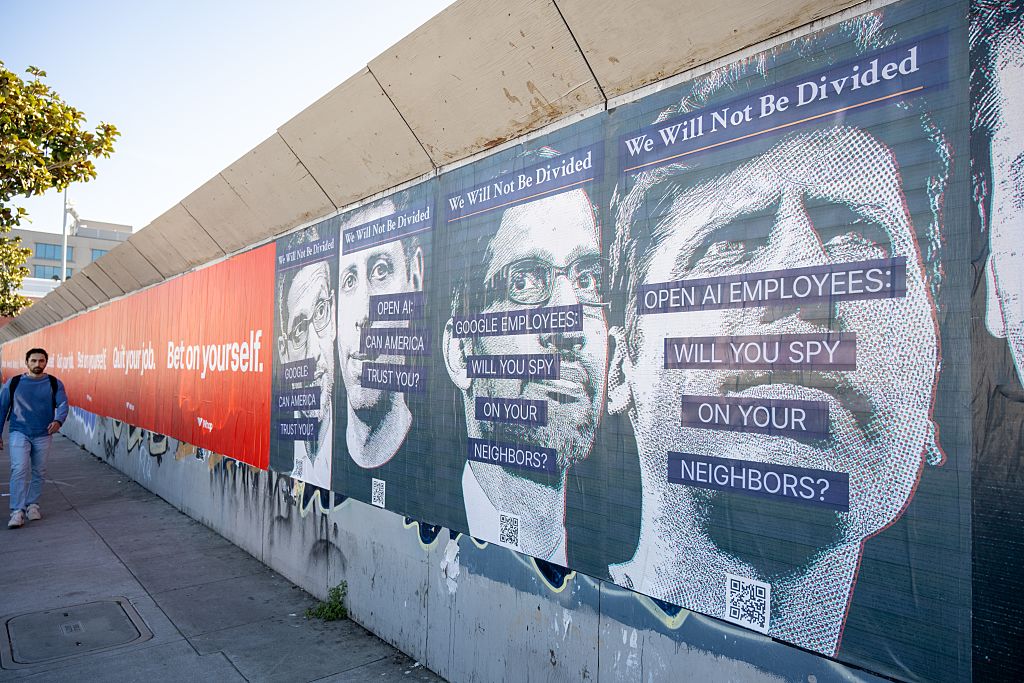
The acquisition of TBPN (The Business & People’s News), a founder-led business talk show, represents OpenAI’s most explicit attempt yet to shape its public image. This move comes at a particularly sensitive moment, following Ronan Farrow’s investigative piece in The New Yorker that raised pointed questions about CEO Sam Altman’s trustworthiness and the company’s broader societal impact.
TBPN will reportedly maintain editorial independence, but skepticism abounds. History suggests that when media properties are acquired by companies with vested interests, true independence becomes challenging to preserve—especially when the editorial team reports to public policy and communications departments.
This acquisition reveals OpenAI’s acute awareness that technical superiority alone cannot guarantee success in AI’s winner-take-all dynamics. Public perception, regulatory relationships, and narrative control increasingly determine which companies receive the social license to operate and scale their technologies.
The Anthropic Shadow: OpenAI’s Competitive Anxiety
Perhaps no factor more profoundly influences OpenAI’s strategic decisions than the meteoric rise of Anthropic and its Claude models. While both companies could theoretically coexist as AI market leaders—similar to how Google and Microsoft have thrived simultaneously—OpenAI appears singularly focused on maintaining its perceived leadership position.
The contrast was stark at recent industry conferences, where attendees expressed enthusiasm for Claude Code while viewing ChatGPT as merely “fine.” This sentiment strikes at OpenAI’s core anxiety: the enterprise and developer tools segment represents AI’s most lucrative and defensible market opportunity. If Anthropic captures this segment while OpenAI remains associated primarily with consumer applications, the power dynamics in AI could shift dramatically.
OpenAI’s recent refocus on enterprise competitiveness suggests acknowledgment that consumer chatbots, despite their popularity, may not provide the sustainable business model needed for continued frontier model development. The capital intensity of training cutting-edge AI systems—often exceeding $100 million per model—demands either massive recurring revenue or continued access to unprecedented funding rounds.
Existential Questions Driving OpenAI’s Diversification
Both acquisitions address what insiders describe as OpenAI’s two most pressing existential challenges:
First, product diversification beyond ChatGPT. Despite its cultural impact and user base, ChatGPT faces monetization headwinds and competition from increasingly capable open-source alternatives. OpenAI needs products that create switching costs and justify premium pricing—precisely the kind of value proposition Hiro’s team might help develop.
Second, reputation management and public trust. As AI systems become more powerful and pervasive, companies building them face escalating scrutiny over safety, ethics, and societal impact. OpenAI’s aggressive growth strategy and Altman’s high-profile leadership have made it a frequent target for criticism, necessitating sophisticated narrative management capabilities.
The Road Ahead: Balancing Innovation and Responsibility
OpenAI’s current position—simultaneously the most celebrated and scrutinized AI company—reflects broader tensions in artificial intelligence development. The same capabilities that make its models revolutionary also raise legitimate concerns about concentration of power, safety, and equitable access.
The company’s willingness to experiment with different business models and public engagement strategies suggests organizational adaptability. However, success will require more than tactical acquisitions or narrative control. OpenAI must demonstrate that its technology development aligns with broader societal interests while building sustainable business models that don’t rely solely on venture capital or create winner-take-all dynamics.
As the AI race accelerates, OpenAI’s moves reveal a company grappling with the paradox of its own success: the very factors that propelled it to leadership—speed, ambition, and technical excellence—now generate the pressures and skepticism that threaten to constrain its future growth.
The coming months will reveal whether these strategic bets on talent acquisition and narrative control prove prescient, or whether OpenAI must pursue even more dramatic pivots to maintain its position at AI’s frontier.
Tags and Viral Phrases:
OpenAI acquisitions, Hiro personal finance, TBPN business talk show, Anthropic competition, Sam Altman leadership, AI enterprise market, ChatGPT monetization, frontier AI development, AI safety concerns, narrative control, acqui-hire strategy, Claude Code, AI reputation management, tech industry consolidation, AI business models, public trust in AI, OpenAI vs Anthropic, AI startup ecosystem, enterprise AI tools, AI societal impact, venture capital in AI, AI regulatory scrutiny, AI talent wars, AI product diversification, AI market dynamics, AI ethical concerns, AI competitive landscape, AI business strategy, AI industry trends, AI future predictions.
,

Leave a Reply
Want to join the discussion?Feel free to contribute!