
Former advisor to Steve Jobs says new Apple CEO is exactly what’s needed: an engineer from the inside
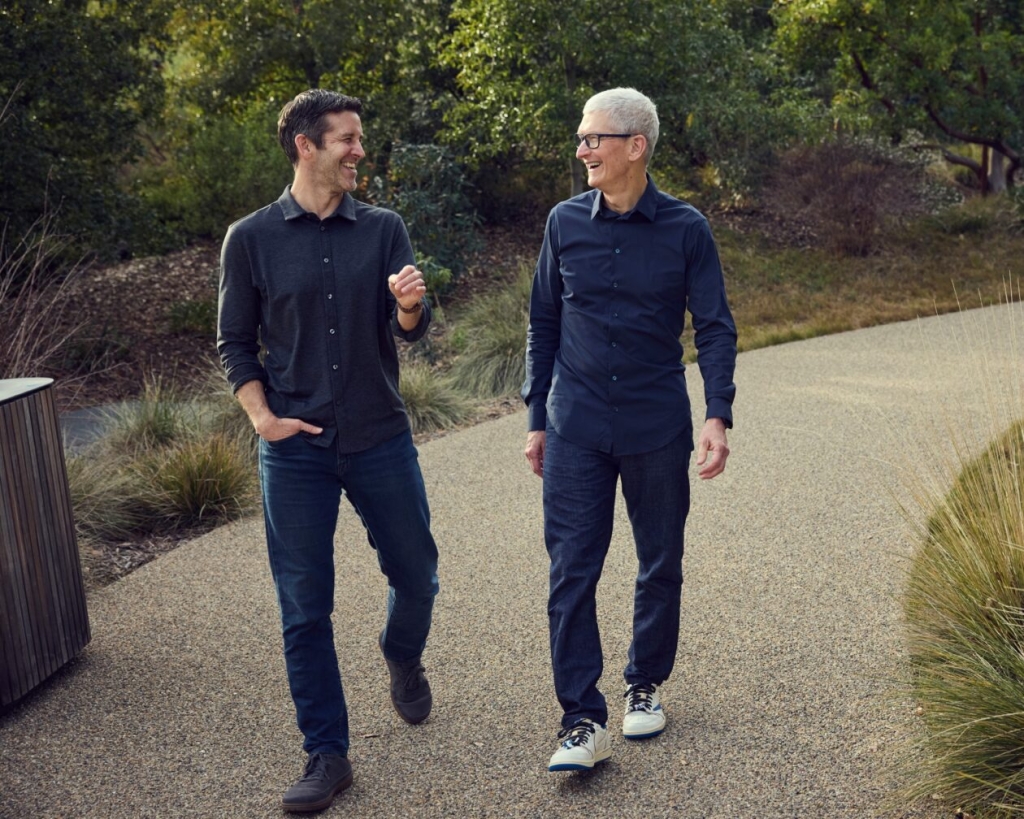
Tim Cook Steps Down as Apple CEO, Passing the Torch to Hardware Engineer John Ternus in Historic Leadership Shift
In a seismic move that will reshape the future of Silicon Valley’s most valuable company, Apple announced Monday that CEO Tim Cook will transition to executive chairman on September 1, with veteran hardware engineering chief John Ternus stepping into the role of CEO. This leadership transition marks the end of an era that saw Apple’s market capitalization explode from $350 billion to an unprecedented $4 trillion, while returning the company’s top position to its product engineering roots after nearly 15 years under operations-focused leadership.
The announcement sent ripples through the tech industry, with analysts and insiders weighing in on what this means for Apple’s future trajectory. The choice of Ternus, a 50-year-old hardware engineering veteran who has spent his entire 25-year career at Apple, signals a deliberate pivot back to the company’s core strength: building exceptional hardware that redefines entire product categories.
A Return to Apple’s Engineering DNA
Seattle tech veteran Mike Slade, who served as an advisor to Steve Jobs during Apple’s critical turnaround years from 1998 to 2004, called the appointment “the right call” for multiple compelling reasons. “Apple’s the last company left where there are people that know how to build computers, in the U.S., at least,” Slade explained. “If you know that, you have an unfair, intuitive ability to know what’s possible. That’s how crazy things like the iPod and the iPhone came to be.”
This sentiment resonates deeply with Apple’s historical pattern of entering established markets—music players, smartphones, tablets—not as first movers, but as companies that fundamentally reimagined what those products could be. As Slade pointedly noted, “They just weren’t very good. Apple made them good.”
Ternus brings exactly the kind of engineering pedigree that made those transformations possible. He joined Apple in 2001 as part of the product design team and has since overseen hardware development across every major product line: iPhone, Mac, iPad, and AirPods. His fingerprints are on some of Apple’s most successful hardware innovations of the past decade, including the revolutionary Apple Silicon transition that has given Mac computers performance and efficiency advantages that competitors are still struggling to match.
The Cook Legacy: Operational Excellence Meets Product Innovation
Tim Cook’s tenure as CEO represents one of the most remarkable corporate success stories in American business history. Under his leadership, Apple didn’t just grow—it expanded its market value by more than 10-fold, adding approximately $3.65 trillion in market capitalization. This achievement places Cook in rarefied air among corporate leaders, having managed to combine operational excellence with continued product innovation.
Cook, who rose through Apple’s operations and supply chain organization, brought a level of efficiency and scale to the company that seemed almost impossible when he took over from Steve Jobs in 2011. His ability to manage complex global supply chains, negotiate with component suppliers, and maintain Apple’s legendary profit margins while simultaneously pushing the company into new product categories and services businesses represents a masterclass in modern corporate leadership.
Former Microsoft Windows and Office chief Steven Sinofsky captured the magnitude of Cook’s achievement on social media, calling it “just an incredible incredible tenure” and praising “the rare combination of improved execution and strategic innovation.” This assessment acknowledges that Cook managed to both refine Apple’s existing operations to near-perfection while also expanding the company’s reach into new domains like wearables, services, and financial technology.
The AI Challenge: Apple’s Strategic Crossroads
Perhaps no issue looms larger for Ternus’s incoming tenure than Apple’s position in the artificial intelligence race. While competitors like Microsoft, Google, and Amazon have poured hundreds of billions of dollars into AI development, Apple has largely watched from the sidelines, struggling with its own AI initiatives and experiencing high-profile setbacks including the delayed Siri overhaul and the departure of AI chief John Giannandrea last year.
Alex Zenla, co-founder and CTO of Seattle-based AI security startup Edera, offers a nuanced perspective on this challenge. She notes that Apple’s strength in recent years has been precisely in hardware, driven by the success of Apple Silicon and a strategic reversal of past mistakes like over-thinning of devices at the expense of performance and durability. Ternus oversaw many of these corrective changes, making him particularly well-suited to navigate Apple’s AI strategy.
“Apple invested early in on-device AI through its Neural Engine, and that positions a hardware-minded CEO well for what’s ahead,” Zenla explained via email. “If Apple wants to shine with Apple Intelligence, hardware will continue to be at the forefront of their strategy, and ultimately I believe that bet will pay off.”
This hardware-centric approach to AI represents a fundamentally different philosophy from Apple’s competitors. While companies like Microsoft and Google are building massive cloud-based AI systems, Apple has focused on bringing AI capabilities directly to its devices through specialized silicon. This strategy aligns perfectly with Ternus’s background and could prove to be Apple’s competitive advantage in an increasingly AI-driven world.
Beyond Technology: Cook’s Cultural Impact
While much of the analysis focuses on technology and business strategy, both Slade and Zenla highlighted the cultural significance of Cook’s leadership. As one of corporate America’s most prominent gay executives and a fellow Alabama native, Cook has served as a powerful role model and source of pride for many in the tech community and beyond.
“His legacy on a personal level has been incredibly meaningful,” Zenla noted, emphasizing how Cook’s visibility and success have helped normalize LGBTQ+ leadership in corporate America. This cultural impact, while perhaps less quantifiable than market capitalization growth, represents a significant aspect of Cook’s tenure that shouldn’t be overlooked.
The Transition Strategy: Cook Stays Involved
One crucial aspect of Monday’s announcement that shouldn’t be overlooked is Cook’s decision to remain involved as executive chairman. This arrangement provides Ternus with invaluable support as he transitions into the CEO role, particularly in areas where he may have less experience, such as corporate governance, political relationships, and the broader strategic positioning of Apple on the global stage.
Slade emphasized the importance of this continued involvement: “The corporate and political sides of running Apple are areas where Ternus may not have deep experience, and Cook isn’t going anywhere.” This mentorship arrangement allows Ternus to focus on what he knows best—product and hardware engineering—while having access to Cook’s deep institutional knowledge and relationships.
Industry Reactions and Future Outlook
The tech industry’s reaction to the announcement has been largely positive, with many seeing it as a natural evolution for a company that has always prided itself on its ability to innovate through superior engineering. The choice of an insider who has spent his entire career at Apple also signals continuity in the company’s culture and values, something that became particularly important after the departure of other high-profile Apple executives in recent years.
Looking ahead, the combination of Ternus’s hardware expertise and Cook’s continued involvement as chairman creates a leadership structure that could be uniquely positioned to navigate the challenges and opportunities facing Apple. The company must continue to innovate in its core hardware business while also figuring out its place in the AI revolution, expanding its services ecosystem, and managing complex geopolitical relationships.
What This Means for Apple’s Product Pipeline
Industry insiders are already speculating about how Ternus’s leadership might influence Apple’s product development. His deep understanding of hardware engineering could lead to even more aggressive innovation in areas like chip design, materials science, and device integration. The success of Apple Silicon under his watch suggests that future products could see even tighter integration between hardware and software, potentially opening up new possibilities for performance, battery life, and user experience.
There’s also speculation about how Ternus might approach Apple’s mixed reality efforts, particularly in light of the Vision Pro’s initial reception. His hardware background could bring new insights to the challenges of creating compelling AR/VR experiences, potentially accelerating Apple’s efforts in this space or pivoting to new approaches that leverage the company’s hardware strengths.
The Broader Implications for Tech Leadership
Apple’s leadership transition also raises interesting questions about the future of tech company leadership more broadly. As artificial intelligence becomes increasingly central to technology strategy, companies are grappling with whether they need AI specialists at the top or whether deep product and engineering expertise remains the most important qualification for leading major technology companies.
Ternus’s appointment suggests that Apple believes deep product knowledge and understanding of hardware engineering remain paramount, even in an AI-driven world. This philosophy—that understanding what’s possible through hardware is crucial to innovation—has served Apple well throughout its history and may prove equally valuable as the company navigates the challenges of the AI era.
Tags: Apple CEO transition, Tim Cook steps down, John Ternus new CEO, Apple leadership change, hardware engineering, Apple Silicon, AI strategy, tech industry news, Silicon Valley, corporate leadership, market capitalization, product innovation, Apple Intelligence, Neural Engine, Vision Pro, mixed reality, LGBTQ+ leadership, Alabama native, Steve Jobs legacy, Microsoft competition, Google AI, Amazon technology, OpenAI, Anthropic, executive chairman, corporate governance, supply chain management, product design, AirPods, iPhone, Mac, iPad, wearables, services ecosystem, geopolitical relationships, chip design, materials science, AR/VR technology, artificial intelligence hardware, on-device AI, tech culture, corporate America, business strategy, innovation leadership
Viral Sentences: “Apple’s the last company left where there are people that know how to build computers, in the U.S., at least” — Mike Slade; “They just weren’t very good. Apple made them good”; “If you know that, you have an unfair, intuitive ability to know what’s possible”; “That’s how crazy things like the iPod and the iPhone came to be”; “Pick an internal person who understands product”; “So there you go”; “Just an incredible incredible tenure”; “The rare combination of improved execution and strategic innovation”; “If Apple wants to shine with Apple Intelligence, hardware will continue to be at the forefront of their strategy”; “Ultimately I believe that bet will pay off”; “Cook’s legacy on a personal level has been incredibly meaningful”; “One of corporate America’s most prominent gay executives”; “A powerful role model and source of pride”; “Deep product knowledge and understanding of hardware engineering remain paramount”; “Understanding what’s possible through hardware is crucial to innovation”; “Apple believes deep product knowledge… remains the most important qualification”; “This philosophy has served Apple well throughout its history”
,

Leave a Reply
Want to join the discussion?Feel free to contribute!