
AMD’s GAIA Makes It Easier To Import/Export Custom AI Agents Across PCs
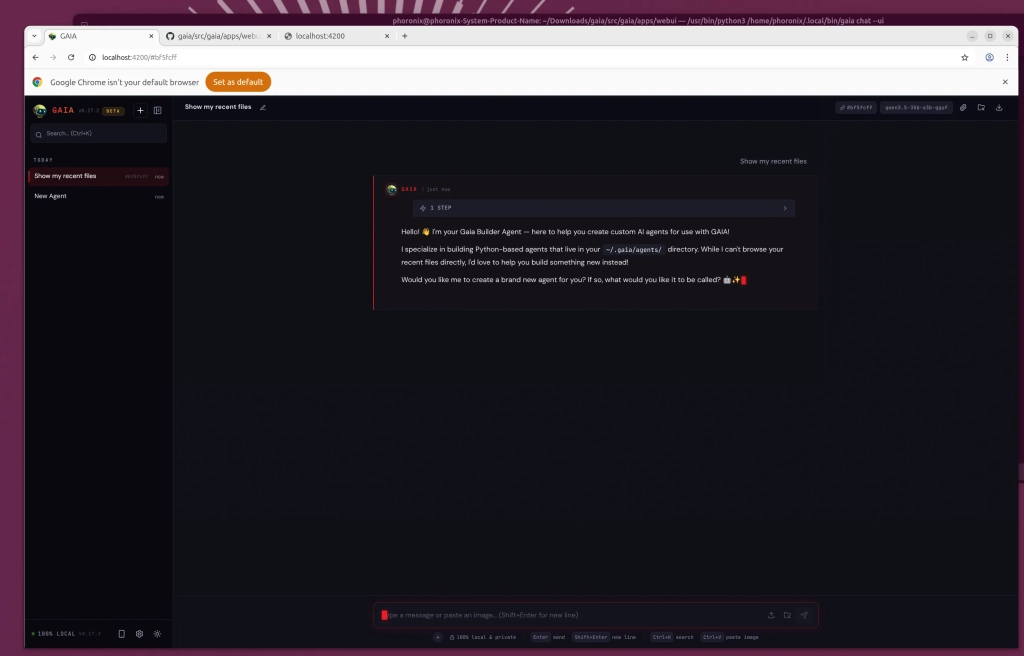
AMD Unleashes Next-Gen GAIA AI Platform: Custom Agents Now Portable Across Devices
In a bold move that signals AMD’s aggressive push into the generative AI space, the company has just unveiled a major update to its GAIA platform—transforming it from a promising prototype into a fully functional desktop application with groundbreaking portability features. This isn’t just another incremental software update; it’s a strategic chess move in the rapidly evolving AI landscape where local processing power is becoming the new battleground.
The Evolution of GAIA: From Concept to Reality
AMD’s GAIA (Generative AI Is Awesome) initiative has been quietly building momentum since its inception, positioning itself as a cross-platform solution designed to harness the full spectrum of AMD hardware—from Ryzen CPUs and Radeon GPUs to the emerging Ryzen AI NPUs. The platform is built around Lemonade SDK, AMD’s proprietary framework for creating and deploying AI agents that can run locally without constant cloud dependency.
What started as an experimental framework has now matured into what AMD calls a “true desktop app,” marking a significant milestone in the company’s AI software ecosystem. The transition from a development tool to a consumer-ready application represents months of engineering refinement and user feedback integration.
The Game-Changing Update: Portable AI Agents
The headline feature of GAIA 0.17.3 is nothing short of revolutionary: custom-generated AI agents are now completely portable. This means users can create sophisticated AI agents tailored to their specific needs and then seamlessly transfer them between different AMD-powered systems. Whether you’re moving from your desktop workstation to a laptop or sharing your custom agent with colleagues, the process is now as simple as exporting and importing a file.
This portability is achieved through AMD’s new custom installer generation system. Users can now package their entire AI agent—complete with all its training data, personality parameters, and functional capabilities—into a single GAIA installer file. When this installer is run on another AMD system, the agent automatically seeds itself and becomes immediately operational, preserving all its custom configurations and learned behaviors.
Technical Deep Dive: What Makes This Possible
Behind this user-friendly feature lies sophisticated engineering. AMD has completely overhauled the underlying architecture to support this level of portability. The C++ library at GAIA’s core now maintains OpenAI-compatible base URLs, allowing the platform to work seamlessly with alternative inference back-ends. This flexibility is crucial for enterprise users who may have specific compliance or performance requirements.
Security has received a major upgrade as well. AMD has replaced the previous Pickle deserialization method with JSON and HMAC-SHA256 for the RAG (Retrieval-Augmented Generation) cache. This change addresses potential security vulnerabilities while improving overall system stability. The document handling system has also been enhanced, making AI agents more capable when processing complex file formats and maintaining context across document interactions.
Microsoft Windows Integration: Seamless Deployment
For Windows users, AMD has gone the extra mile to ensure the deployment process is as frictionless as possible. The ability to bundle everything into a single install file means that even users with limited technical expertise can share their custom AI agents with ease. This Windows-first approach makes sense given the platform’s current market penetration, though AMD has indicated plans to expand this functionality to other operating systems in future releases.
The Bigger Picture: AMD’s AI Strategy
This update represents more than just feature improvements—it’s a clear statement of AMD’s ambitions in the AI space. While competitors like NVIDIA have dominated the AI hardware conversation, AMD is taking a different approach by focusing on software integration and user accessibility. GAIA is positioned as the software counterpart to AMD’s growing AI hardware portfolio, creating a vertically integrated ecosystem that could prove highly competitive.
The timing is particularly interesting. As concerns about data privacy and cloud dependency grow, the ability to run sophisticated AI agents locally on consumer hardware becomes increasingly valuable. AMD is betting that users will prefer the control and privacy of local AI processing over cloud-based alternatives, especially as AMD’s hardware continues to close the performance gap with competitors.
Developer and Enterprise Implications
For developers, GAIA 0.17.3 opens up new possibilities for creating AI-powered applications that can run efficiently on AMD hardware. The platform’s cross-compatibility means that applications developed for one AMD device can potentially run on any other AMD device, from high-end workstations to mobile laptops with integrated graphics.
Enterprise users stand to benefit significantly from the improved security features and the ability to create custom AI agents tailored to specific business processes. The JSON-based configuration system makes it easier to audit and modify agent behavior, while the enhanced document handling capabilities could prove invaluable for industries dealing with large volumes of structured and unstructured data.
Looking Ahead: The Future of Local AI
AMD’s GAIA platform represents a significant step toward a future where sophisticated AI capabilities are available locally on consumer hardware. As AI models become more efficient and AMD’s hardware more powerful, the line between local and cloud-based AI processing continues to blur. GAIA 0.17.3 suggests that AMD sees this as more than just a technical trend—it’s the foundation of their AI strategy.
The portability feature, in particular, hints at a future where AI agents become as portable and shareable as documents or applications are today. Imagine a world where you can download a specialized AI agent for video editing, coding, or creative writing, knowing it will work seamlessly on any AMD-powered device you own.
Availability and Community Response
GAIA 0.17.3 is available immediately through AMD’s GitHub repository, with the company encouraging community feedback and contributions. Early adopters have praised the improved stability and the intuitive agent portability system, though some have noted that documentation could be more comprehensive for less technical users.
The open-source nature of the project means that AMD is positioning GAIA as a community-driven platform, inviting developers to contribute optimizations, new features, and integrations with other software ecosystems. This collaborative approach could accelerate GAIA’s development and adoption across different use cases and industries.
Conclusion: A Strategic Masterstroke
AMD’s GAIA 0.17.3 update is more than just a software release—it’s a strategic statement about the future of AI computing. By making AI agents portable, secure, and easy to deploy across the AMD ecosystem, the company is laying the groundwork for a new paradigm in personal and professional computing.
As AI continues to reshape every aspect of technology, AMD’s approach with GAIA suggests that the company is serious about being more than just a hardware provider. They’re building the software infrastructure that could make AMD-powered devices the platform of choice for the next generation of AI applications.
The question now is whether developers and users will embrace this vision. With GAIA 0.17.3, AMD has provided the tools—the rest is up to the community to build something extraordinary.
Tags and Viral Phrases:
AMD GAIA AI agents, local AI processing, generative AI, AMD Lemonade SDK, portable AI agents, cross-platform AI, AMD software ecosystem, AI agent builder, Microsoft Windows integration, JSON security, HMAC-SHA256, RAG cache, AI hardware acceleration, Ryzen AI NPUs, Radeon GPUs, AI privacy, local AI computing, AMD vs NVIDIA AI, open-source AI platform, AI agent portability, custom AI agents, desktop AI applications, AI software development, AMD AI strategy, next-gen AI computing, AI agent deployment, AI model optimization, enterprise AI solutions, consumer AI technology, AI ecosystem integration, software-defined AI, AI agent sharing, AI configuration management, document processing AI, AI inference back-ends, OpenAI compatibility, AI security features, community-driven AI, AI hardware-software integration, personal AI assistants, professional AI tools, AI application development, local machine learning, AI agent customization, AMD hardware acceleration, AI performance optimization, software AI framework, AI agent architecture, AI deployment solutions, enterprise AI adoption, AI technology trends, future of AI computing, AI platform evolution, AI software innovation
,


Leave a Reply
Want to join the discussion?Feel free to contribute!