
Hello Inside pushes metabolic health into mainstream care with BARMER deal
Women’s Metabolic Health Finally Gets the Tech It Deserves — And It’s Going Viral
Let’s be honest: women’s health has been stuck in the dark ages for far too long. Despite the fact that 80% of women will face a chronic illness in their lifetime, the medical system still treats symptoms instead of addressing the root metabolic causes. Hormonal fluctuations across the menstrual cycle, pregnancy, and menopause? Barely accounted for. Personalised prevention? Practically non-existent.
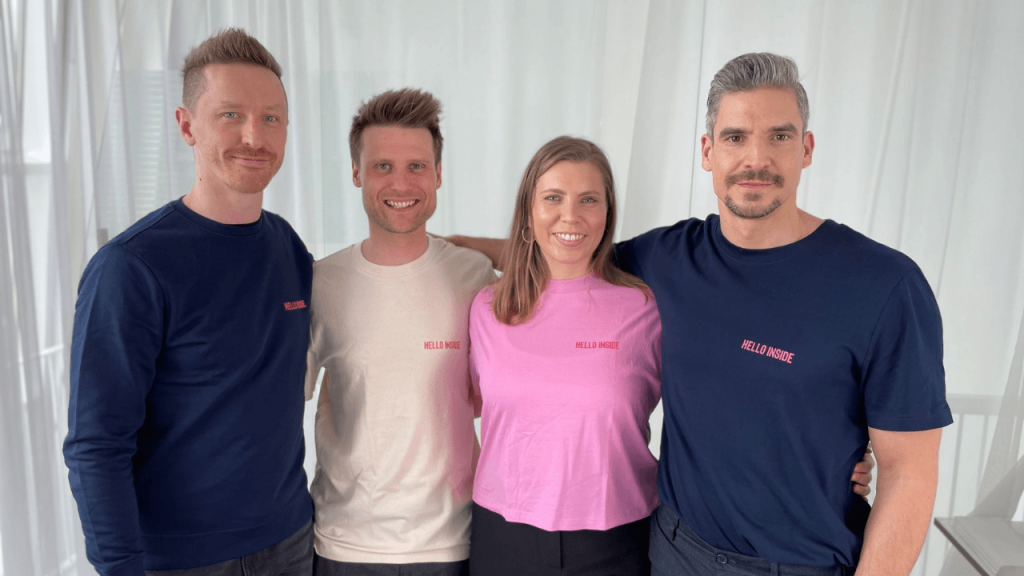
Enter Hello Inside, the Austrian startup on a mission to flip the script. Using continuous glucose monitoring (CGM), they’re putting metabolic health in women’s hands — literally. Their platform tracks glucose, movement, sleep, and symptoms to deliver personalised, sex- and gender-sensitive recommendations. And now, their programme is free for over 9 million members of BARMER, one of Germany’s largest statutory health insurers.
I sat down with co-founders Mario Aichlseder (CEO) and Jürgen Furian (COO) to unpack how they’re rewriting the rules of women’s health tech.
From Reach to Real Impact: A Founder’s Wake-Up Call
Mario Aichlseder isn’t new to scaling health tech. As former VP Growth at Runtastic, he helped grow the app to 140 million users and saw it acquired by Adidas for €220 million in 2015. But here’s the kicker: “Reach does not necessarily mean impact,” he told me.
Despite millions of users, Runtastic’s 30-day retention hovered around 1%. Why? It was great at keeping healthy people healthy — but it didn’t move the needle on chronic disease prevention.
That realisation hit home for Aichlseder. Two of his aunts live with diabetes, and his mother died young from a chronic illness. So when he tried a CGM for the first time, everything changed. “My brain went in a completely different direction,” he said. “For the first time, I got real-time insight into how my food, movement, stress, and sleep were immediately visible — and gave me an instant feedback loop.”
Cracking the Metabolic Code With Data Intelligence
Most health apps stop at data collection. Hello Inside goes further — interpreting signals in context and translating them into actionable decisions. But here’s the catch: in healthcare, recommendations must be auditable and traceable. So they built their tech on a “Controlled-by-Design” principle, ensuring every insight is transparent and aligned with medical guidelines.
Why does this matter? A 2025 report by Yale, Harvard, and Johns Hopkins found that 60% of AI models fail on women’s health questions — and often deliver incorrect answers with high confidence. Yikes.
Hello Inside has built what’s likely the most comprehensive metabolic health dataset for women in Europe, including 66,000 symptom logs from 1,743 women tracked over 90 days. They combine glucose data with inputs from wearables like Oura and Garmin for a holistic view.
The #1 Symptom Women Report (Spoiler: It’s Not What You Think)
Here’s a mind-blowing insight: the number one symptom women report isn’t weight gain or mood swings — it’s exhaustion. Yet when women sign up, they rarely choose “increase energy.” They choose “lose weight.”
“People come for weight loss, but the underlying issue is exhaustion,” Aichlseder said. Hello Inside also found unexpected correlations, like glucose stability improving skin health. And the best part? Results stayed consistent even as their dataset doubled and quadrupled.
Cycle Syncing Enters the Evidence Base
A recent IRB-approved clinical study led by FLO Living, Mira, Hello Inside, and Citruslabs found that a “cycle syncing” approach — aligning nutrition, exercise, and lifestyle with menstrual phases — significantly reduced PMS symptoms. In a 3-month trial of 60 women aged 22–42, 92% reported fewer and less intense PMS symptoms within 60 days.
And retention? Hello Inside sees up to 19 app opens per day with CGMs (versus 3 without). That’s social media-level engagement — and it’s driving real behaviour change.
From D2C to B2B2C: The Insurance Play
Hello Inside started with a D2C model, but quickly realised they needed to pivot to B2B2C to scale impact. Their D2C proof-of-concept removed the risk factor for insurers, proving users actually liked the product.
“Most companies trying to enter insurance build only for the payer and completely ignore the consumer,” Aichlseder said. “If someone asked me what the biggest challenge in this business is, it’s that we are trying to do the impossible: build for the payer and the consumer at the same time.”
In Germany and Austria, prevention incentives are modest and fragmented. But Hello Inside’s ZPP-certified metabolic prevention program and 21-day blood sugar challenge are closing critical gaps in women’s healthcare — marking one of the first large-scale integrations of AI-powered metabolic prevention into statutory health insurance in Germany.
The Future: Cortisol, Lactate, and Beyond
Hello Inside isn’t stopping at glucose. Aichlseder predicts lactate tracking is coming soon, with cortisol — the stress hormone — likely 18–24 months out. “Metabolic health has gone from unknown to central,” Furian said. “In 10 years, we’ll look back and realise how little we understood.”
Tags & Viral Phrases:
women’s health tech, metabolic health, continuous glucose monitoring, CGM, Hello Inside, BARMER, women’s health insurance, cycle syncing, PMS relief, energy levels, glucose tracking, AI healthcare, personalised prevention, women’s health data, metabolic health startup, health tech innovation, women’s health app, glucose stability, hormonal health, women’s wellness, health tech funding, metabolic health insights, women’s health research, health tech trends, AI in healthcare, women’s health breakthroughs, metabolic health prevention, women’s health solutions, health tech startups, women’s health awareness, metabolic health tracking, women’s health technology, health tech news, women’s health innovation, metabolic health app, women’s health platform, health tech investment, women’s health data science, metabolic health research, women’s health breakthroughs 2025, health tech disruption, women’s health empowerment, metabolic health education, women’s health analytics, health tech scalability, women’s health engagement, metabolic health outcomes, women’s health accessibility, health tech transformation, women’s health future
,

Leave a Reply
Want to join the discussion?Feel free to contribute!